Quick Trail Guide
- The Heart of the System: Why We Grade Ski Routes at All
- Breaking Down the Core Difficulty Scale
- It's Not Just Steepness: The Other Factors in Grading
- The Global Patchwork: How Grading Changes Across the Pond (and Beyond)
- From Map to Mountain: A Practical Guide to Using the Grades
- Beyond the Symbols: Terrain Parks and Other Markings
- Common Questions (And Straight Answers) About Ski Route Grading
- The Final Turn: Your Responsibility on the Graded Mountain
You're standing at the top of a run, squinting at the trail map. Green circle, blue square, black diamond... what does it all actually mean? If you've ever felt a flicker of uncertainty (or outright panic) when choosing which way down the mountain to go, you're not alone. Understanding how ski routes are graded is one of those fundamental skills that nobody really sits you down to explain, but it completely changes your experience on the snow.
I remember my first real ski trip as a young adult, confidently pointing my skis down what I thought was a blue square, only to find myself sideslipping down something that felt closer to a cliff face. The embarrassment was real. That moment taught me that the symbols aren't just suggestions—they're a critical language for safety and enjoyment.
So let's crack the code. How are ski routes graded, really? It's not just about steepness, though that's a huge part of it. It's a mix of objective measurements, subjective judgment by the ski patrol, and local mountain culture. And it varies from continent to continent, which is why an American blue might feel like a European red.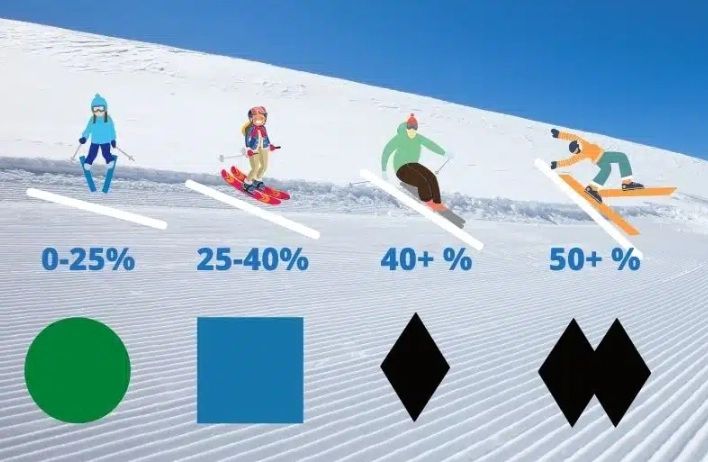
The bottom line up front: Ski trail ratings are a standardized system using shapes and colors to communicate difficulty. They're your best friend for choosing runs that match your ability, but they're not a perfect science. Always ski within your limits, regardless of the symbol on the map.
The Heart of the System: Why We Grade Ski Routes at All
Before we dive into the specifics of how are ski routes graded, it's worth asking why we bother. Imagine a mountain without any signs. Chaos, right? Beginners would end up on expert terrain, experts would be bored on gentle slopes, and the ski patrol would have a never-ending job of rescuing people.
The grading system exists primarily for safety and communication. It's a quick, visual way to tell skiers and snowboarders what to expect. The International Ski Federation (FIS) promotes certain standards to help create consistency, especially for major resorts and competitions. But in practice, there's no single global governing body that stamps every run with a grade. It's largely up to individual resorts and their ski patrol.
Think of it like a restaurant menu. The symbols are the spice ratings. A green circle is mild, a black diamond is extra hot. But just like one chef's "medium" might be another's "mild," one resort's blue square might be steeper or narrower than another's.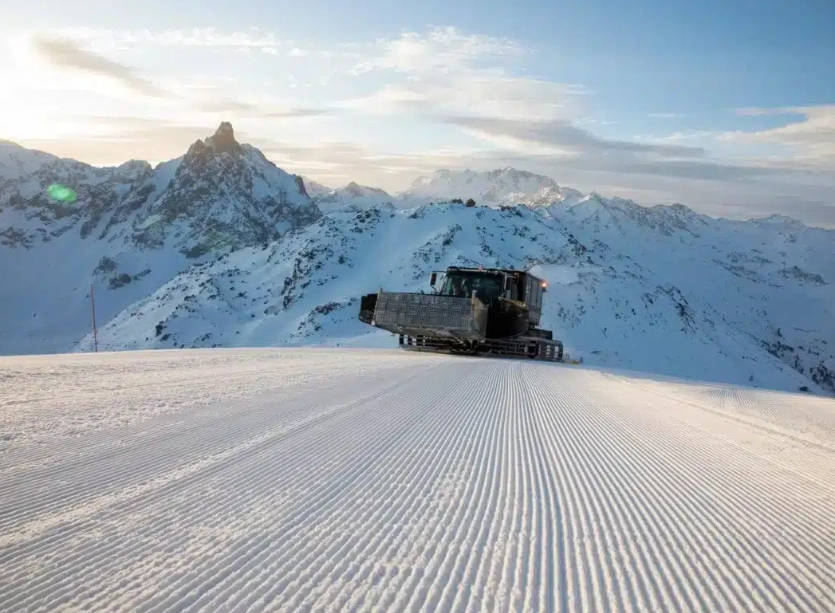
Here's a personal gripe: the inconsistency drives me nuts sometimes. I've skied blue runs in Colorado that were wide-open motorways, and blue runs in New England that were icy, narrow, and littered with obstacles. The grade told only part of the story. It taught me to always scope out a run from the lift if I can, or ask a local for the real scoop.
Breaking Down the Core Difficulty Scale
Let's get into the nitty-gritty. In North America, and in many parts of the world, you'll encounter a system based on three main symbols, sometimes with added variations. This is the core answer to "how are ski routes graded?"
Green Circle: The Beginner's Playground
These are the easiest runs on the mountain. We're talking wide-open spaces, very gentle slopes (typically between 6% and 25% grade), and a smooth, groomed surface. They're designed for first-timers and those still mastering the pizza slice (snowplow). You'll often find them near the base area or served by dedicated beginner lifts.
What makes a green run green?
- Gradient: The slope is barely noticeable. You won't pick up scary speed just pointing your skis downhill.
- Width: They're wide. Really wide. This gives you plenty of room to make turns, fall over, and generally figure things out without worrying about trees or other skiers.
- Obstacles: Minimal to none. You might find a few gentle rollers, but no sudden drop-offs, cliffs, or dense trees.
- Grooming: They are almost always meticulously groomed overnight, creating a smooth, predictable surface of corduroy snow.
If you're asking "how are ski routes graded for absolute beginners?", the green circle is the answer. It's the training wheels of the ski world.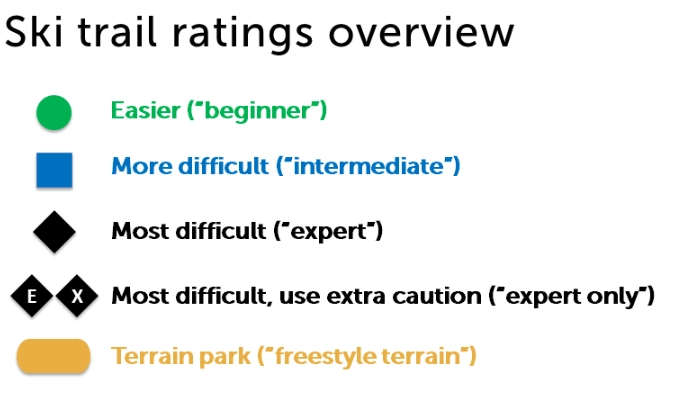
Blue Square: The Intermediate Highway
This is where most recreational skiers spend their time. Blue squares offer more variety and steeper pitches than greens, but are still generally groomed and obstacle-free. The slope is moderate—usually between 25% and 40%—requiring linked, controlled turns. This is the workhorse of the resort.
Here's the thing about blues: this is the category with the most variation. A light blue might feel like a steep green, while a dark blue might border on an easy black. It's the broadest category, which is why it can be tricky.
Key Point: When moving from green to blue, don't just look at the symbol. Look at the run's name on the map. Often, resorts will list their easiest blues first. Start there.
You should be comfortable stopping on a dime and making parallel turns on a green run before venturing onto a blue. The question "how are ski routes graded for intermediates?" is largely answered by the blue square, but it demands a closer look.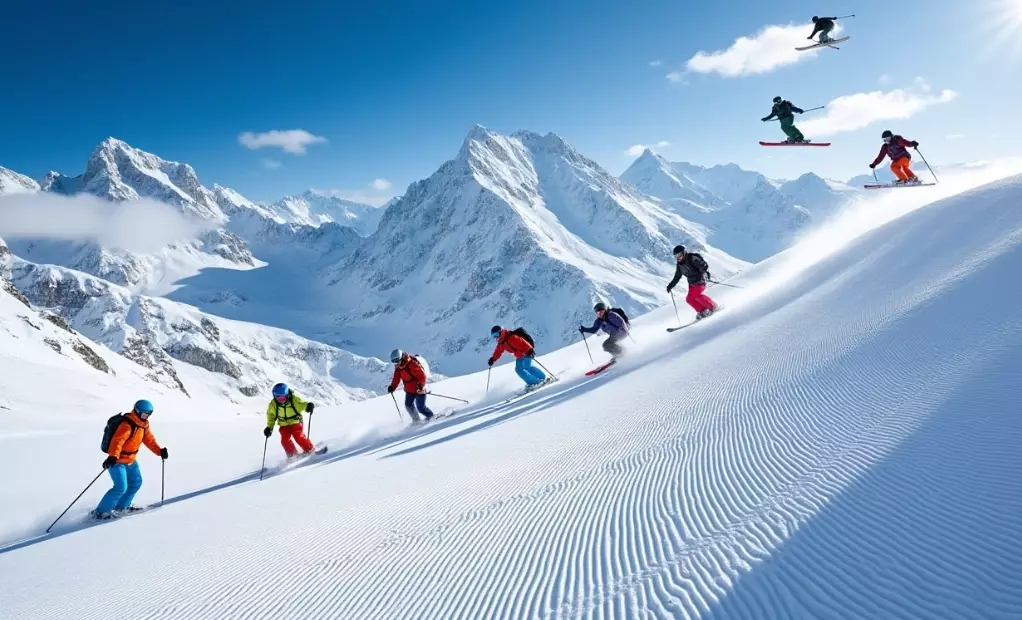
Black Diamond: Expert Terrain
Now we're talking. Black diamond runs are for advanced skiers and riders. They feature steep slopes (over 40% grade), often with variable conditions like moguls (bumps), ice, or ungroomed snow. They may be narrower and involve navigating around trees or other natural features.
Not all black diamonds are created equal. Some are steep but groomed (sometimes called "groomed blacks"), which are a great introduction to expert terrain. Others are mogul fields that will test your legs and resolve. Then you have the trees, the chutes, the cliffs...
This is where the system starts to expand. How are ski routes graded for experts who want more? Enter the variations.
Double Black Diamond and Beyond: The Expert-Plus Realm
This symbol means business. Double black diamonds (or in some regions, black diamonds with an "EX" or "Extreme" label) represent the most difficult in-bounds terrain a resort offers. Expect very steep slopes (often 45%+), mandatory exposure (where a fall could have serious consequences), tight spaces like couloirs, and natural obstacles like rocks and trees.
These runs are not groomed. You'll be dealing with whatever nature provided: deep powder, crust, ice, or huge moguls. Ski patrol checks them for avalanche risk and opens them when safe, but they do not modify the terrain. You need expert-level skills in variable conditions, quick decision-making, and the fitness to handle it.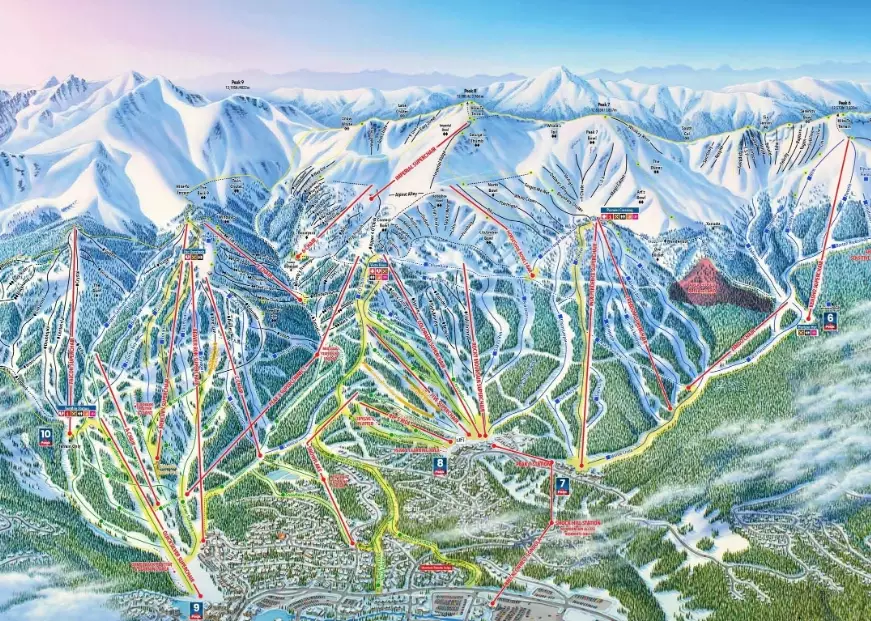
Some resorts, particularly in North America, even use Triple Black Diamond for ultra-extreme, pro-level terrain. It's more of a marketing label than an official standard, but it tells you to bring your A-game (and maybe a guide).
A critical warning: The jump from a single black diamond to a double black is massive. It's not just "a bit harder." It often involves exposure to real danger. If you have to ask if you're ready, you're probably not. Always ski with a partner on this terrain and know your escape routes.
It's Not Just Steepness: The Other Factors in Grading
If you think the answer to "how are ski routes graded?" is simply a person with a clinometer measuring slope angle, you'd be only partially right. Steepness is the primary factor, but it's not the whole story. Ski patrol considers a whole checklist.
- Width and Visibility: A narrow trail flanked by trees feels harder and is graded tougher than a wide trail of the same steepness. Blind rolls (where you can't see the landing) also increase the perceived difficulty.
- Terrain Features: Are there constant moguls? Is it littered with small rocks or stumps? Does it have a consistent fall line, or does it twist and turn? All of this adds to the technical challenge.
- Snow Conditions and Grooming: A run's grade is usually assigned based on its typical condition. A blue run that is groomed nightly might be a black diamond if it's left to become a mogul field. Similarly, an easy black diamond in fresh powder can feel like a blue, but the underlying hazards (rocks, trees) remain.
- Exit Difficulty: Is the run easy to get into but has a very tricky, congested, or flat exit? That can influence the grade.
- Psychological Factors: This is the subjective part. Does the trail feel exposed? Does it have a "no-fall zone"? The mental aspect of skiing is huge, and graders take that into account.
I once asked a veteran ski patroller in Utah how they make the final call. He said, "We imagine an intermediate skier—someone solid on blues—accidentally finding themselves at the top. If their likely outcome is a controlled but scary descent, it's a single black. If their likely outcome is a crash and a toboggan ride down with us, it's a double." That practical mindset really stuck with me.
The Global Patchwork: How Grading Changes Across the Pond (and Beyond)
Here's where it gets fun. Travel to the Alps, Japan, or New Zealand, and you'll see different symbols. Understanding these differences is crucial for any traveling skier. The core question of "how are ski routes graded?" has different answers depending on your longitude.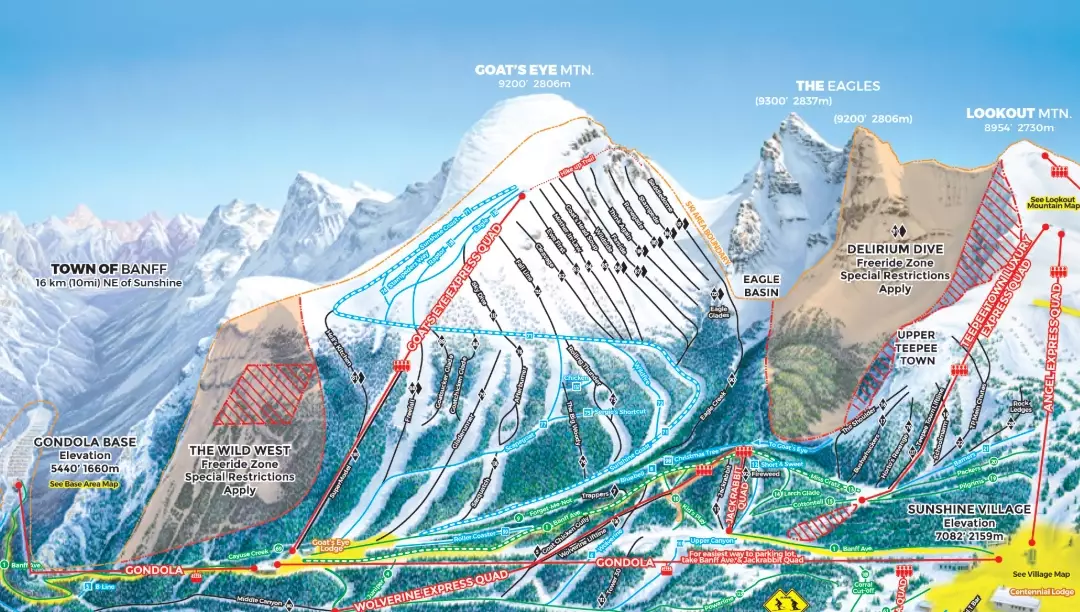
| Region | System Name | Beginner | Intermediate | Advanced | Expert/Off-Piste | Key Things to Know |
|---|---|---|---|---|---|---|
| North America (USA, Canada) | Shape & Color System | Green Circle | Blue Square | Black Diamond | Double Black Diamond | The most common reference. Focuses on in-bounds, prepared trails. |
| Europe (Alps, Pyrenees) | Color-Coded Piste System | Green (sometimes) or Blue | Red | Black | Often marked with Orange or Yellow, or just "Off-Piste" | No universal standard! A French red may be steeper than an Austrian black. Off-piste (anywhere outside marked trails) is ungraded and unpatrolled. |
| Japan | Mixed System | Green (初学者) | Red (中级者) | Black (上级者) | Double Black or Gate-accessed Backcountry | Often uses both colors and Japanese text. Grading can be very conservative—their blacks are often quite manageable. |
| Australia / New Zealand | Adapted International | Green | Blue | Black | Double Black or "Extreme" | Very similar to North America. Watch for icy conditions which can make runs feel harder than their grade. |
See the confusion potential?
The European system is the biggest point of divergence. In France, you'll commonly see blue, red, and black. Green is sometimes used for the absolute easiest, but often beginner areas are just labeled as such. The critical, earth-shattering difference for North Americans is this: in Europe, the trail rating only applies to the groomed, marked, avalanche-controlled piste. The moment you step off the side of that piste, you are in the backcountry. It is unpatrolled, ungraded, and you are responsible for your own avalanche safety and rescue.
An American skier used to ducking ropes into gladed areas (which are often still within the resort boundary and controlled for avalanches) can get into serious trouble doing the same in the Alps. This isn't a minor detail—it's a life-saving distinction. So, when asking "how are ski routes graded in Europe?", the real question might be "what is considered a route versus backcountry?"
From Map to Mountain: A Practical Guide to Using the Grades
Knowing the symbols is one thing. Using them effectively is another. Here’s a step-by-step approach to take the theory of how ski routes are graded and apply it to your day on the hill.
- Be Honest About Your Level. This is the hardest part. Are you a "comfortable intermediate" or an "aspiring expert"? Err on the side of caution. If you struggle on the steepest part of a blue run, you're not ready for a black diamond.
- Read the Whole Trail Map. Look for the key. Some maps differentiate between groomed and ungroomed blacks. Look at the layout—are the blues all clustered together, or are they the only way down from a certain lift? That tells you a lot.
- Ask the Locals. Lifties, ski school instructors, and people in the lodge bar are goldmines of information. "Is 'Sunshine Cruiser' really a cruiser, or is it an ice sheet by 11 AM?" They'll tell you.
- Warm Up. Always start your day on a run you know is well within your ability. Get your legs under you and assess the day's conditions (icy, soft, etc.) on easy terrain.
- Progress Gradually. Don't go from green circle to double black in one day. Move up one grade at a time. Find the easiest black diamond on the mountain and try that before tackling the famous expert chute.
- Respect Closures. A run is closed for a reason—thin cover, avalanche danger, an obstacle. It doesn't mean "expert shortcut." It means danger.
Pro Tip: Many resorts offer mountain tours for intermediates or above, often free in the morning. This is the absolute best way to learn how the grading works on that specific mountain from a guide who knows every inch of it.
Beyond the Symbols: Terrain Parks and Other Markings
The standard grading system doesn't really apply to terrain parks. These have their own progression, typically marked with signs showing the size of the jumps and rails:
- Small Features / Beginner Park: Tiny jumps, low rails, and boxes. A great place to learn park basics.
- Medium Features: For progressing park riders. Jumps with proper takeoffs and landings, longer rails.
- Large Features / Pro Line: Big jumps and complex rails for expert freestyle skiers and snowboarders only.
You might also see other symbols on a trail map:
- Orange Oval / Slow Zone: Areas where you must ski slowly and in control, often near lifts, bases, and beginner areas.
- Boundary Lines: A solid line typically means the resort boundary. Skiing past it means you are leaving the controlled area and entering the backcountry.
- Gladed Areas: Often shown as trees with spacing. These are in-bounds tree runs and will be graded (e.g., "Black Diamond Glades"). The spacing of the trees is a clue to difficulty—tight trees are harder.
Common Questions (And Straight Answers) About Ski Route Grading
The Final Turn: Your Responsibility on the Graded Mountain
At the end of the day, the system of how ski routes are graded is a tool, not a guarantee. It's a language created to help you, but you are the one who has to speak it wisely.
The mountain doesn't care about your ability. Ice, trees, and gravity are impartial. A trail rating is a best-effort signpost put up by people who want you to have fun and be safe, but they can't ski for you.
My advice? Use the grades as your primary guide. Respect them. But also use your eyes, your legs, and your common sense. If something looks over your head, it probably is. There's no shame in taking off your skis and sidestepping down a tricky section, or even turning around and hiking back up. I've done it. Every good skier has.
The goal is to come back tomorrow, and the day after that. Understanding how are ski routes graded is the first step in a lifetime of finding the perfect run for today, whatever today's perfect run may be.
Now go look at that trail map with new eyes. You've got this.
Related Articles

Comments
Join the discussion