In This Guide
- Where Are You Stuck? Diagnosing the Advanced Plateau
- The Technical Toolkit: Drills That Actually Work for Experts
- Conquering Specific Terrain: Moving Beyond Groomers
- The Gear Talk: Is Your Equipment Holding You Back?
- The Mental Game & Off-Snow Training
- Putting It All Together: A Sample Progression Week
- Safety & The Next Level: Beyond Resort Skiing
- Common Questions from Advanced Skiers (The Stuff You Actually Google)
Let's be honest. You can handle blue runs in your sleep. Blacks are fun, not frightening. You might even dabble in some off-piste stuff when the snow is good. You're an advanced skier. Congrats. But here's the thing nobody tells you: this is where it gets really hard. The easy gains are gone. Progress isn't measured in runs conquered, but in millimeters of edge control and seconds of balance recovered. You've hit the plateau.
I've been there. Staring down a steep couloir thinking, "I can get down this," but also knowing I'd be survival-skiing, not skiing with any style or grace. The question of how to improve as an advanced skier becomes a constant itch. You watch videos of pros making perfect arcs in deep powder and think, "What am I missing?"
Well, you're not missing magic. You're missing a structured approach to breaking down your own skiing. This isn't about learning to parallel turn anymore. It's about refinement, intentionality, and tackling specific weaknesses you probably don't even know you have.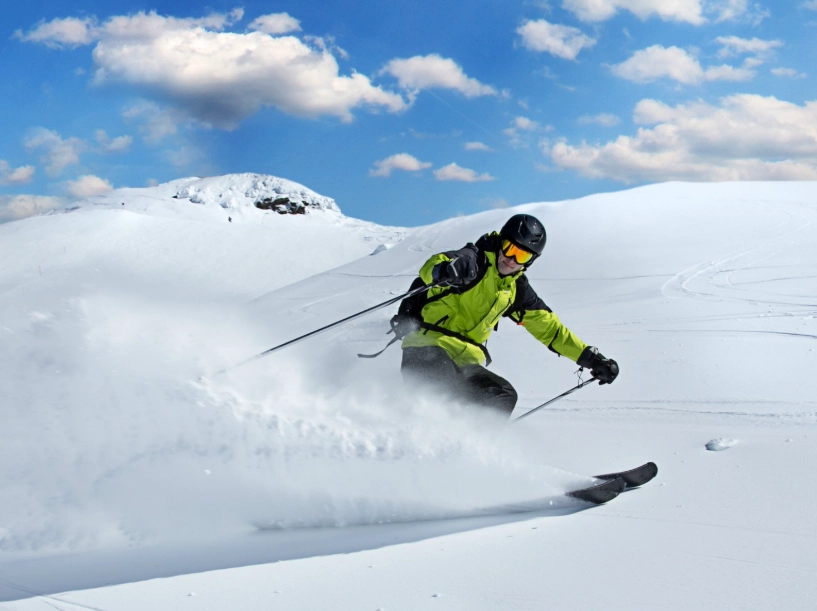
Where Are You Stuck? Diagnosing the Advanced Plateau
Before you can fix it, you need to see it. The biggest mistake advanced skiers make is having a vague goal. "I want to ski moguls better" is okay, but "I want to maintain a consistent rhythm and line in large, firm moguls without getting thrown backseat" is a target you can actually work on.
How do you diagnose? The best tool is video. It's brutally honest. Have a friend film you from the side and from below on a run you find challenging. Watch it that night. Don't just watch the cool parts. Look for these common advanced skier tells:
- The Upper Body Wanderer: Are your shoulders and arms swinging wildly to initiate turns? Good skiers turn with their feet and legs; the upper body is quiet and facing downhill.
- The Bouncer: Do you have a constant, unnecessary up-and-down motion? Efficient skiing uses flexion and extension at the right moments, not a perpetual pogo stick.
- The Stemming Ghost: Does one foot subtly sneak out at the start of a turn, especially when you're tired or on ice? That old beginner habit can haunt even experts.
- The Static Stance: Are you just... standing there between turns? Dynamic skiers are always in motion, preparing for the next turn as they finish the last one.
I remember watching my own video and cringing at my "helicopter arms" on steeps. I was using my upper body to muscle the skis around because I was scared to commit my weight forward. That was my specific problem to solve.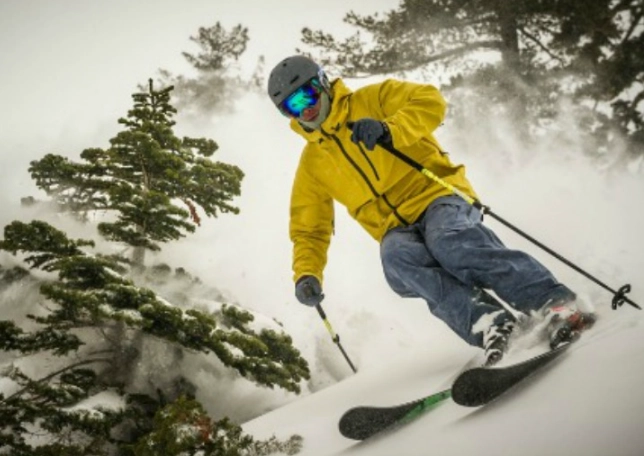
The Technical Toolkit: Drills That Actually Work for Experts
Once you know your kryptonite, you attack it with specific drills. Not just any drills—drills that force you to feel the right movement. These aren't for the chairlift line; dedicate a few runs each day to focused practice on easier terrain before applying it to the hard stuff.
Mastering the Carve (It's Not What You Think)
You probably think you can carve. On a groomed blue, sure. But true, high-edge-angle carving on a steep red or hard black is another beast. The key is patience and letting the ski do the work.
- Roll your knees and ankles aggressively into the hill at the very start of the turn.
- Keep your upper body quiet and facing straight down the fall line.
- Be patient. Let the ski's sidecut pull you across the hill. Don't rush to finish the turn.
Dynamic Balance and Absorption
Bumps, crud, variable snow—this is where balance separates the good from the great. Your legs need to act as independent shock absorbers.
Drill: The One-Ski Challenge. On a very flat, wide beginner area, take one ski off. Seriously. Now try to glide and make gentle turns on the other ski. It's humbling. It forces you to balance directly over that single ski's sweet spot. You'll feel every tiny movement. This translates directly to keeping equal, balanced pressure on both skis in rough terrain. It's a game-changer for skiing tired legs at the end of the day, too.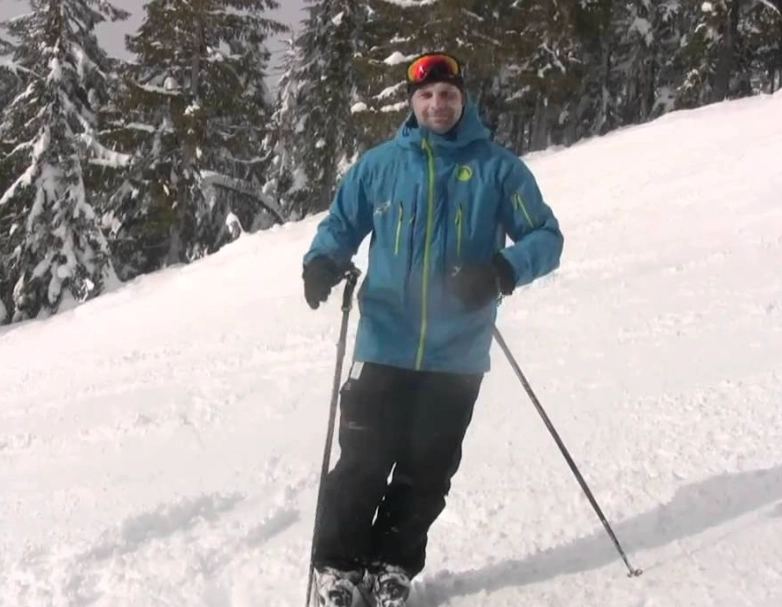
Pole Planting for Rhythm and Timing
A late or sloppy pole plant throws your whole timing off. For advanced skiing in trees or tight bumps, your poles are your metronome.
Drill: Touch, Don't Stab. Find a run with small, soft bumps. Focus solely on your pole touch. It should be a light, forward "touch" of the basket on the snow, right next to your boot. Not a swing, not a stab behind you. Say "touch" out loud every time you plant. This synchronizes your turn initiation and creates a rhythm you can rely on when the terrain gets chaotic. I used to be a terrible pole stabber—it made my turns disjointed. Fixing this was one of the simplest yet most effective things I've done.
Conquering Specific Terrain: Moving Beyond Groomers
This is where the rubber meets the road—or rather, the ski meets the powder, crud, and ice. How to improve as an advanced skier is largely defined by how you adapt your technique to what the mountain throws at you.
| Terrain Type | Key Challenge | Essential Technique Focus | Common Mistake to Avoid |
|---|---|---|---|
| Deep Powder | Staying afloat, managing speed without edges. | Neutral/Backseat Balance. Weight centered or slightly back. Use a bouncy, up-motion to unweight and initiate turns. Skis together. | Leaning forward and trying to "drive" the tips. This will bury you every time. |
| Hardpack & Ice | Grip and confidence. | Aggressive Edging & Patience. Sharp edges are non-negotiable. Commit your knees inward. Let the turn develop; don't force it. | Skidding out of fear. A controlled, carved turn is safer than a panicked slide. |
| Bumps (Moguls) | Absorption, rhythm, line choice. | Independent Leg Action. Legs are shock absorbers. Upper body faces downhill. Look 2-3 bumps ahead for your line. | Letting the bumps kick you into the backseat. Fight to keep your hands forward and shins pressing on boot tongues. |
| Crud & Chopped-Up Snow | Predictability and power. | Strong, Athletic Stance & Pivoting. Wider stance for stability. Use quick, powerful rotary movements to pivot the skis through the variable snow. | Being passive. You must actively steer and power through each turn. |
| Steep Couloirs & No-Fall Zones | Mental focus, precision, survival. | Side-slipping & Jump Turns. Master the controlled side-slip for scoping sections. Jump turns are your friend for extreme pitch. Breathe. | Looking down at your skis. Look at your intended landing spot for the next turn, not the abyss below. |
My personal nemesis was, and sometimes still is, breakable crust. That awful layer of ice with a dusting on top. The key I learned? Don't fight it. The moment you feel the crust start to grab your ski, you have to unweight immediately and make a quicker, more decisive turn than you planned. Hesitation means a guaranteed face plant. It's exhausting, both physically and mentally.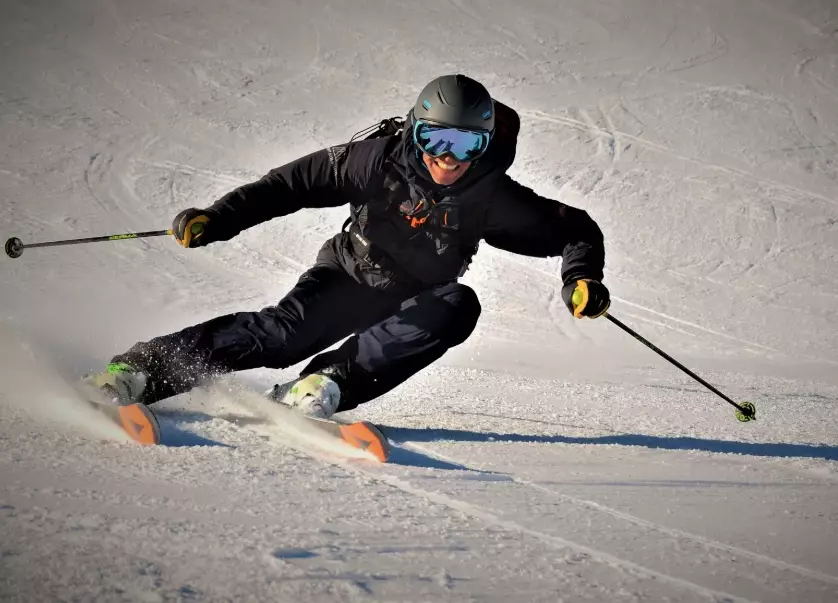
The Gear Talk: Is Your Equipment Holding You Back?
As an intermediate, almost any modern ski works. As an expert, the wrong gear can cement bad habits or limit your ceiling. This isn't about buying the most expensive stuff; it's about fit and suitability.
Skis matter too. Are you on a playful all-mountain ski but trying to charge hard on icy resort slopes? You'll be working overtime. Conversely, a stiff, heavy charger will be miserable in deep powder or tight trees. Consider a two-ski quiver if you can: one for hard-snow performance (narrower waist, 70-85mm) and one for soft snow/powder (95-110mm waist).
And for heaven's sake, keep your edges sharp and your bases waxed. Dull edges on ice will destroy your confidence and technique. It's like a chef trying to cook with a blunt knife.
The Mental Game & Off-Snow Training
Advanced skiing is as much between the ears as it is in the legs. Fear, hesitation, and poor focus will undo perfect technique.
Visualization: Before a challenging run, close your eyes and ski it perfectly in your mind. See the line, feel the turns, hear the snow. This primes your neuromuscular system. It sounds like hocus-pocus, but elite athletes in all sports use it. It works.
Breathing: When you're scared, you hold your breath. This tenses every muscle. Make a conscious effort to exhale forcefully at the start of each turn, especially in bumps or steeps. It forces relaxation.
Off the snow, you need to train. Skiing is a leg-burner. Summer and fall are for building the engine.
- Leg Blasters: The holy grail of ski conditioning. Do 10 squats, 10 lunges (each leg), 10 jump lunges, and 10 jump squats. Rest 30 seconds. Repeat. Start with 3 rounds and build. You'll hate me and thank me later.
- Balance Work: Single-leg balances on a pillow or Bosu ball. Practice while brushing your teeth.
- Mobility: Ankles and hips. Couch stretches, ankle dorsiflexion drills. You need range of motion to get forward in your boots.
I neglected off-snow training for years. My first big mountain day of the season was always a painful wake-up call. Now, a consistent routine makes Day 1 feel like Day 20.
Putting It All Together: A Sample Progression Week
Let's say you have a week-long ski trip. How do you structure it to actually improve, not just rack up vertical feet?
Day 1-2 (Re-acclimation & Diagnosis): Don't go straight to the double blacks. Ski easy blues and reds. Focus on feeling your edges. Do the railroad track drill. Get someone to film you. Identify one primary focus for the week (e.g., "quiet upper body on steeps").
Day 3-4 (Focused Practice): Dedicate the first hour each morning to drills related to your focus on easy terrain. Then, take that focus onto progressively harder runs. If your focus is upper body, ski a challenging run but think only about keeping your shoulders pointed downhill. Nothing else.
Day 5 (Application): Time to test it. Pick the terrain that challenges your focus—steeps, bumps, etc. Go in with confidence. Don't abandon your focus if you make a mistake; just reset for the next turn.
Day 6-7 (Integration & Play): Your focus should start to feel more natural. Now, just ski. Explore. Have fun. The work is done. Let your subconscious take over and enjoy the flow state you've been building towards.
Safety & The Next Level: Beyond Resort Skiing
For many advanced skiers, the natural progression leads to the backcountry or sidecountry. This is a massive step with serious consequences.
If you're asking how to improve as an advanced skier with an eye towards untouched slopes, STOP. Your next step isn't a ski lesson; it's an avalanche education course. Period. Organizations like the American Institute for Avalanche Research and Education (AIARE) offer essential Level 1 courses that teach you how to assess terrain, understand snowpack, and use rescue gear (beacon, probe, shovel). This isn't optional gear or knowledge. It's the price of admission.
Even within resort boundaries, tree well safety, understanding avalanche terrain (some exist in-bounds!), and skiing with a partner are critical. The best skier is the one who comes home every time.
Common Questions from Advanced Skiers (The Stuff You Actually Google)
So, that's the map. There's no secret handshake, just hard, focused work on the right things. The path on how to improve as an advanced skier is a personal one. It's frustrating, humbling, and incredibly rewarding. Some days you'll feel like you've gone backwards. Other days, you'll link three turns in variable snow exactly as you imagined, and it'll feel like flying. Those moments make all the work worth it.
Now get out there. And maybe stay out of my line.
Related Articles
Comments
Join the discussion