In This Guide
So you want to understand the different types of alpine skiing? Maybe you're watching the Olympics and hear commentators throw around terms like "Super-G" and "Slalom," and you're not quite sure what the real difference is. Or perhaps you're a skier yourself, comfortable on blues and blacks, and you're curious about what it would take to try a more structured form of the sport. You're in the right place.
Let's clear one thing up right away. When most people think of skiing, they picture themselves cruising down a groomed resort run. That's recreational alpine skiing, and it's fantastic. But the competitive world—the one you see on TV—breaks down the art of going downhill into five distinct disciplines. Each one is like a different event in track and field. The 100-meter dash and the marathon are both running, but the skills, training, and mindset are worlds apart. It's the same with these types of alpine skiing.
I remember the first time I tried to follow a friend who was a former racer down what he called an "easy GS course." I was a confident advanced skier, but the specific turning rhythm and line he was talking about felt completely foreign. My usual wide, swooshy turns were useless. That's when I really started to appreciate that these aren't just labels; they're entirely different ways to interact with the mountain.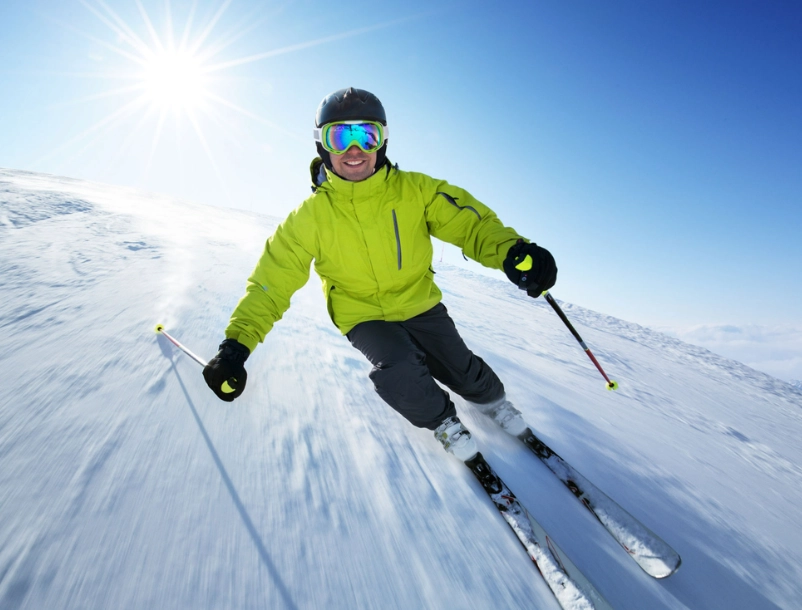
The Big Five: Breaking Down the Core Alpine Skiing Disciplines
Alright, let's get into the nitty-gritty. The International Ski and Snowboard Federation (FIS) is the global governing body, and they set the rules for these events. Their Alpine Skiing document library is the bible for course regulations, equipment rules, and everything in between. It's dense reading, so I've boiled down the essentials for you here.
Think of it as a spectrum. On one end, you have pure, untamed speed. On the other end, you have intricate technical agility. The main types of alpine skiing sit at different points along that line.
| Discipline | The Core Idea | Typical Speed | Gate (Flag) Setup | What It Feels Like |
|---|---|---|---|---|
| Downhill (DH) | The ultimate speed test. Point 'em straight and go. | 80-100+ mph (130-160+ km/h) | Widely spaced, blue and red gates marking the fastest line down the fall line. | Like being a pilot. Minimal turning, maximum tuck, managing immense forces. |
| Super-G (SG) | "Speed with turns." A hybrid of Downhill and Giant Slalom. | 70-80 mph (110-130 km/h) | More gates than Downhill, set to force a flowing, rhythmic turn sequence. | A high-speed dance. You need the courage of Downhill and the arc of GS. |
| Giant Slalom (GS) | The technical speed event. Long, carved turns at pace. | 40-50 mph (65-80 km/h) | Gate panels are farther apart than Slalom, requiring full, rounded carved turns. | The most "fun" for many recreational skiers to emulate. Powerful, banking turns. |
| Slalom (SL) | The technical agility test. Quick, precise feet and reflexes. | 25-35 mph (40-55 km/h) | Tightly spaced, with flexible poles ("poles") that skiers must hit with their bodies. | Like a high-speed puzzle. It's less about flow and more about rapid-fire decision-making. |
That table gives you the textbook version. But skiing isn't lived in a textbook. Let me walk you through each one like we're chatting on a chairlift.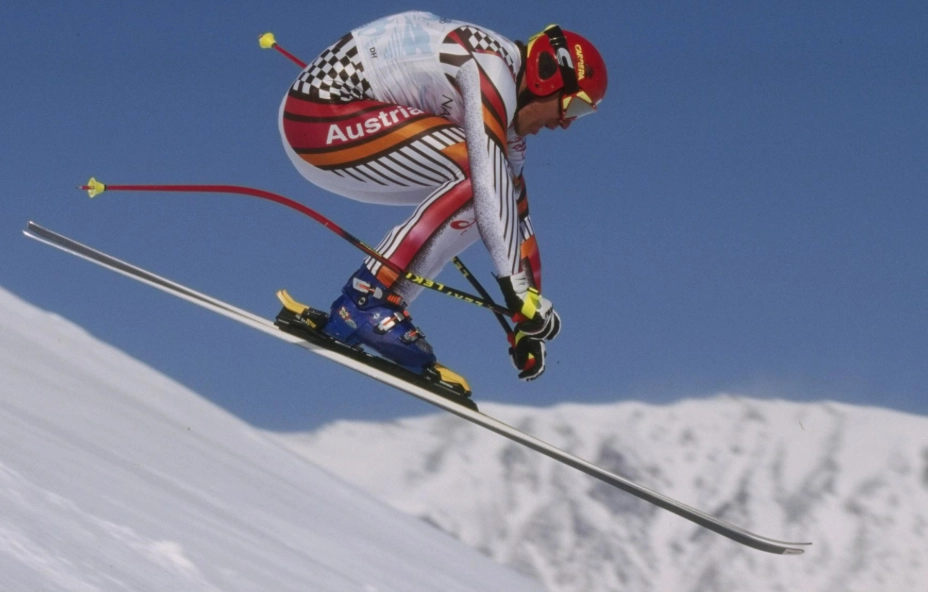
Downhill: The King of Speed
This is the headline act. Downhill is the Formula 1 of skiing. The courses are long, often over 2 miles, and drop thousands of vertical feet. Racers get multiple days to inspect the course, memorizing every bump, compression, and turn. There's a reason they wear skin-tight suits and aerodynamic helmets—they're trying to cheat the wind.
The goal is simple: take the most direct, fastest line possible. Turns are minimal and are often more about controlling direction than slowing down. You'll see racers in a full "tuck" position for 60-70% of the course to minimize drag. The physical forces are insane. Hitting a bump at 90 mph can launch you into the air, and you need the core strength of a gymnast to absorb the landing and not get thrown off line.
Honestly, it looks terrifying. And it is. A great resource to see what a real Downhill course looks like is the trail map for a classic venue like Beaver Creek's Birds of Prey course. Just looking at the steepness and length gives you respect for the athletes.
Super-G: The Unseen Beast
Super-G stands for "Super Giant Slalom." It's the youngest of the disciplines, invented in the early 80s. If Downhill is a sprint, think of Super-G as a 400-meter dash. It's still blisteringly fast, but you can't just point your skis. The gate setting forces a consistent rhythm of turns.
Here's the kicker: racers usually only get one inspection run on the morning of the race. They don't have days to memorize it. So it becomes a test of instinct, reading the terrain on the fly, and making micro-adjustments at high speed. A mistake in Downhill might cost you a few tenths. A mistake in Super-G, where you're loading your skis on the edge while flying, can send you into the nets in a heartbeat.
It might not get the same glory as Downhill, but among ski racing fans, a perfect Super-G run is often considered the most beautiful to watch. It's pure, flowing aggression.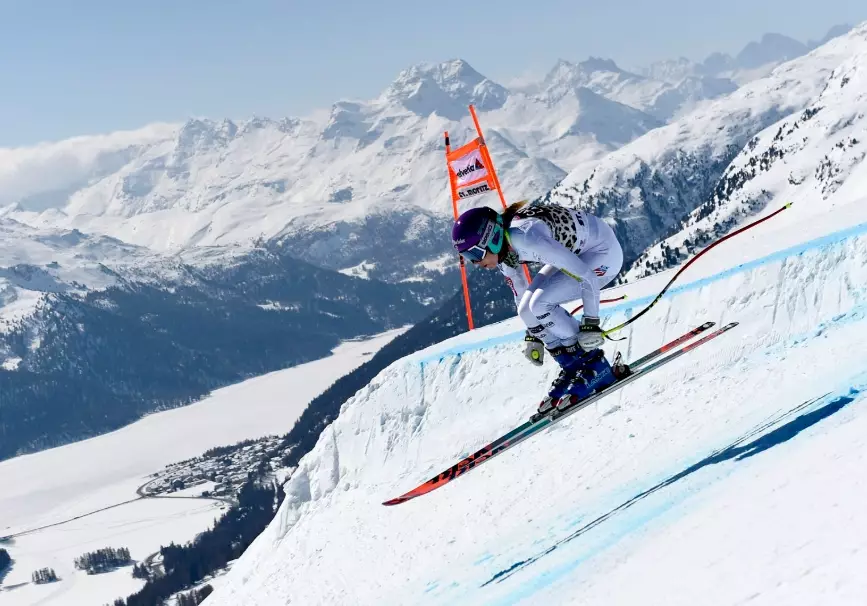
Giant Slalom: Where Technique Meets Power
Now we're moving firmly into the "technical" events. Giant Slalom, or GS, is what most advanced recreational skiers try to mimic when they lay down big, carved turns on a wide groomer. The turns are longer and more drawn out than in Slalom.
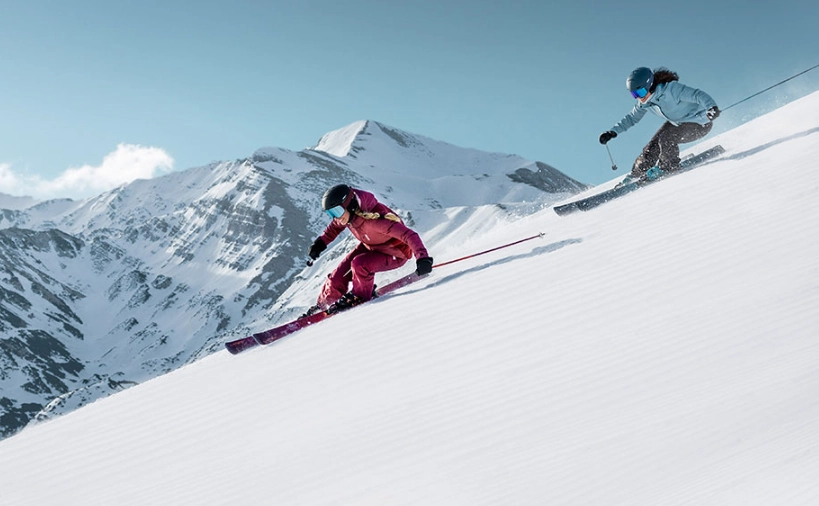
The key here is carving. You're not skidding your turns. You're setting your ski on its edge and letting the sidecut of the ski do the work, arcing a clean, round line around each gate. It requires immense leg strength to hold that edge against the centrifugal force. Your legs are burning by the end of a run.
GS skis are stiff and have a significant sidecut (meaning they're much wider at the tip and tail than the waist) to facilitate these powerful arcs. Watching a world-class GS skier, you'll see them almost lying on the snow, their body angulated dramatically, with only a whisper of snow spraying from the edge. It's a thing of beauty.
Slalom: The Quickstep
Slalom is the polar opposite of Downhill. It's not about speed; it's about agility, timing, and guts. The course is a maze of tightly spaced gates. These aren't the wide panels of GS; they're single, flexible plastic poles. To make a turn, you literally have to hit the pole with your shin, knee, or forearm to knock it out of the way. It's violent and rhythmic.
The technique is totally different. You're pivoting your skis rapidly, using short, sharp movements. It's incredibly taxing on the legs and core. Slalom skis are short, light, and quick to pivot. The boots are incredibly stiff to transmit every tiny movement from your leg to the ski.
I tried a recreational slalom course once. It was exhausting and frustrating. My timing was off, and I felt like I was fighting the course the whole way down. It gave me a massive appreciation for the athletes who make it look effortless. A publication like Ski Racing Media often has great technical breakdowns of slalom technique that show just how nuanced it is.
So, where does that leave us? We've covered the four main types of alpine skiing you see individually. But there's a fifth that combines them.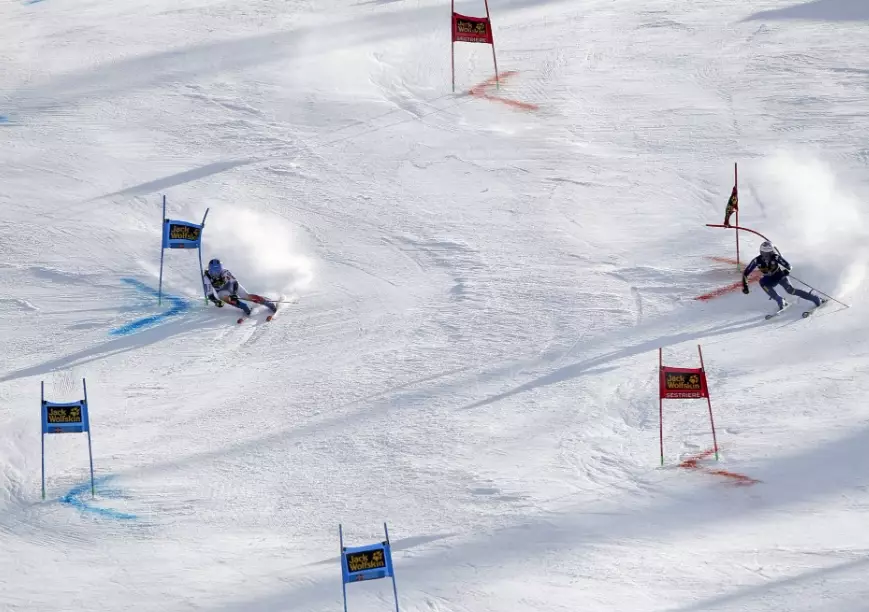
Alpine Combined: The Ultimate Test
The Combined is the decathlon of alpine skiing. Traditionally, it was one run of Downhill and two runs of Slalom on the same day. The idea is to crown the most complete skier—the one who has both the bravery for speed and the finesse for technique.
It's brutal. Your body and mind have to switch completely between two opposite disciplines in a matter of hours. Modern variations sometimes use a Super-G run instead of a full Downhill, but the concept is the same. It's a niche event now, but winning a Combined is a badge of immense respect among peers.
Which Type of Alpine Skiing is Right For You? (Spoiler: Maybe All of Them)
Okay, so you're not planning to race in the World Cup. But understanding these types of alpine skiing can massively improve your own skiing and make your days on the mountain more interesting.
Ask yourself: What part of skiing do you love most?
- The Need for Speed? If you live for the adrenaline rush of a steep, wide-open run, study the lines and body position of downhillers. Work on your tuck. Practice being aerodynamic and finding the fall line. Just, you know, do it at a sane speed with plenty of space.
- The Love of the Carve? If you get joy from the feeling of your edges gripping and launching you into the next turn, you're a GS skier at heart. Focus on making complete, round turns without skidding. Try to link them in a rhythm. This is arguably the most transferable racing skill to recreational skiing.
- The Puzzle Solver? If you enjoy quick, technical challenges, find a mountain that sets a weekly "NASTAR" or recreational slalom course. It will change your skiing. It forces you to think ahead, be precise, and develop lightning-fast reflexes. It's humbling and incredibly rewarding.
The truth is, dabbling in the mindset of each discipline makes you a better, more versatile skier. A little slalom practice improves your quickness in moguls. Thinking like a GS skier improves your control on icy groomers. Understanding downhill line improves your efficiency everywhere.
My advice? Don't pigeonhole yourself. The different types of alpine skiing offer different tools. Try to collect them all.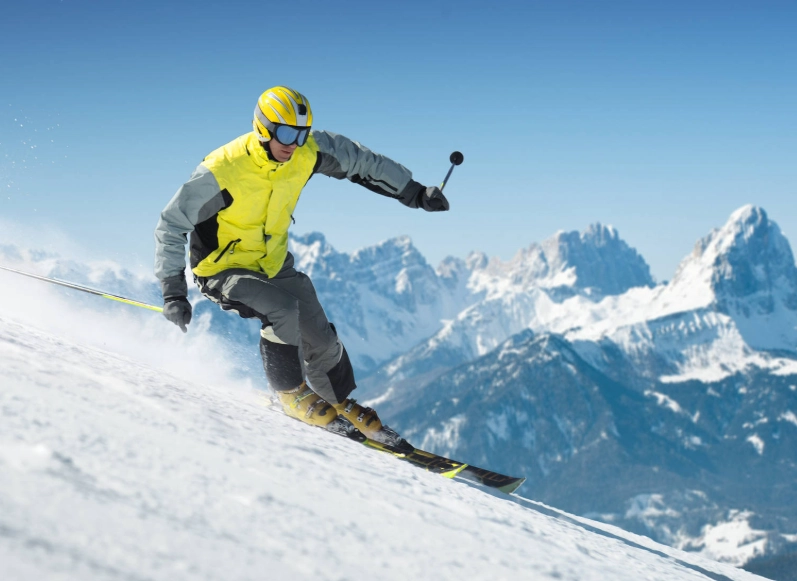
The Gear Divide: How Equipment Changes for Each Discipline
This is a huge point of confusion. You can't take your all-mountain skis and compete in a Downhill. The equipment is hyper-specialized. For recreational skiers, knowing this spectrum helps explain why certain skis exist.
| Discipline | Skis | Bindings | Boots | Poles |
|---|---|---|---|---|
| Downhill | Long (up to 218cm), very stiff, minimal sidecut. Built for stability at speed. | High DIN (release setting), often with a longer toe piece for more forward pressure. | The stiffest of all, with a pronounced forward lean to hold the tuck. | Heavily bent to fit around the body in a tuck. Almost look broken. |
| Super-G | Slightly shorter & more turn-friendly than DH skis, but still very stable. | Similar to Downhill bindings. | Very stiff, but with a slightly more upright stance than pure DH boots for turning. | Less bent than DH poles, but still curved for aerodynamics. |
| Giant Slalom | Shorter, with a pronounced sidecut for carving. Stiff underfoot and in the tail. | Bindings are set back slightly on the ski to help initiate the turn. | Stiff, but with more flexibility in the cuff than speed boots to allow angulation. | Straighter poles, similar to what you'd use recreationally. |
| Slalom | The shortest race skis. Very soft in the tip for quick initiation, stiff underfoot. | Often have a "plate" system under the binding to elevate the skier for leverage. | Extremely stiff laterally (side-to-side), but with more forward flex to absorb impacts. | Straight, lightweight poles. The grips often have guards for hitting gates. |
See what I mean? It's a whole different world. For us mere mortals, a good all-mountain ski borrows a bit from GS design (sidecut for carving) and a bit from slalom design (soft tip for quickness). Boots are the most important piece of gear, period. A stiff boot gives you more control and responsiveness, which is why advanced skiers prefer them, even if they're less comfortable at first. A site like Blister Review does an incredible job of deep-diving into ski and boot design, explaining how these race technologies trickle down to the skis we buy.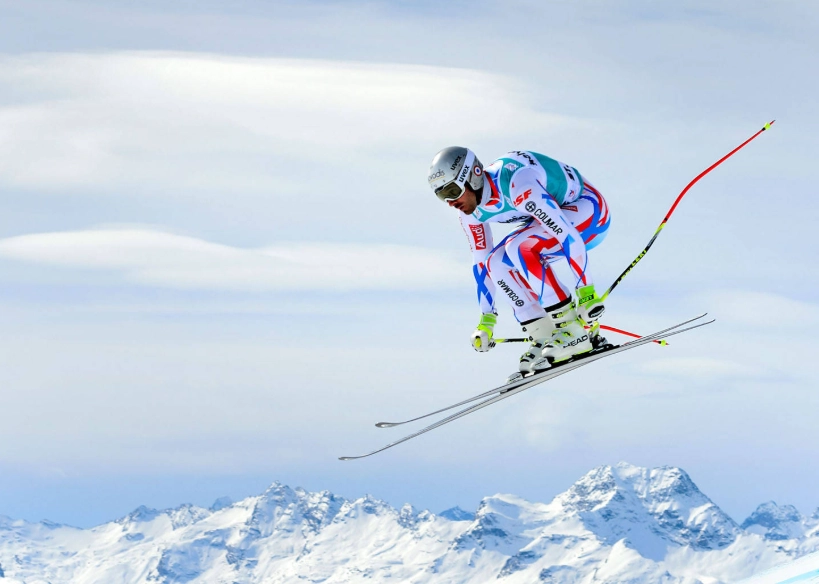
Your Burning Questions About Types of Alpine Skiing (Answered)
Which alpine skiing type is the fastest?
Hands down, Downhill. It's not even close. Top athletes regularly exceed 90 mph. Super-G is next, then Giant Slalom, with Slalom being the slowest in terms of pure speed. But "fast" is relative—slalom feels incredibly fast because of how close the obstacles are.
What's the hardest type of alpine skiing to learn?
For a beginner? They're all impossible. But in terms of the skill ceiling and unique demands, I'd argue Slalom has the steepest learning curve for a recreational skier to even attempt properly. The timing and precision are unforgiving. Downhill is the hardest physically and mentally due to the consequences of error.
Which discipline is safest?
They all carry risk when pushed to the limit. At the World Cup level, Downhill has the most spectacular crashes due to the speed. For a recreational skier trying to emulate the disciplines, Giant Slalom-style carving on open terrain is generally the safest and most accessible way to experience "race-like" skiing.
Can I try any of these at my local resort?
Absolutely! Many resorts set permanent or weekly race courses for the public. Look for "NASTAR" banners (a popular recreational racing program in the US) or ask at the ski school if they have a race camp or course. It's the best way to get a taste. You'll use your own gear, and the gates will be set very gently, but you'll get the idea.
Do pros specialize in one type of alpine skiing?
Most do, especially at the very top. A Downhill specialist has a different physique and training focus than a Slalom specialist. However, the true legends—people like Mikaela Shiffrin or the late Bode Miller—excelled in multiple disciplines, which is incredibly rare and impressive. They are the exceptions that prove the rule of how specialized these types of alpine skiing have become.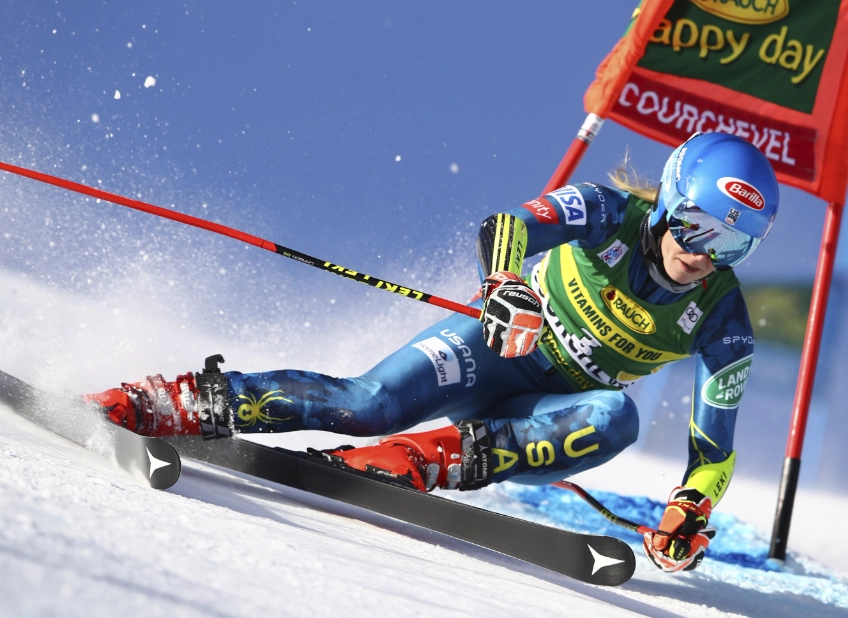
Wrapping It Up: More Than Just Labels
So there you have it. The types of alpine skiing are far more than just different races. They're different philosophies, different skill sets, and different conversations with gravity. Understanding them enriches your experience as a fan and as a skier.
Next time you're watching a race, you'll see the subtle differences. You'll appreciate the raw power of a downhill tuck, the flowing grace of a Super-G turn, the powerful arc of a GS carve, and the violent precision of a slalom run.
And maybe, just maybe, you'll find yourself on a quiet groomer early in the morning, imagining the gates, and trying to link a few clean, GS-style turns together. That's where the magic is—taking a little piece of this incredible sport and making it your own. The mountain is the same, but the way you ride it can tell a thousand different stories. These five disciplines are just the most famous versions of that story.
Go explore them.
Related Articles
Comments
Join the discussion