Quick Navigation
- Mindset Shift: From Surviving to Thriving
- The Core Technical Pillars for Advancement
- From Skidding to Carving: The Holy Grail of Efficiency
- Dynamic Balance and Power Management
- Building Your Advanced Skills Toolkit: A Practical Progression Plan
- Safety and the Next-Level Mentality
- Common Questions Intermediates Have About Advancing
So you’ve mastered the pizza wedge (thankfully), you can link your parallel turns on a nice blue run without thinking too hard, and you’re starting to feel pretty good on your skis. That’s awesome. But then you hit a patch of ice, or a steep pitch, or a field of moguls that look like a minefield, and suddenly that confidence evaporates. Sound familiar?
That plateau—the space between comfortable intermediate and confident advanced skier—is where a lot of us get stuck. You’re not a beginner anymore, but those black diamond signs still give you pause. The goal here isn’t just to ski steeper stuff; it’s to ski everything with more control, less effort, and way more fun. This is exactly what mastering advanced skiing techniques for intermediates is all about.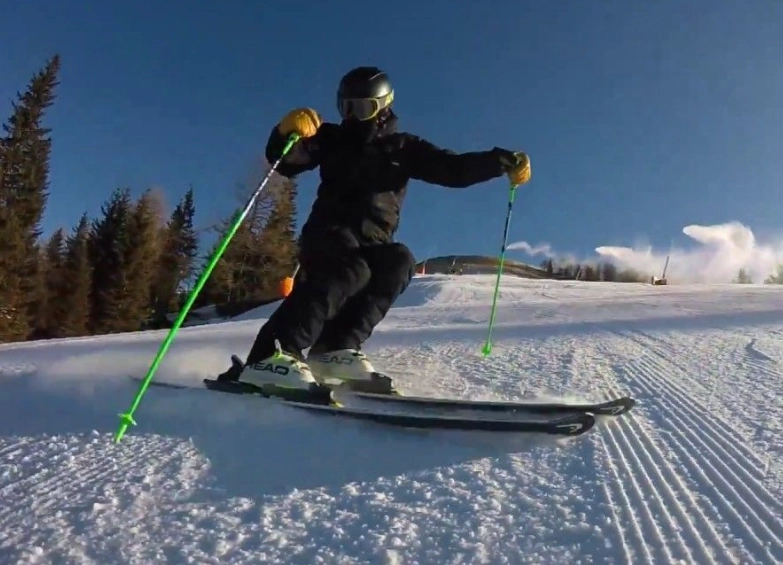
It’s less about learning brand-new tricks and more about refining and connecting the skills you already have. It’s about understanding why you do things, not just how. I remember staring down a seemingly vertical couloir years ago, my legs feeling like jelly, realizing my nice, wide turns on groomers didn’t translate at all. I had to go back to the drawing board on some fundamentals I thought I’d nailed.
Mindset Shift: From Surviving to Thriving
Before we dive into the physical techniques, let’s talk about the mental game. As an intermediate, your focus is often on not falling. Your turns are a series of managed stops and recoveries. To advance, you need to shift to a mindset of continuous, fluid motion. Think of it as dancing with the mountain, not fighting against it.
This means being proactive, not reactive. You’re planning your line three turns ahead. You’re reading the snow texture changes before your skis hit them. You’re managing your energy and balance constantly, not just when you feel off-kilter. It’s a more engaged, more athletic way of skiing. Frankly, it’s also more tiring at first—but eventually, it becomes infinitely more efficient.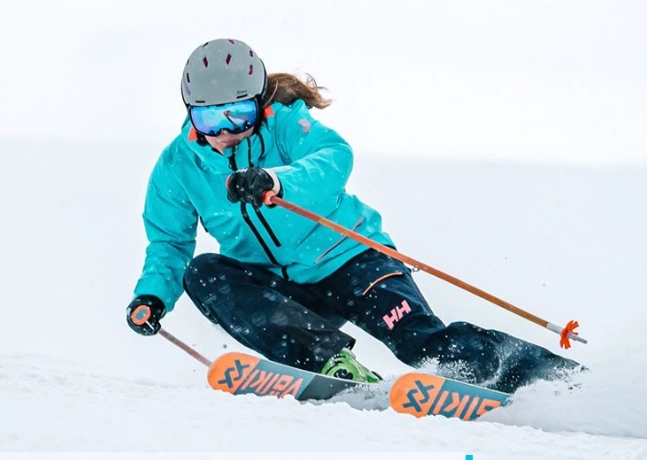
The Core Technical Pillars for Advancement
These aren’t separate tricks. They’re interconnected elements that, when combined, create solid, advanced skiing. If your parallel turns are your sentence, these are the grammar rules that make it eloquent.
1. From Skidding to Carving: The Holy Grail of Efficiency
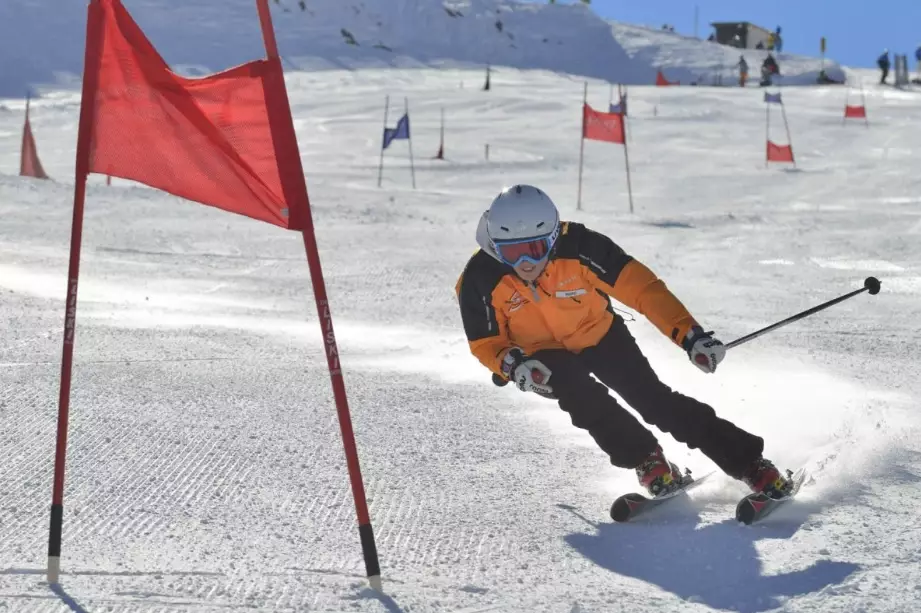
Most intermediates skid their turns. You pivot your skis sideways and use friction against the snow to slow down and change direction. It works, but it’s slow and wastes energy. Carving is different. When you carve, the metal edge of your ski cuts a clean, pencil-thin line in the snow. The ski bends like a bow, and its sidecut geometry pulls you around the turn. You don’t slow down; you redirect energy.
How do you start carving?
First, you need adequate speed on a groomed blue run. As you initiate the turn, roll your knees and ankles steadily towards the inside of the turn. Feel your shins press against the front of your boots. The key is to maintain that edge angle and pressure throughout the turn, letting the ski do the work. You’ll feel a powerful, smooth acceleration out of the turn. If you hear a scraping sound, you’re still skidding. A clean “shhh” sound means you’re carving.
Mastering the carving turn is arguably the most critical of all advanced skiing techniques for intermediate skiers aiming for efficiency. It’s the foundation for everything else.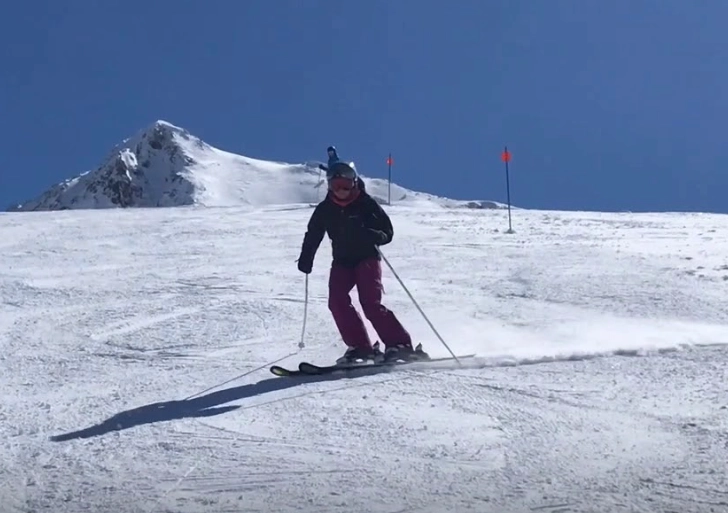
2. Dynamic Balance and Power Management
Intermediate balance is often static—centered over the skis on easy terrain. Advanced balance is dynamic, constantly adjusting fore/aft and side-to-side. On variable terrain, you’re a shock absorber.
Where do you feel your weight? It should be on the ball of your foot, your shin firmly on the boot tongue. On steep terrain or in bumps, you must aggressively drive your weight forward. Leaning back is a guaranteed loss of control. Practice on a moderate slope by making turns while consciously trying to keep the tails of your skis lightly brushing the snow. You can’t do this from the backseat.
Power comes from your core and legs, not from swinging your upper body. A quiet upper body is a sign of an advanced skier. Your shoulders should generally face down the fall line. The turning force is generated by extending and retracting your legs (this is called flexion and extension) and directing pressure through your edges.
3. Terrain Adaptation: The Real Test
Anybody can look good on a corduroy groomer. Advanced skiing is defined by how you handle everything else. Let’s break it down.
Moguls (Bumps)
They’re intimidating. The common mistake is to try to steer each turn violently, which tires you out in three bumps. The advanced technique is absorption and pivot. As you approach a bump, you quickly flex your legs (absorb) to go over the top, then pivot your skis around in the trough between bumps. Your legs are acting like pistons. Look two or three bumps ahead for your line, not at your ski tips. Start on a low-angle mogul field and focus on rhythm, not speed. The Professional Ski Instructors of America (PSIA) emphasizes a "quiet upper body, active legs" approach in moguls, which is gold-standard advice you can read more about in their educational resources.
Steep Terrain & Ice
Fear makes you lean back. You must fight this. On steeps, commit to your pole plant at the turn initiation and jump your feet laterally underneath you to start the new turn. Keep your weight forward. On ice, edge grip is everything. Make sure your skis are properly tuned (sharp edges!). Make shorter, quicker, more aggressive turns. Really roll those knees into the hill to engage the edges fully. Hesitation is your enemy here.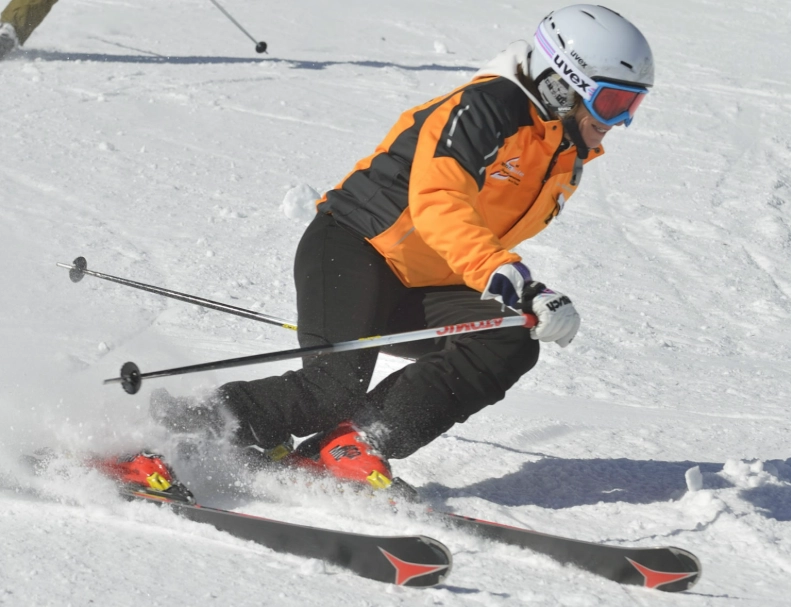
Powder & Crud
This is where you learn to love a more centered or even slightly backseat stance (contrary to everything else!). In deep snow, you need to keep your ski tips up to plane on the surface. Weight both skis evenly, keep your feet closer together, and make smooth, rounded turns. Let the snow’s resistance help you turn. In heavy, chopped-up crud, you need to be even more dynamic, using strong leg absorption to punch through the variable chunks.
To visualize the core technique shift, here’s a comparison of the intermediate mindset versus the advanced execution in key situations:
| Terrain/Situation | Intermediate Tendency (The Survival Move) | Advanced Technique (The Thriving Move) |
|---|---|---|
| Steep Slope Entry | Panic, lean back, make a desperate skidded hockey stop. | Commit forward, plant pole, make a confident, controlled jump turn to establish a new fall line. |
| Middle of an Icy Patch | Freeze up, reduce edge angle, skid uncontrollably. | Increase edge angle aggressively, shorten turn radius, drive knees downhill, trust the sharp edge. |
| Navigating a Mogul Field | Stare at the next bump, upper body twisting to force each turn. | Look 3 bumps ahead, absorb with legs, let feet pivot in troughs, keep shoulders facing downhill. |
| First Run in Deep Powder | Lean back too far, struggle to turn, exhaust quickly. | Adopt a neutral, centered stance, weight both skis evenly, make slow, patient, rounded turns. |
Building Your Advanced Skills Toolkit: A Practical Progression Plan
You can’t learn this all in a day. Here’s a sensible, progressive way to build these advanced skiing techniques for intermediate athletes into your muscle memory. Don’t skip steps.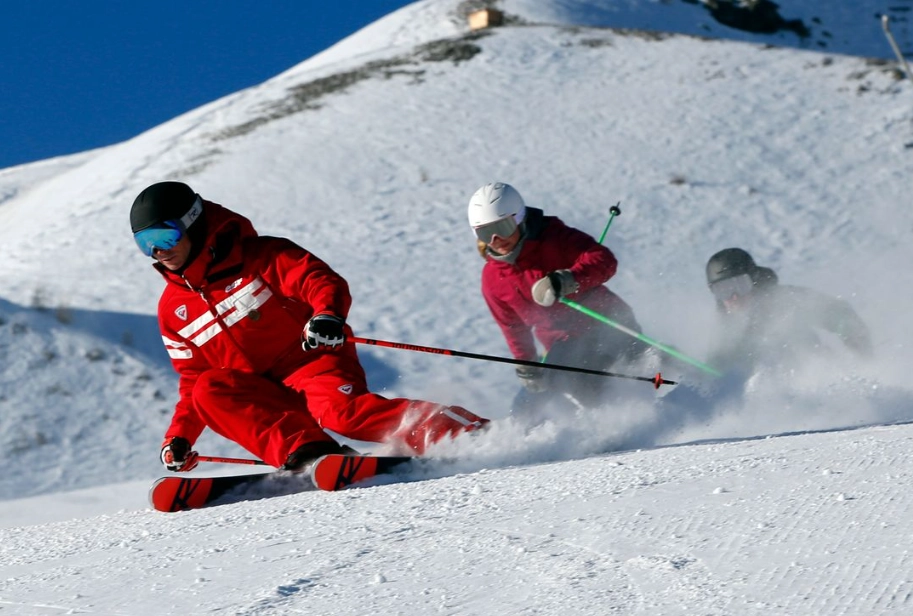
- Foundational Carving: Spend a morning on a wide, groomed blue. Focus purely on making clean, linked carved turns. Start with big, wide turns (Gs), then progress to medium (Cs) and finally short, quick turns (Ss). The goal is control through edge angle, not speed.
- Dynamic Movement Drills: On the same groomer, practice hopping your skis laterally from edge to edge. Then, practice flexing and extending your legs deeply throughout a turn. Get used to the full range of motion.
- Introduce Variability: Find a blue run with some small, soft bumps on the side. Practice absorbing and turning through them. Then find a groomed run with a short, steeper section. Practice your jump turns and forward commitment there.
- Combined Terrain Lap: Pick a run that has a bit of everything—a groomed start, a section of bumps, maybe some off-piste crud. Ski it slowly, consciously applying the specific technique for each section. This is integration.
Safety and the Next-Level Mentality
Pushing your limits requires respect. Always ski with a buddy when venturing off-piste or trying difficult terrain. Know how to read avalanche terrain if you’re going into the backcountry—take a course. A lot of ski areas offer “steep skiing clinics” or “bump workshops.” These are worth every penny. A good instructor can spot your specific bad habits (we all have them) and give you personalized cues.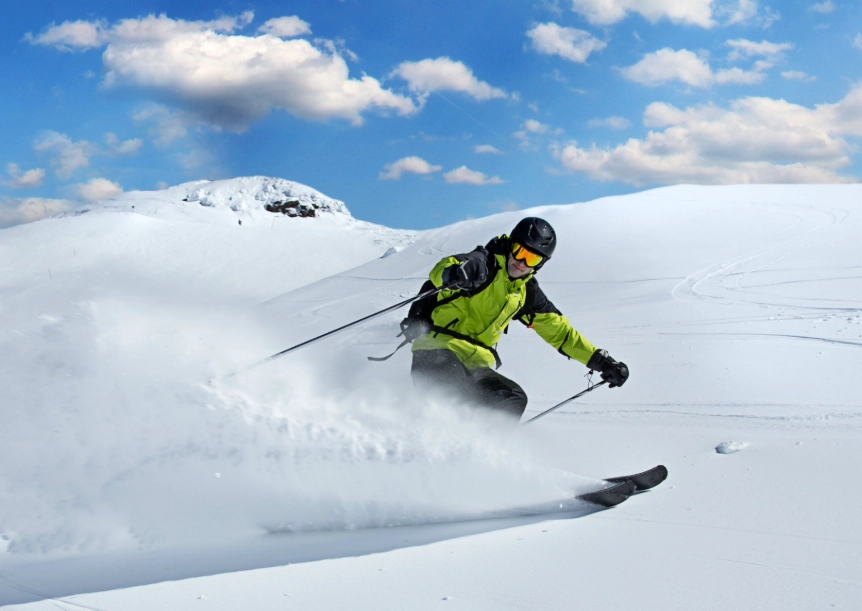
My personal take? The obsession with “conquering” double black diamonds is overrated. I’ve seen too many people scrape down a terrifying run looking miserable, just for the bragging rights. True advanced skiing is about finding graceful, efficient lines in challenging terrain, whether that’s a tricky black mogul run or a complex off-piste bowl. It’s about the quality of the turns, not the steepness of the pitch.
Common Questions Intermediates Have About Advancing
The journey through advanced skiing techniques for intermediates is the most rewarding phase of learning to ski. It’s where you transition from being a passenger on the mountain to becoming its dance partner. It takes patience, focused practice, and a willingness to feel awkward before you feel awesome. But the moment you float through a mogul field with rhythm, or lay down a set of perfect, arcing carves on a groomer, or confidently pick your way down a steep chute—that’s the moment it all clicks. The mountain opens up, and the fun multiplies exponentially. Now go get some of that.
Related Articles
Comments
Join the discussion