Ask ten expert skiers about the hardest ski run in the world, and you'll likely get ten different answers. That's because "hardest" is a wonderfully subjective term. Is it the steepest? The iciest? The one with the most terrifying cliff entry? The run that demands perfect racing technique at 80 mph? For some, the mental game—the sheer exposure to a fatal fall—is what defines the ultimate challenge.
I've spent over a decade chasing steep lines and listening to guides argue in mountain huts. The truth is, there's no single champion. Instead, there's a pantheon of legendary slopes, each brutal in its own special way. This isn't about picking one winner; it's about understanding what makes a run earn its reputation and figuring out which nightmare might be yours to conquer.
What You'll Find in This Guide
What Makes a Ski Run "The Hardest"?
Before we name names, let's set the criteria. A truly formidable run attacks you on multiple fronts.
Steepness (Gradient): This is the obvious one. We measure it in degrees or percent. A typical advanced black diamond might be 30-35 degrees. The real monsters start at 40 degrees and go up. At 45 degrees, you're looking straight down the fall line. Anything steeper feels like you're dropping off a roof.
Terrain and Exposure: Is it a smooth, steep face, or a minefield of rocks, ice bulges, and mandatory airs? Exposure refers to what's next to you—namely, a long, unforgiving drop. A 40-degree slope over a gentle runout feels different from a 40-degree slope that funnels into a cliff band.
Snow Conditions: The same run is a different beast in two feet of powder versus bulletproof ice. Many legendary difficult runs are famous for their consistently terrible, hard-pack or icy conditions, which is part of their identity.
Technical Demands & Required Speed: Some runs, like World Cup downhill courses, are impossible at slow speeds. You need the velocity to make the jumps and clear the compressions. This adds a layer of commitment most recreational skiers never experience.
The Mental Game: This is the silent killer. The run might be technically within your ability, but the consequence of a mistake—a long, sliding fall into rocks or trees—paralyzes your decision-making. The fear factor is a legitimate difficulty multiplier.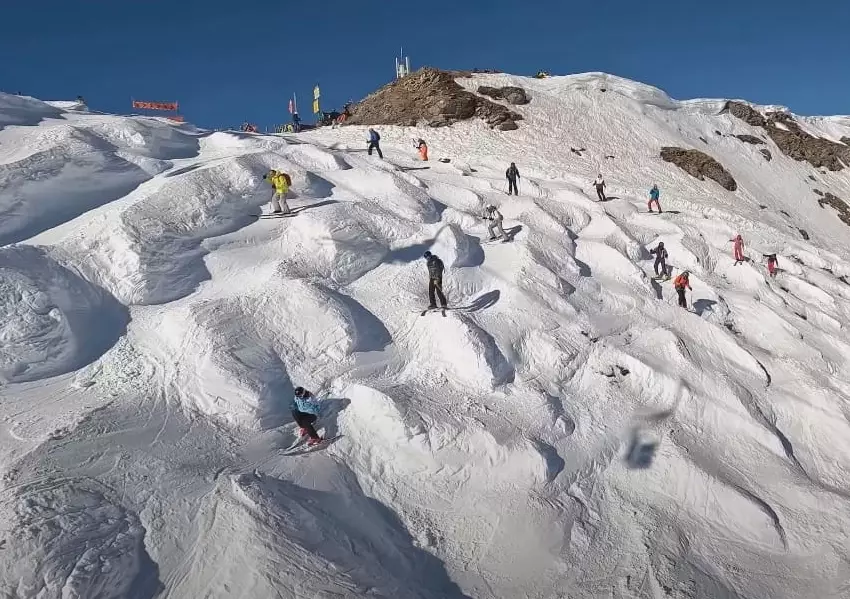
The Usual Suspects: A Rundown of Legendary Slopes
Based on the criteria above, here are the runs that consistently top the lists and fuel barstool debates. Think of this as a hall of fame, not a ranked podium.
| Run Name & Location | Key Claim to Fame | Steepness & Key Feature | Who It's For (Realistically) |
|---|---|---|---|
| Harakiri Mayrhofen, Austria |
Steepest groomed run in the Alps. | 78% gradient (38 degrees). A sustained, perfectly smooth, and often icy pitch. | Strong expert skiers with flawless ice technique. It's accessible by lift, which is its blessing and curse—it tempts the unprepared. |
| The Streif Kitzbühel, Austria |
Most demanding World Cup downhill course. | Not the steepest overall (85% max), but a terrifying combination of jumps (Mausefalle), compressions, and turns at 90+ mph. | Professional downhill racers. For the public on race day, it's a spectator sport. Skiing it at non-race speeds is still brutally difficult. |
| Corbet's Couloir Jackson Hole, USA |
Iconic, intimidating cliff entry. | The entrance is a mandatory drop of 10-20 feet onto a 50+ degree slope. It's the psychological barrier that's legendary. | Expert skiers comfortable with big air entries. The couloir itself is skiable for strong experts; it's the commitment of the jump that defines it. |
| La Chavanette (The Swiss Wall) Portes du Soleil, France/Switzerland |
Infamously steep, moguled, and icy. | A huge, convex face at about 40 degrees that collects the worst snow conditions imaginable—often a sheet of ice littered with giant, frozen moguls. | Masochistic experts with supreme bump and ice skills. It's a test of endurance and technical precision in awful conditions. |
| The Sarenne (Alpe d'Huez) French Alps |
Longest black run in the Alps. | 16km of continuous descent. The difficulty isn't extreme steepness, but relentless, leg-burning technical terrain for over an hour. | Experts with supreme fitness and mental stamina. A mistake here isn't a crash; it's being too exhausted to continue properly. |
| Various Extreme Lines Chamonix, Alaska, etc. |
Ungroomed, unmarked, high-alpine terrain. | Routes like the Vallée Blanche (Z) in Chamonix or spines in Alaska. Steepness varies wildly, but exposure, crevasses, avalanche risk, and complex navigation are the real challenges. | Expert skiers with mountaineering skills, avalanche training, and a certified guide. This is a different category of "hard"—it's about mountain judgment. |
A crucial point most articles miss: Groomed runs like Harakiri are often cited as "the hardest" because they are measurable and accessible. But many seasoned pros will tell you that a random, unnamed 45-degree chute in the backcountry, filled with variable snow and hidden rocks, demands more all-around skill and nerve than a smooth, prepared piste. The "hardest" run for you might be one with no name on the map.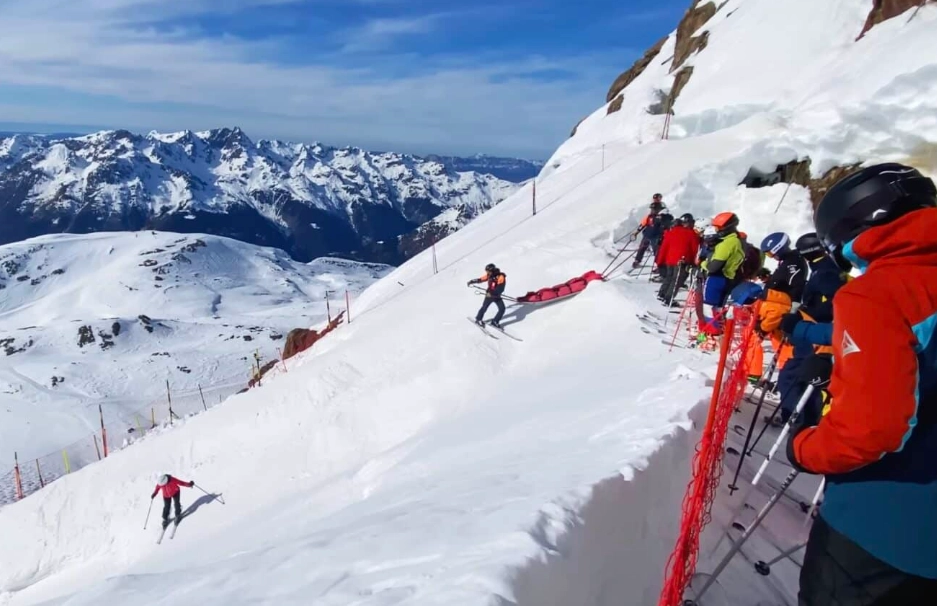
The Real Challenge: It's More Than Just Steep
Let's get into the weeds. Here's what you don't hear about until you're staring down the thing.
The Ice Factor
Harakiri or The Swiss Wall aren't hard because they're steep; they're hard because they're steep and they're often a sheet of blue ice by 11 AM. On hardpack, you can trust your edges. On true ice, your skis chatter, your edges want to slip, and every turn feels like a negotiation. Most skiers have never experienced real, alpine ice. It's a humbling sensation. The run's difficulty is directly tied to the time of day and recent weather—ski it first thing after a groom, and it's a different experience.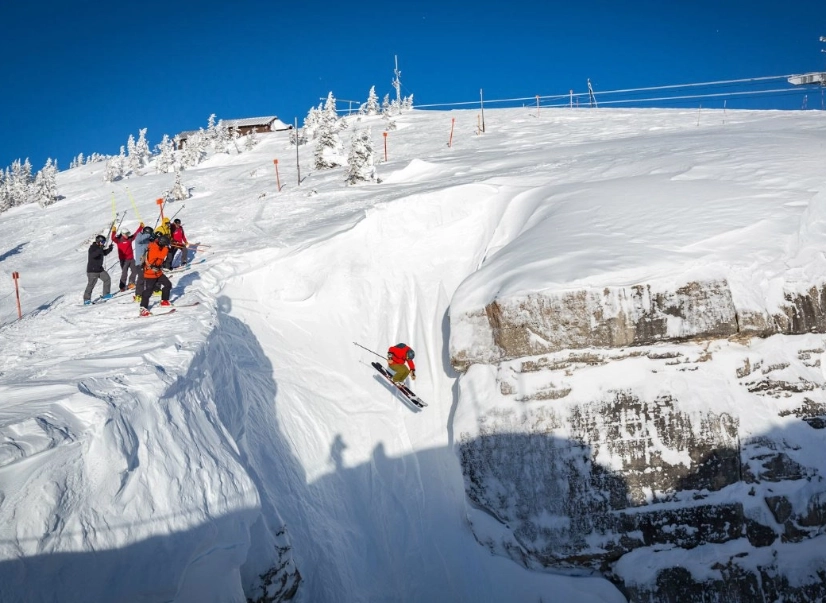
The Psychological Entry Fee
Corbet's is the poster child for this. You can stand there for an hour. The drop doesn't look that big from above, but the perspective is deceptive. The real challenge is making the decision to go. Once you're in the air, it's out of your hands. That moment of commitment, where a mistake means a hospital trip, is a purer form of difficulty than any groomed slope. It filters out more skiers than any technical requirement.
Speed as a Non-Negotiable
On The Streif, if you don't carry enough speed into the Mausefalle jump, you'll land flat on the knuckle, which can literally break your back. You can't just "take it easy." The course design forces you to ski at a near-professional pace to survive the terrain features. This absolute requirement for high speed transforms the challenge from technical skiing to a blend of technique, courage, and line choice under extreme pressure.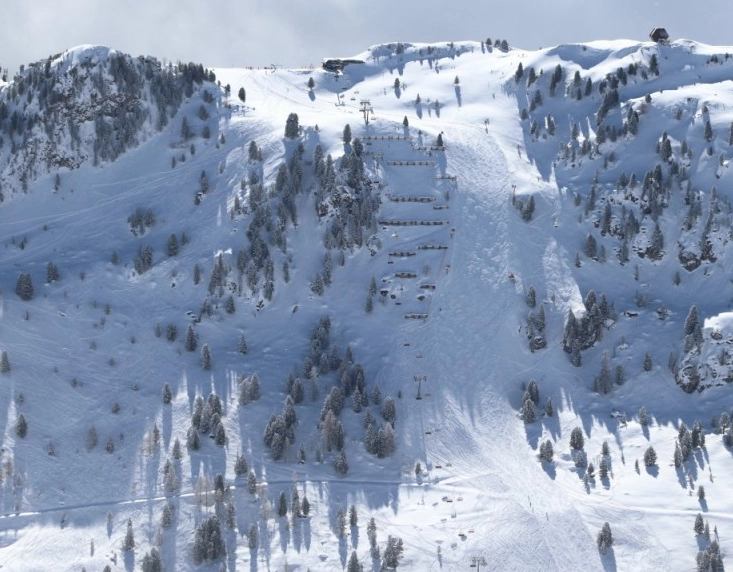
The Fitness Wall
On a run like the Sarenne, the first 10 minutes are fun. By minute 30, your quads are screaming. By minute 45, your technique is crumbling because your muscles are fried. The difficulty here is physical endurance. You need the fitness to maintain proper form for an absurdly long time, or you risk a fatigue-induced mistake on tricky terrain. It's a marathon, not a sprint.
How to Even Think About Attempting Runs Like These
If you're reading this and feeling a mix of dread and ambition, here's a reality check and a roadmap. This isn't a checklist for a weekend warrior.
1. Honestly Assess Your Skill Level. Can you confidently and consistently link short-radius parallel turns on a 35-degree icy black diamond? If not, you have no business on a 40+ degree run. There's no shame in it. These runs don't forgive intermediate technique.
2. Train Specifically. Leg blasters, wall sits, and cardio. You need iron quads and a strong core. On-snow, practice on the hardest runs at your local mountain until they feel easy. Seek out ice and bumps.
3. Gear is Non-Negotiable. Your edges must be razor-sharp and tuned for hard snow. Dull rentals are a death sentence. A stiff, high-performance ski is better than a forgiving one. Wear a helmet. Seriously.
4. Use a Guide for the Big Stuff. For couloirs, backcountry lines, or even just to find the best line on La Chavanette, hire a certified mountain guide. They know the snow conditions, the safe entry points, and can manage the objective risks. This is the single best investment you can make.
5. Pick Your Conditions. Do not attempt Harakiri at 2 PM on a sunny day. Aim for first tracks after grooming. For backcountry, wait for a stable snowpack and good visibility. Your ambition should wait for the mountain's permission.
6. Have an Exit Strategy. It's okay to sidestep down the first part of Corbet's. It's okay to take your skis off and down-climb a section if it feels wrong. Turning around is always an option. The mountain will be there another day; your knees might not be.
Your Burning Questions Answered
So, what is the hardest ski run in the world? It's the one that challenges your personal limits the most. It might be the icy, groomed precision of Harakiri, the committing air of Corbet's, or the endurance test of the Sarenne. The title is a myth, but the pursuit of the challenge is very real. Build your skills honestly, respect the mountain's power, and maybe one day, you'll have your own answer to the question—not from a list, but from experience.
Related Articles
Comments
Join the discussion