Quick Guide
- The Universal Language: The Green Circle, Blue Square, and Black Diamond System
- Beyond the Basics: Other Crucial Signs and Symbols
- Reading the Trail Map Like a Pro
- Regional Variations and "Ski Trail Markings Explained USA" Nuances
- Special Terrain and How It's Marked (or Not Marked)
- Your Action Plan: Putting It All Together on the Mountain
- Final Thoughts: It's About More Than Just a Label
Let's be honest, the first time you look at a trail map, it can feel like you're trying to decode some ancient hieroglyphics. Green circle? Blue square? What do these even mean? And don't get me started on those ominous black diamonds. If you've ever found yourself hesitating at the top of a run, squinting at a signpost, you're not alone. Understanding ski trail markings in the USA isn't just about picking a fun route—it's the absolute bedrock of safety and enjoyment on the hill.
I remember my first big mountain trip out west. I was feeling confident from my East Coast blues and thought, "How hard can a single black diamond be?" Let's just say it was a humbling, slightly terrifying experience that involved more side-slipping than actual skiing. That day taught me a hard lesson: the trail marking system is a language, and if you don't speak it, you're asking for trouble.
This guide is here to translate that language for you. We're going to break down the standard US system, but we'll also dig into the stuff the brochures don't always tell you—like why a blue square in Vermont can feel like a black diamond in Colorado, or what those weird orange triangles mean. Consider this your cheat sheet for navigating any resort in the country with way more confidence.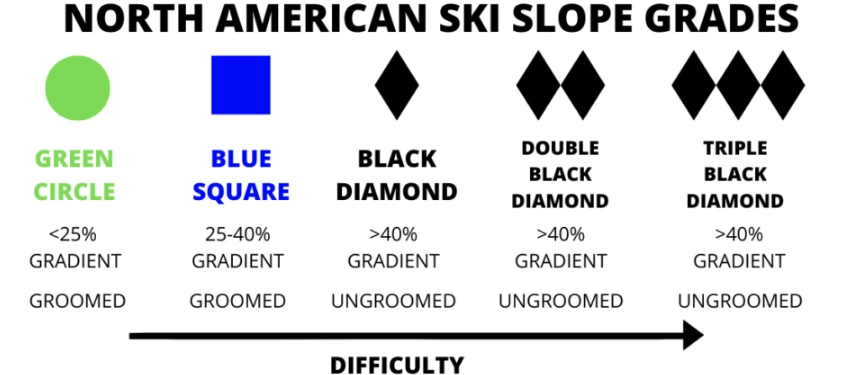
The Universal Language: The Green Circle, Blue Square, and Black Diamond System
This is the core of ski trail markings explained usa. Almost every single resort uses this color-coded system, established by the National Ski Areas Association (NSAA), to categorize terrain based on difficulty. It's meant to be intuitive, but the devil is in the details.
| Symbol & Color | Official Difficulty Name | What It Really Means for You | Typical Slope Gradient |
|---|---|---|---|
| ● Green Circle | Easiest | Wide, groomed, gentle slopes. Perfect for first-timers, kids, and cruising. The "learning zone." You'll mostly make wide, slow turns here. | Less than 25% grade (about 14 degrees or less) |
| ■ Blue Square | More Difficult | Intermediate territory. These are groomed but steeper and may be narrower. You need to be able to link parallel turns confidently and control your speed. The bread and butter for most recreational skiers. | 25% to 40% grade (about 14-22 degrees) |
| ◆ Black Diamond | Most Difficult | Steep, challenging terrain. May be groomed, but often left with moguls, trees, or other obstacles. Requires advanced skills, strong edge control, and the ability to handle variable conditions. | Over 40% grade (more than 22 degrees) |
| ◆◆ Double Black Diamond | Expert Only | Extremely steep, often with mandatory cliffs, tight trees, rock gardens, or exposed terrain. Almost never groomed. For experts only who can handle anything. Avalanche gear/awareness may be needed. | Very steep, often 50%+ (over 27 degrees). Pitch is just one factor here. |
The thing is, this table makes it seem so clean. Reality is messier. A blue square at a small Midwest hill is a fundamentally different beast than a blue square slicing down the side of a Rocky Mountain peak. The former might be a consistent, groomed slope, while the latter could have sections that make your heart skip a beat. This inconsistency is the biggest gripe I have with the system—it's not standardized from resort to resort, only within a single resort.
Key Takeaway: The colors tell you the relative difficulty within that specific ski area. A green at Aspen is easier than a blue at Aspen, but it might be steeper than a blue at your local hill. Always scope out the first run of a new difficulty level cautiously.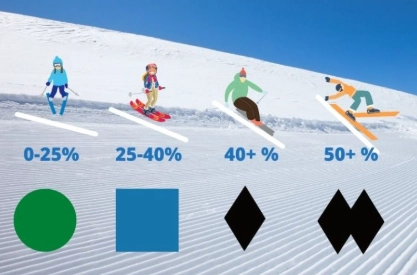
Beyond the Basics: Other Crucial Signs and Symbols
If you only know the green-blue-black code, you're missing half the picture. Trail signs are packed with other critical info.
Terrain Park Markings
This is a whole separate universe. Parks use their own color system to rate the size and difficulty of features (jumps, rails, boxes).
- Green Circle (Small): Small, low-risk features for beginners. Usually low boxes and tiny jumps.
- Blue Square (Medium): Medium-sized features. The most common size in most parks.
- Black Diamond (Large): Large jumps and complex rails for advanced riders.
- Double Black Diamond (Extra Large): The biggest features, often seen in professional-level parks.
A crucial sign here is the "Terrain Park Ahead" warning. If you're not a park skier, take this seriously. Cutting across a landing zone is incredibly dangerous.
Safety and Boundary Markings
These are non-negotiable. Ignoring them can get you seriously hurt, lost, or slapped with a huge rescue bill.
Orange Diamonds or Triangles: This is a Slow Skiing Zone. Usually found near lift bases, beginner areas, and trail merges. Patrol will stop you if you're going too fast. It's for everyone's safety.
Red Signs & "Trail Closed" Rope: This means exactly what it says. CLOSED. The trail is unsafe due to lack of snow, avalanche control work, racing events, or other hazards. Going under a rope is a surefire way to lose your lift ticket and endanger yourself and potential rescuers.
Yellow Signs with a Skier Symbol and "CAUTION": This points out a specific, constant hazard. It could be a sudden steep drop (a "cliff area"), a narrow trail section, a water bar crossing, or exposed rocks. Pay extra attention.
Boundary Markers (Often Red or Orange with Black Lettering): These mark the edge of the resort's patrolled and avalanche-controlled terrain. Going beyond them means you are in the backcountry. You need proper knowledge, equipment (beacon, probe, shovel), and partners. The ski patrol is not obligated to come find you here, and rescue costs are on you.
I once saw a group duck a boundary rope near Jackson Hole because they saw "fresh powder." They didn't have beacons, and one of them triggered a small slide. They got lucky and were okay, but it took hours for rescue to locate them. It was a stupid, selfish risk. The boundaries are there for a reason.
Other Common Symbols
- Black Dot or "EX" on a Trail Line: Usually indicates an expert-level route within a trail, like a chute or a cliff band.
- Snowcat or Groomer Symbol: Shows which trails are typically groomed nightly. A black diamond with this symbol might be groomed sometimes, making it more accessible.
- Gladed Area (Trees with spacing): Indicates tree skiing where the trees are spaced apart. Single tree symbol usually means dense, expert-only glades.
- Mogul Symbol (Bumps): Lets you know a trail is famous for or regularly develops moguls.
Reading the Trail Map Like a Pro
The trail map is your pre-game strategy tool. Don't just look at the colors.
First, find the legend. It explains every symbol used on that specific map. Resorts love to add custom icons for things like on-mountain restaurants, scenic lookouts, or beginner magic carpet areas.
Second, look at the contour lines. The closer the lines are together, the steeper the terrain. A wide blue square with tightly packed contours at the top tells you there's a steep headwall before it mellows out.
Third, note the lift access. Does that long, beautiful green run from the summit require you to take a black diamond to get back to the lift? It happens more often than you'd think. Plan your descent so you end up where you want to be.
Pro Tip: Use the resort's app if they have one. Live trail maps often show which lifts and trails are open/closed in real-time, and sometimes even show grooming status. It's a game-changer for planning your day.
Regional Variations and "Ski Trail Markings Explained USA" Nuances
Okay, here's the real talk part of ski trail markings explained usa. The system isn't perfectly uniform across the country. Here’s a rough, unofficial breakdown of what to expect:
The East (New England, Mid-Atlantic): Trails are often narrower, cut through trees, and can be icier. A black diamond here might be shorter but incredibly steep and technical. They tend to be more rigid with the ratings. Ice is a frequent factor that isn't marked on the sign.
The West (Rockies, Sierra Nevada, Cascades): Everything is bigger. Wider trails, more vertical, and generally better snow. However, this can create a false sense of security. A blue square out west can have sections that would be a single black back east. The scale is just shifted. Altitude is the hidden factor here—you get tired faster.
The Midwest: Ratings are often relative to the limited vertical. A black diamond might be very steep but over in 30 seconds. The focus is on making the most of the terrain they have.
Some resorts, particularly in Utah and Colorado, have even introduced unofficial designations. You might hear locals talk about a "blue-black"—a run that's clearly harder than a typical blue but not quite a full black diamond. It won't be on the map, but it's useful local knowledge.
Special Terrain and How It's Marked (or Not Marked)
Ungroomed, Bowls, and Glades
A black diamond that's groomed is a very different experience from one that's left natural. The map or sign won't always tell you. Bowls (large, open, treeless slopes above treeline) are often rated black or double black due to exposure, potential for avalanche terrain, and variable snow conditions. Glades (tree runs) will have a tree symbol. Pay close attention to the spacing shown—tightly packed trees are for experts only.
Terrain Parks & Pipes
As mentioned, they have their own system. Look for the park's dedicated map or entrance sign, which will detail the size and style of features. A halfpipe will be clearly marked.
Backcountry Access Gates
These are formal, signed points where you can leave the resort boundary to access sidecountry (often leads back to the resort) or full backcountry. They are NOT a trail rating. They are a transition point from a controlled to an uncontrolled environment. A sign here doesn't rate the difficulty of what's beyond; it just marks the legal exit. You are responsible for everything past that gate.
Your Action Plan: Putting It All Together on the Mountain
So how do you use all this info? Here's a step-by-step approach for a safe day.
- Start Easy: Even if you're an expert, warm up on a familiar-level run or an easier run than you usually ski. Get your legs under you and assess the day's snow conditions.
- Read the Sign, Then Look Up the Trail: Don't just trust the symbol. Stop at the top and visually inspect the first pitch. Is it groomed? Are there moguls? How crowded is it?
- Respect All Closures and Warnings: This is non-negotiable. Ropes, red signs, and slow zones exist for concrete reasons.
- Ask for Local Intel: Chat with a lift attendant or a ski patroller. "Hey, is Upper Paradise groomed today, or is it all bumped out?" This is the best way to get real-time info.
- Have an Exit Strategy: If you try a harder run and it's over your head, there's no shame in sideslipping down a section or even carefully taking off your skis to walk a short, safe stretch to an easier trail. It's safer than panicking and losing control.
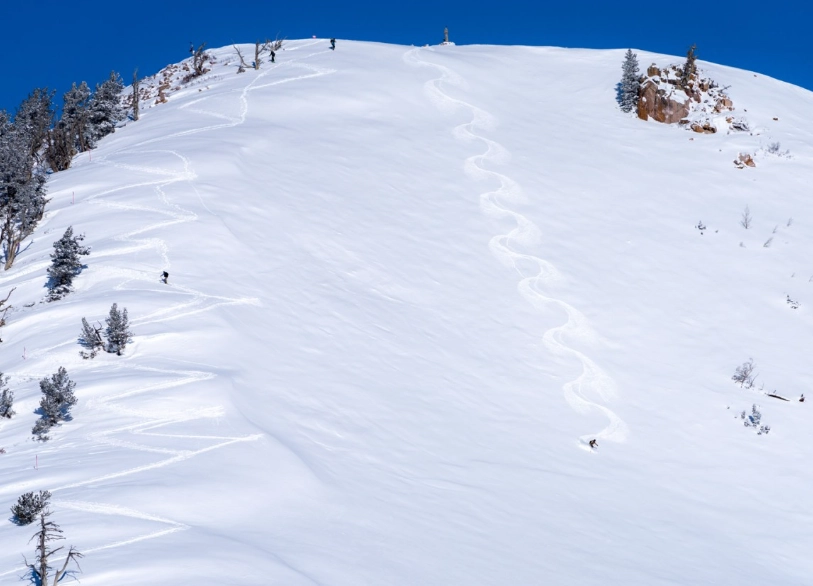
Common Questions About Ski Trail Markings in the USA
Final Thoughts: It's About More Than Just a Label
At the end of the day, understanding ski trail markings explained usa is about empowering yourself. It's about turning confusion into clarity and anxiety into anticipation. Those signs and symbols are a conversation between the mountain and you. They're saying, "Here's what to expect." Your job is to listen, assess your own ability honestly, and choose accordingly.
The mountain isn't going anywhere. There's no prize for skiing the hardest run on your first day. The prize is a fantastic, safe, memorable day where you challenge yourself appropriately and come back with a smile, ready for more.
So next time you're staring at that trail map or the sign at the top of a run, take a breath. You've got this. You speak the language now. Use it to find your perfect line, whatever that may be.
See you on the slopes.
Related Articles
Comments
Join the discussion