Quick Guide
Let's be honest. Standing at the top of a beginner slope, looking down, the idea of "turning" those long, slippery planks feels less like a sport and more like a physics problem you didn't sign up for. I remember my first time. I pointed my skis straight and just... went. It was thrilling for about three seconds, then pure panic set in. How do you stop? How do you not crash into that kid taking a break? The answer, of course, is learning how to turn.
And that's what this is all about. Forget the complex jargon you might hear from seasoned skiers. This guide is for the absolute first-timer. We're going to break down how to ski turns for beginners into the simplest, most digestible steps possible. It's not about carving perfect arcs on day one. It's about gaining control, building confidence, and actually starting to enjoy the process of moving down a mountain with intention.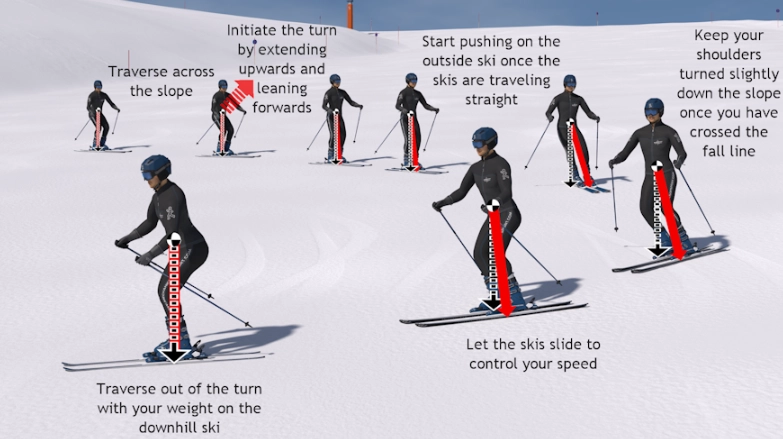
The magic starts with one technique: the snowplough turn. It's the foundation. Master this, and the whole mountain (well, the green runs at least) starts to open up.
Before You Even Think About Turning: Mindset & Gear
You can't build a house on sand, and you can't learn how to turn on skis with the wrong mindset or equipment. This part is boring but critical. Skipping it is like trying to bake a cake without preheating the oven.
Getting Your Head in the Game
Fear is the biggest brake for beginners. It makes you stiff, and stiffness is the enemy of skiing. Your goal isn't to be fearless—that's reckless. Your goal is to be in control. The snowplough turn is your first real tool for control. It's your brake and your steering wheel. When you feel that panic rising, remind yourself: "I have a technique for this." It shifts your focus from the obstacle to the action.
Another thing? Embrace looking silly. The snowplough stance (or "pizza slice") is not the picture of graceful athleticism. Who cares? Every expert skier on the mountain started right there. Do the silly stance well, and grace comes later.
Gear That Won't Fight You
Renting is the smart move for beginners. But you need to rent correctly.
Boots are everything. I can't stress this enough. A loose boot means your foot moves inside, and your control over the ski is delayed, mushy, and ineffective. It should feel snug—like a firm handshake all around your foot and ankle. You should be able to wiggle your toes, but your heel must not lift when you lean forward. Spend time in the rental shop. Try different pairs. It's the most important 15 minutes of your day.
Skis: For your first few days, you want short, soft, beginner skis. They are more forgiving and easier to pivot into a turn. The rental technician will size them for you. Just make sure the bindings are correctly set for your weight and ability—this is a safety must.
Poles? Honestly, forget about them for now. When you're first learning how to ski turns for beginners, poles are just something else to trip over or hold incorrectly. Your focus needs to be 100% on your feet and legs. Many ski schools don't give poles to first-day beginners for this exact reason.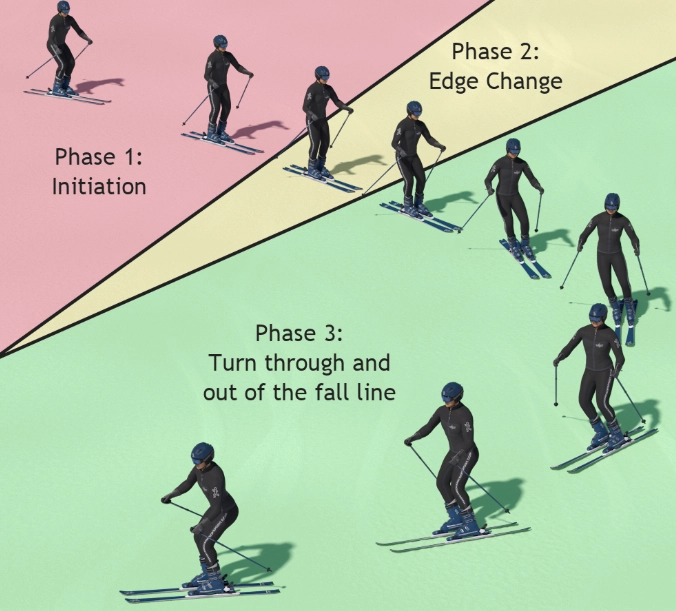
The Core Technique: The Snowplough Turn, Broken Down
This is it. The fundamental skill. The snowplough (or wedge) turn uses a simple principle: to turn left, you press more on your right ski. To turn right, press more on your left ski. Let's dissect it.
Step 1: Finding Your Stable Snowplough Stance
On a flat, gentle area, practice making a wedge. Push your heels out, bring your ski tips together. Your skis should form a "V" or a pizza slice. Your weight should be evenly distributed. Bend your ankles, knees, and hips. Don't bend at the waist! Imagine you're about to sit on a low stool. Your back should be straight, your hands forward and visible in your peripheral vision.
Feel that?
That's your home base. This stance alone creates drag and slows you down. From here, you steer.
Step 2: Initiating the Turn – It's in the Leg, Not the Torso
Here's the most common mistake: people try to turn their shoulders to make the skis turn. It's the opposite. You turn your skis, and your body follows.
To turn left from your snowplough:
- Keep your upper body facing mostly downhill (this feels weird at first).
- Gently apply more pressure to the inside edge of your right ski. Think about pressing your right knee slightly inward, towards the mountain.
- As you press, you'll feel the right ski start to grip and guide you to the left.
- Your left ski is just along for the ride, maintaining the wedge shape.
It's not a sharp, jerky movement. It's a smooth, increasing pressure. You're not trying to lift one ski off the snow.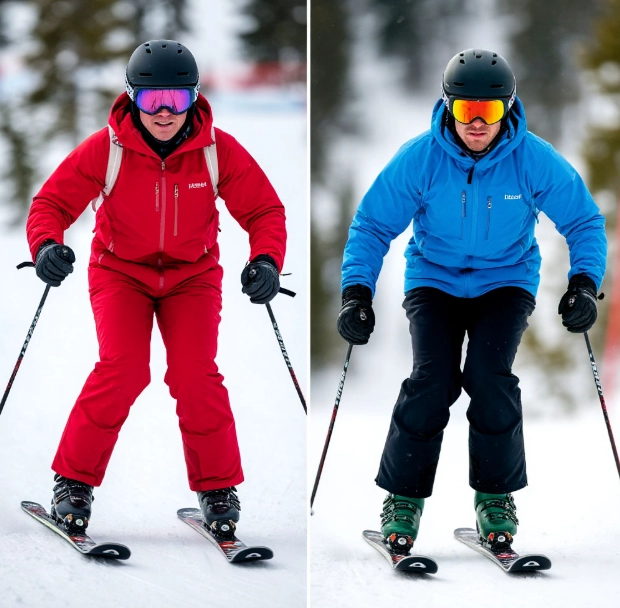
Step 3: Controlling the Turn and Linking to the Next One
As you complete the left turn and start facing across the hill, you'll naturally slow down. This is your moment to reset.
To start a right turn:
- First, recenter your weight. Bring the pressure back to equal on both skis for a moment.
- Then, shift pressure to the inside edge of your left ski (press that left knee inward).
- This will initiate the turn back to the right.
And just like that, you're linking turns. The rhythm is: pressure right (go left) -> center -> pressure left (go right) -> center. That "center" phase is crucial. It's your moment of control and preparation.
This entire process is the heart of how to ski turns for beginners. It's a dance of weight distribution.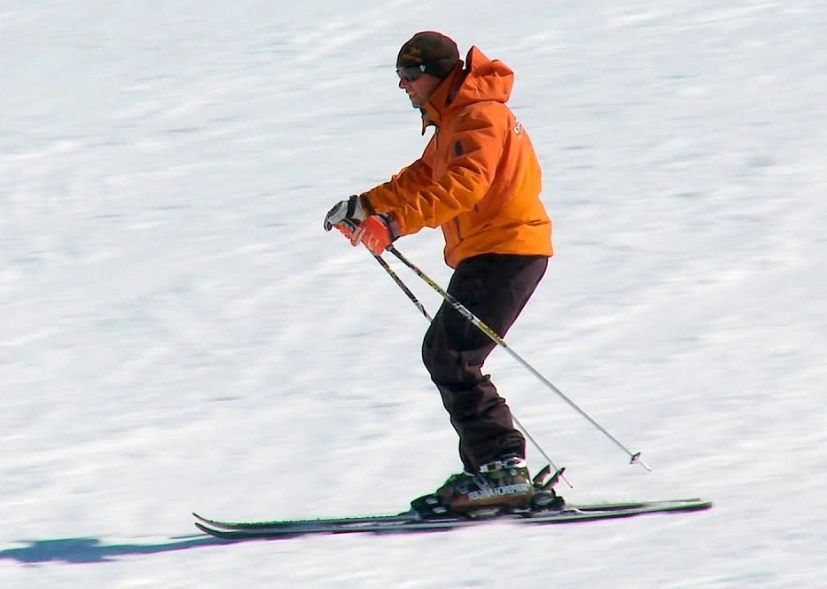
What's Going Wrong? Top Beginner Mistakes (And How to Fix Them)
We all make these errors. Recognizing them is half the battle.
| The Mistake | What It Looks/Feels Like | The Simple Fix |
|---|---|---|
| Leaning Back (The "Survival Lean") | Feeling out of control, skis speeding up, quads burning. Your weight is in the back seat of your boots. | Consciously push your shins into the front of your boots. Keep your hands forward and up. Imagine you're trying to keep your belly button over the front of your ski bindings. |
| Looking Down at Your Skis | You crash into things you didn't see. Turns feel unstable. | Look where you want to go, 20-30 feet ahead on the slope. Your body and skis will naturally follow your gaze. Trust your feet. |
| The "A-Frame" Wedge | One knee is bent in, the other is straight. The wedge is lopsided. | Focus on bending BOTH knees equally. Practice on a flat area making symmetrical pizza slices. It's about matching the movement in both legs. |
| Rotating Shoulders to Turn | Your upper body twists wildly, but your skis don't follow well. You get tired quickly. | Hold your hands out in front, wide apart like you're holding a steering wheel. Keep that "wheel" pointing downhill. Let your legs do the steering work underneath a stable upper body. |
| Not Committing to the Pressure | The turn starts but then fizzles; you don't complete the arc across the hill. | Be decisive with that knee-press motion. Commit to squashing that imaginary grape. A timid press gives a timid turn. |
Practice Drills That Actually Work (On and Off the Slopes)
Reading is one thing. Doing is another. Here are drills to build the muscle memory for beginner ski turns.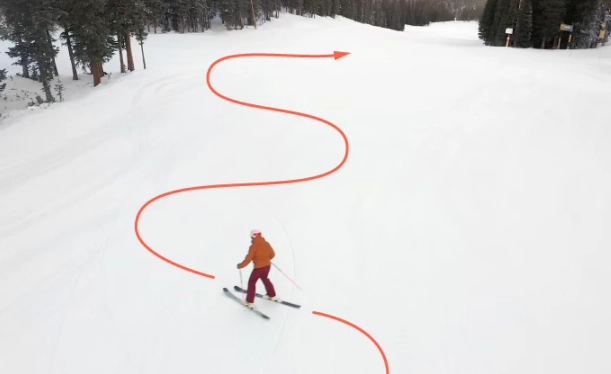
On a Very Gentle Slope (The Magic Carpet Area)
- The Falling Leaf: Traverse across the slope in a snowplough, then gently switch pressure to go the other way. Don't turn downhill; just go side-to-side. This isolates the weight-shift feeling without the fear of pointing downhill.
- Garlands: Make a small turn to the left, then straighten out. Make another small turn to the left, then straighten out. Do a series of "C" shapes going left. Then do the same going right. This breaks the full turn into bite-sized pieces.
- Pole Touch (if you have poles): Hold both poles together horizontally in front of you with both hands. Keep them pointed directly across the slope as you turn. If they start to rotate, you know your shoulders are turning too much.
Dryland/Home Practice (Seriously, it helps)
- Sock Slides on Hardwood: Put on socks and get in your athletic stance on a smooth floor. Practice sliding your heels out into a wedge and bending your knees. Feel the muscles.
- Balance on One Leg: While brushing your teeth, stand on one leg. This builds the ankle and leg stability you need for pressure control.
The goal of these drills isn't perfection. It's familiarity. When you get on snow, your body will have a vague memory of what to do, and that reduces the mental load.
When Should You Take a Lesson?
I'm a huge advocate for at least one group lesson when you're starting out. A certified instructor from a body like the Professional Ski Instructors of America (PSIA) can see and correct your mistakes in real-time—things you'd never feel or see yourself. They also teach in a progression that makes sense. You can read all the guides in the world (including this one!), but personalized feedback is invaluable.
It's also a massive confidence boost. Being in a group of people at the same level is reassuring. You'll learn that everyone struggles with the same things.
Is it possible to self-teach?
Technically, yes. But it's slower, more frustrating, and you risk ingraining bad habits that are hard to break later. Investing in a lesson is investing in faster progress and more fun. The International Ski Federation (FIS) Responsibility Code also emphasizes the importance of instruction for safety, which is something every skier should review.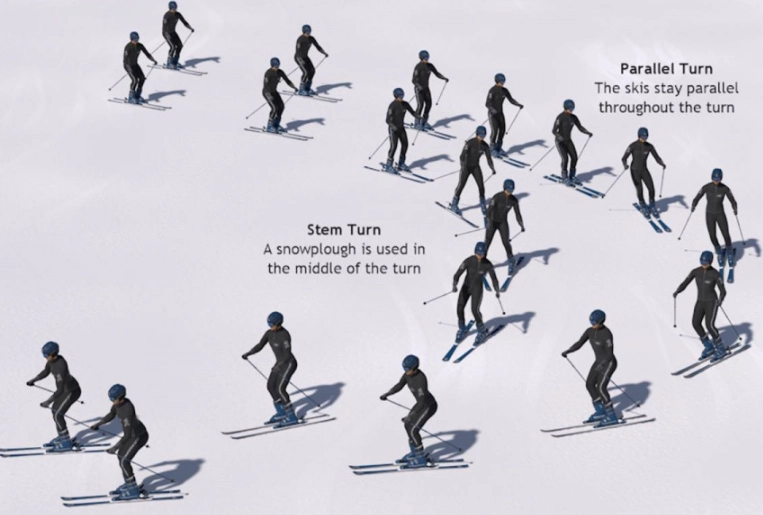
Your Beginner Ski Turn Questions, Answered
Learning how to ski turns for beginners is a journey. Some days it will click; other days you'll feel like you've forgotten everything. That's normal. The key is to break it down, focus on one element at a time (today, I'll work on my hand position; tomorrow, I'll focus on looking ahead), and celebrate the small victories.
That first time you successfully link three turns together and feel in control of your descent? There's nothing quite like it. It's the moment you stop being a passenger on your skis and start being the driver. Stick with it. The mountain is waiting.
Related Articles
Comments
Join the discussion