Quick Trail Markings Guide
You're standing at the top of a run, looking down at a sea of snow. To your left, a sign with a green circle. Straight ahead, a blue square. Off to the right, a menacing black diamond. If you've ever felt a flicker of uncertainty in that moment, you're not alone. Understanding the language of the slopes is the first step to a safe and fun day. So, let's get straight to it: how are ski trails marked in the United States?
It's not random. There's a whole system—a universal language, really—that ski areas use to communicate difficulty, hazards, and boundaries. This system is your most important tool for navigation and safety. Knowing it can mean the difference between a fantastic run and a terrifying ordeal. I remember my first time on a mountain out West, thinking a blue square out there felt more like a black diamond back East. That's when I realized the system has nuances. We'll get into that.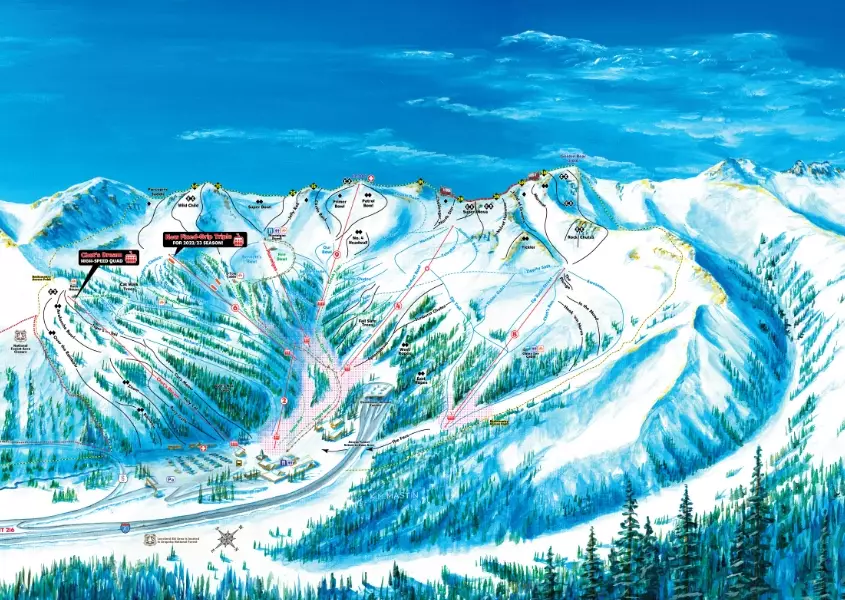
The Foundation: The Color-Coded Difficulty System
This is the heart of the matter. The system is designed to be intuitive, much like a traffic light. Green means go (if you're a beginner), red would be stop (but they use black), and blue is somewhere in the middle. The National Ski Areas Association (NSAA) provides guidelines for this system, which is why you'll see remarkable consistency from Maine to California.
But here's the thing—the guidelines are just that, guidelines. Individual resorts have the final say in how they rate their own terrain. This leads to the classic debate among skiers and riders about the "hardness" of a resort's ratings. A blue at a challenging mountain like Jackson Hole might feel like a black at a more family-oriented hill. It's subjective, and you have to use the system as a guide, not an absolute guarantee.
| Trail Symbol | Difficulty Level | Who It's For | What to Expect |
|---|---|---|---|
| ● Green Circle | Easiest | First-timers & beginners. Gentle slopes (usually less than 25% grade). Wide, groomed trails. | You'll be learning fundamental skills like turning and stopping. These are the "learning zones." |
| ■ Blue Square | Intermediate | Comfortable beginners & intermediate skiers. Moderate pitch (25%-40% grade). | Mostly groomed, but may have some steeper sections or bumps. This is where you build confidence and speed. |
| ◆ Black Diamond | Advanced | Expert skiers with strong technique. Steep slopes (40%+ grade). | May be groomed or left with moguls (bumps). Can have narrow passages, trees, or other obstacles. |
| ◆◆ Double Black Diamond | Expert | Highly skilled experts only. Very steep, often extreme terrain. | Likely ungroomed, with cliffs, tight trees, rock bands, and complex features. High consequence for error. |
You'll sometimes see a Triple Black Diamond, but this is rare and not officially part of the NSAA system. Resorts use it to denote their absolute most extreme, often unpatrolled or "pro-level" terrain. It's more of a marketing or warning label than a standard rating.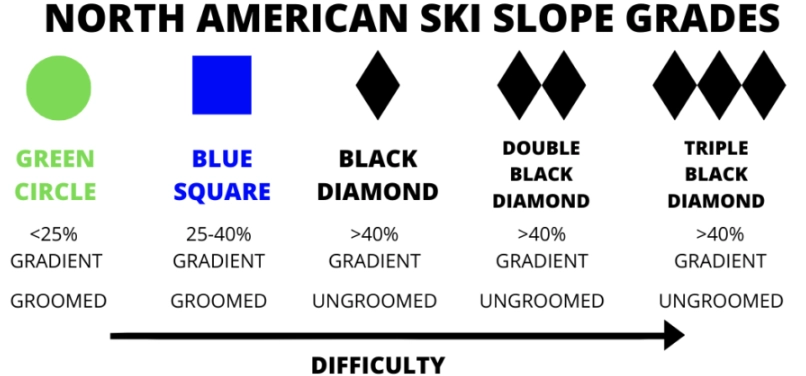
Beyond Color: Shapes, Symbols, and Special Markings
If colors were the only answer to how ski trails are marked in the United States, things would be simple. But the mountain needs to communicate more. That's where shapes and additional symbols come in. You'll see these on trail maps and often on signs at the top of runs.
Terrain Park Specific Markings
This is a world of its own. Since features like jumps, rails, and boxes don't fit the standard slope gradient model, terrain parks use their own color system, typically mirrored from the standard one but applied to man-made features.
- Small Features (Green Circle): Small jumps, low boxes, and mellow rails. Perfect for learning park basics.
- Medium Features (Blue Square): Medium-sized jumps (20-40 ft), longer rails, and more complex boxes.
- Large Features (Black Diamond): Large jumps (40+ ft), high rails, and advanced technical setups. For experienced park riders only.
- Extra Large Features (Double Black Diamond): The biggest jumps and most technical rails on the mountain. Professional-level.
Parks also use specific signs like "Slow Zone" for approach areas and "Freestyle Terrain" warning signs, which you must read. The Terrain Park Council advocates for standardized safety and signage in parks, which is a great resource for understanding best practices.
Other Critical Signs and Symbols
These are the signs that keep you safe and on the right path. Ignoring them is a bad idea.
You'll also see:
- Boundary Markers: Often orange or red plastic diamonds or nets. Going beyond these marks means you're leaving the resort's patrolled and avalanche-controlled area. This is backcountry territory, and you need the proper gear, knowledge, and partners.
- Slow Skiing Area: Usually near lift bases, lodges, and beginner zones. These are enforced for everyone's safety.
- Merging Trails: Yield signs! The skier downhill of you has the right of way. It's your responsibility to avoid them.
- Caution Signs: For cliffs, unmarked obstacles, thin cover, or sudden drops. Heed them.
How to Use This System: A Skier's Guide to Navigation
Knowing the symbols is one thing. Using them effectively is another. Here’s how I approach a new mountain.
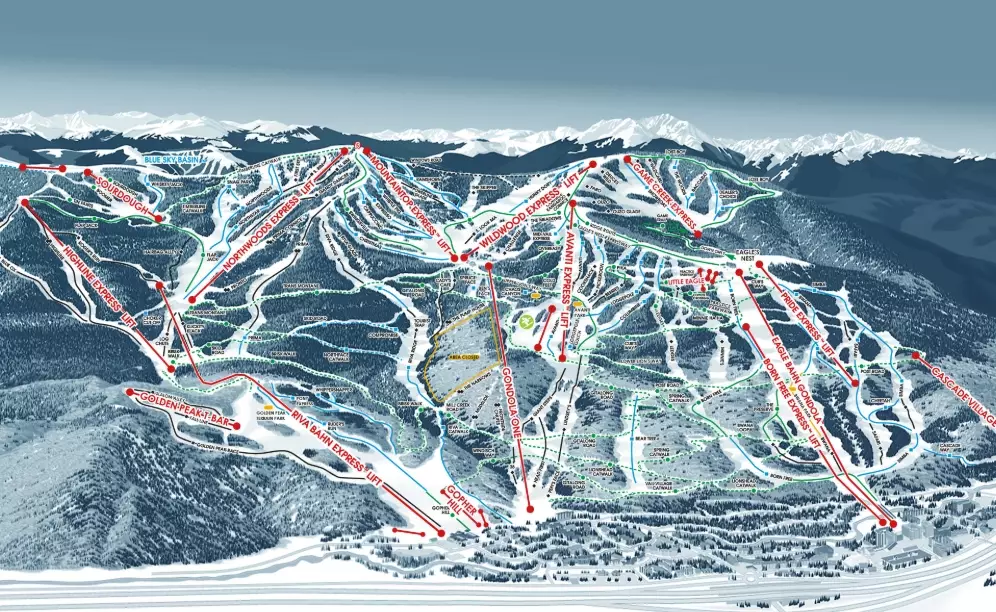
First, I always grab a trail map. Not just the one on my phone—a paper one. They're free at the lodge. I look for the legend first. Then, I identify a "home run"—a comfortable blue or green that I can use to get from the top to the bottom if I get turned around. I trace it on the map.
Second, I trust the signs, but verify with my eyes. Before committing to a run, I'll look down it from a safe spot. Does that blue square look steeper than I expected? Are there unexpected moguls? The marking tells you the intent, but conditions change everything. An icy green circle can be tricky for a true first-timer.
Third, I pay attention to the "Easiest Way Down" signs. Most mountains mark a specific route (usually a combination of green and easy blue trails) from the summit back to the base area. If the weather rolls in, you're tired, or a run feels too hard, finding this route is your safety net.
Understanding how ski trails are marked in the United States is fundamentally about risk management. You're using the information provided by the resort to make informed decisions about where to put your skis or board. It's a dialogue between you and the mountain.
Common Questions About Ski Trail Markings
Mostly, yes. But accuracy depends on conditions. A run rated blue might be groomed smooth one day and a bumpy mess the next after a thaw-freeze cycle. The rating doesn't change, but the experience does. Resorts can't change signs daily. This is why the National Ski Areas Association emphasizes that the ratings are a general guide. Your own assessment of conditions is crucial.
If you genuinely believe a trail is grossly mis-marked (e.g., a clear black diamond is signed as a blue square), you can politely mention it to ski patrol at the bottom. They might reassess it. But more often than not, the discrepancy is due to conditions or personal skill level.
Make it a game! On the lift, have them spot the signs and shout out the colors. Use the trail map like a treasure map. "We need to take two green circles and one blue square to get to the hot chocolate lodge!" Reinforce that green and blue are their "home zones" until they feel super confident. The goal is to build their awareness and decision-making skills.
The core color/shape system is nearly universal. However, as mentioned, the "firmness" of the ratings varies. A Midwest hill might have very few true black diamonds by Western standards. Resorts also have their own quirks. Some use a single black diamond for advanced and double for expert, while others might have a wider range. Always check the specific resort's trail map legend.
That's a different ballgame. Cross-country or Nordic trails often use a similar color system (green/easiest, blue/more difficult, black/most difficult), but they are rating the terrain's challenge for Nordic skiing, which is very different from downhill. They also use symbols to denote the trail's grooming style (e.g., classic track set, skate lane). For official information on trail use in National Forests, which host many Nordic areas, the USDA Forest Service website is an authoritative source.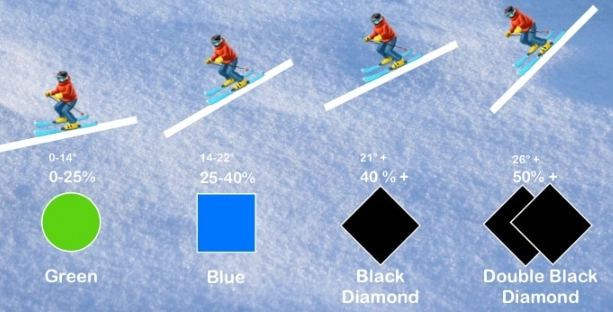
At the end of the day, the system for how ski trails are marked in the United States is a tool for empowerment, not intimidation. It's there to help you find the terrain that matches your mood and ability, to warn you of real dangers, and to keep the mountain organized for thousands of people. Read the signs, trust your gut, and when in doubt, take the easier route. The mountain will still be there tomorrow for another try. The most important skill isn't the perfect parallel turn—it's the ability to make a smart, safe choice about where to make that turn. Now you have the map to do just that.
Related Articles
Comments
Join the discussion