Your Skiing Journey at a Glance
- The Intermediate Mindset: You're Re-Learning, Not Just Learning
- The Core Techniques You *Think* You Know (But Probably Don't)
- Breaking Down the Turn: From Wedge to Parallel
- Drills That Actually Work (No Gimmicks)
- Tackling Specific Terrain: Applying Your New Skills
- Frequently Asked Questions (The Stuff You're Secretly Googling)
- Putting It All Together: Your Progression Checklist
Let's be honest. That "intermediate" label can feel like a trap. You're past the pizza slices and the herringbone walks up the bunny hill. You can link your turns down a blue run without (too much) panic. But then you hit a wall. Steeper stuff feels sketchy, ice sends a jolt of fear right through you, and watching those smooth, effortless skiers carve past just highlights the gap. You're not a beginner anymore, but the advanced zone feels miles away. What gives?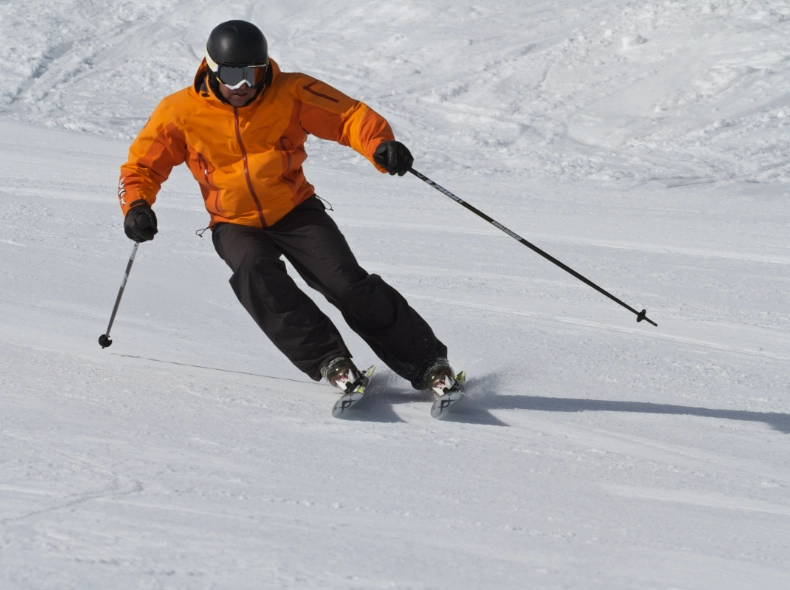
I was stuck there for what felt like an eternity. I'd go on ski trips, have fun, but never really progress. The problem, I eventually learned, wasn't that I needed fancier tricks. It was that I'd glossed over some fundamental beginner skiing techniques for intermediates actually need to master. We rush past them, thinking they're for newbies. They're not. They're the bedrock.
This isn't about throwing your weight around and hoping for the best. It's about refining the basics with an intermediate's understanding. We're going to dig into the mechanics you probably half-know, identify the common pitfalls that keep you plateaued, and lay out clear, doable drills. The goal? To build a foundation of control so solid that tackling harder terrain becomes a matter of choice, not a white-knuckle gamble.
The Intermediate Mindset: You're Re-Learning, Not Just Learning
The first shift has to happen in your head. As a beginner, success is just getting down the hill. As an intermediate, success is how you get down the hill. You need to become a student of your own skiing. This means sometimes going back to green runs to drill a specific skill without the pressure of speed or pitch. It feels counterintuitive, but it's the fastest way forward.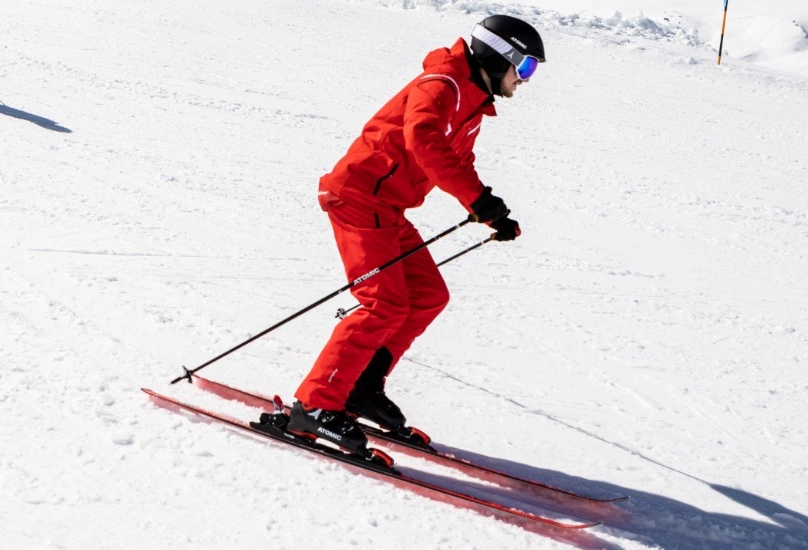
I used to think drilling on easy slopes was a waste of a lift ticket. I was wrong. Trying to fix a shaky stem christie on a steep, bumped-up blue run is like trying to rebuild your car's engine while driving down the highway. It's frustrating and dangerous. Find a gentle, wide slope where you can make mistakes safely. That's your practice gym.
The Core Techniques You *Think* You Know (But Probably Don't)
Here’s where we get into the meat of it. These are the foundational beginner skiing techniques for intermediates that deserve a second, deeper look. Mastering these will change everything.
Weight Transfer and Stance: It's Not About Leaning
"Lean forward!" is the most shouted and least helpful instruction in skiing. What you're really after is a neutral, athletic stance that allows you to pressure the front of your ski to initiate a turn and the middle/to back to finish it. Think of it like a ready position in basketball or tennis: ankles, knees, and hips softly flexed, shins touching the front of your boots, hands forward and visible, weight centered over the middle of your feet.
The magic happens in the transfer. To start a turn to the left, you don't just throw your body left. You gently increase the pressure on your right (outside) ski, allowing your left (inside) ski to lighten and almost float. Your body follows the pressure. This is the essence of steering with your feet, not your shoulders.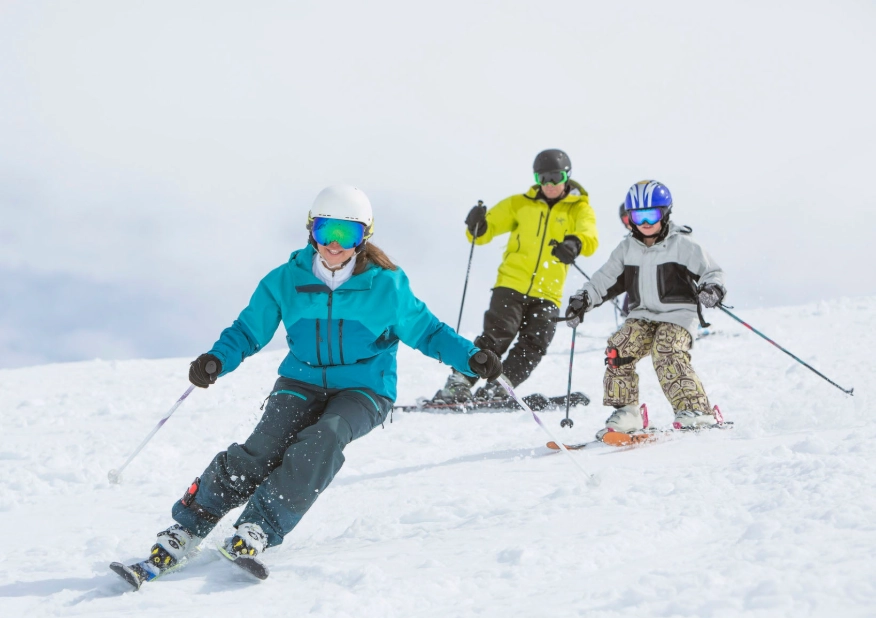
Edging: The Difference Between Sliding and Carving
Beginners skid. Intermediates often skid more than they think. Advanced skiers carve. The difference is in the edges. A pure carve leaves two pencil-thin lines in the snow. A skid leaves a washed-out fan shape.
To engage your edges, you need to roll your ankles and knees into the hill. For a right turn, roll your left ankle and knee inward. This angles the ski on its edge. The higher the edge angle, the tighter and more powerful the turn. But here's the kicker—you can't get high edge angles with a stiff, upright body. You need to incline your whole body into the turn while keeping your mass over the outside ski. It's a subtle tilt, not a dramatic lean.
Pole Planting: It's a Timing Device, Not a Support Stick
Most intermediates either ignore their poles or use them for balance like trekking poles. Wrong. A proper pole plant is a light, rhythmic tap that coordinates your turn initiation. As you finish one turn, your pole tip gently touches the snow near the tip of your outside ski. This marks the moment you begin to shift your weight to start the next turn. It's a metronome for your rhythm.
It feels trivial, but a consistent pole plant forces your upper body to stay facing downhill (good!) and prevents your arms from windmilling around (very bad!). Don't swing your whole arm. Just a flick of the wrist.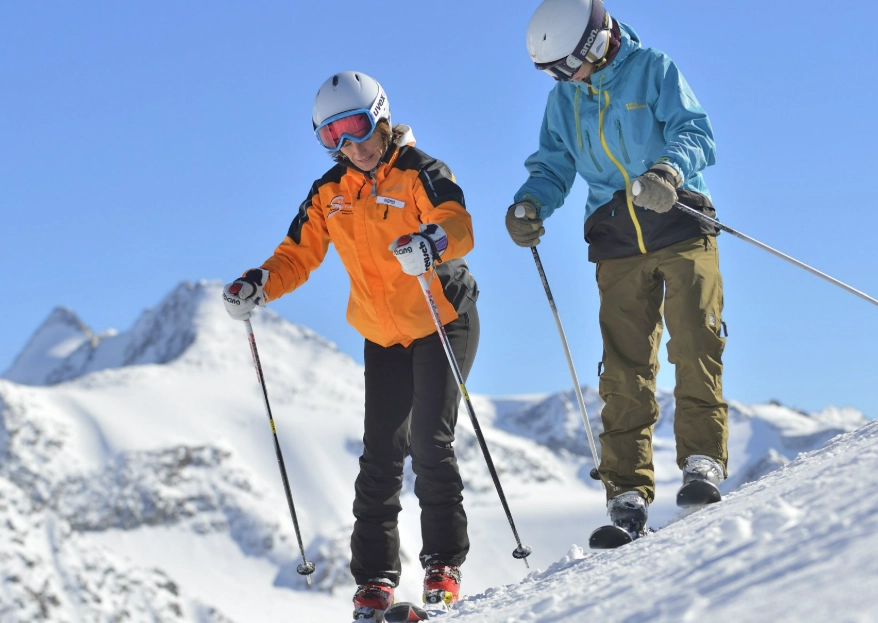
Breaking Down the Turn: From Wedge to Parallel
Many intermediates are in a messy transition between a wedge (snowplough) turn and a true parallel turn. The goal is clean, parallel turns where both skis move and edge together. Let's compare the stages.
| Turn Phase | Wedge Turn (What you're leaving) | Parallel Turn (What you're aiming for) |
|---|---|---|
| Initiation | Push out the tail of the inside ski to form a wedge, creating braking force. | Roll ankles/knees and pressure the outside ski. The inside ski lightens and matches the angle of the outside ski. |
| Control Phase | Steer both skis separately, often with the inside ski lagging or skidding. | Both skis are on matching edges, working together. Control comes from edge angle and pressure, not a braking wedge. |
| Finish & Transition | Often ends with a harsh skid to slow down. Transition to the next turn is clunky. | Turn finishes with continued pressure, releasing edges smoothly. Pole plant marks the transition, which is fluid and continuous. |
| Feeling | Struggling against the mountain, defensive, slow. | Working with the mountain, fluid, efficient, controlled speed. |
The bridge between these two worlds is often called a stem christie. You start the turn with a tiny, quick stem (a small wedge) of the inside ski to set the edge, then quickly bring the skis parallel to finish. It's a useful stepping stone, but don't get stuck there. The ultimate goal is to eliminate that initial stem entirely.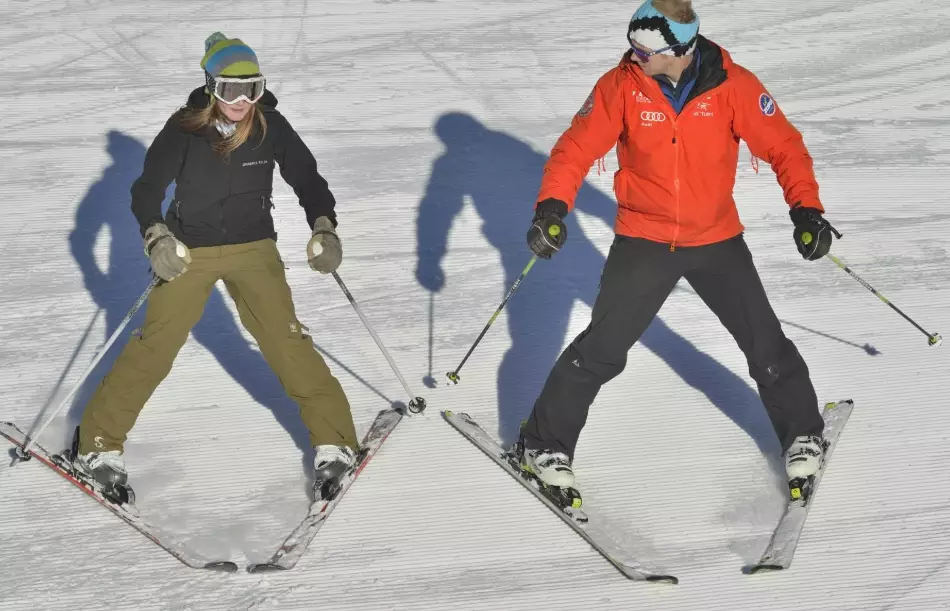
Drills That Actually Work (No Gimmicks)
Reading is one thing. Doing is another. Here are drills I've found brutally effective for cementing those beginner skiing techniques for intermediates. Do these on a gentle slope until they feel easy.
J-Turns
Traverse across a slope. Slowly roll your knees into the hill to engage your edges and make a single, large turn that finishes pointing directly downhill (forming a "J" shape). Hold that position, skis across the hill, balanced on your edges. Feel the control? This isolates the edge engagement and balance you need at the end of every turn.
One-Ski Skiing
As I mentioned earlier, this is a game-changer. On a very easy slope, simply lift your inside ski off the snow for the entire turn. You will be forced to balance perfectly on your outside ski. Switch skis every other turn. This builds insane confidence in your outside ski dominance.
Pole Drag
Hold both poles horizontally in front of you, gripping them at the ends (baskets will be pointing outwards). Keep them level and pointed directly across the fall line as you make turns. If your upper body rotates or your arms swing, the poles will wobble wildly. This is a fantastic visual cue to keep your upper body quiet and facing downhill.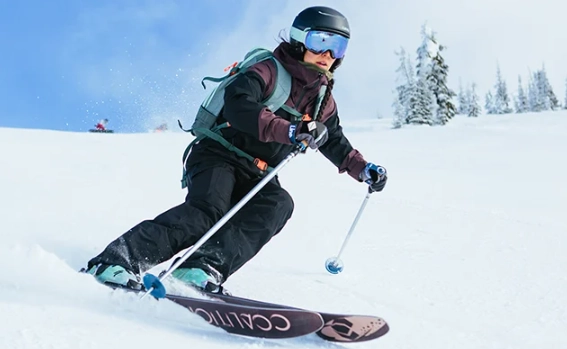
Tackling Specific Terrain: Applying Your New Skills
Once the drills start to click on the greens, take these refined techniques to the terrain that scares you.
Steeps
The fear on steeps makes you lean back—the absolute worst thing you can do. You lose all steering control. You must commit to driving your shins into the front of your boots. Make shorter, quicker turns to control speed. Look for the next turn, not at the abyss below your tips. Trust that your edges will hold if you pressure them correctly.
Moguls
Moguls are all about absorption and quick, precise turns. Don't try to carve through them. Use a solid pole plant at the top of each bump to mark your turn. Suck your feet up beneath you as you go over the top (absorb), then extend your legs down the backside to start the next turn. It's a rhythmic up-and-down motion. Start on a line of small, spaced-out moguls.
Ice & Hardpack
This is where precise edging pays off. You need higher, more aggressive edge angles and steady, patient pressure. No sudden, jerky movements. Let your sharp edges do the work. Honestly, I still don't love ice, but understanding that it's a matter of finesse, not force, makes it less terrifying.
Frequently Asked Questions (The Stuff You're Secretly Googling)
Putting It All Together: Your Progression Checklist
Don't try to fix everything at once. Work on one element per run, or even per day.
- Day 1 Focus: Stance & Weight Transfer. Drill: One-ski skiing on a green run.
- Day 2 Focus: Edging & Carving. Drill: J-turns, listening for the quiet carve.
- Day 3 Focus: Rhythm & Pole Timing. Drill: Pole drag to quiet the upper body.
- Day 4 Focus: Application. Take your smoothest skill to an easy blue and focus on continuity.
The path from intermediate to advanced isn't about learning crazy new tricks. It's about deepening your mastery of the fundamental beginner skiing techniques for intermediates so often neglected. It's a journey of refinement, not revolution. Be patient with yourself. Some days it will click; other days you'll feel like you've gone backwards. That's normal.
The mountain is the best teacher, but only if you're listening. Listen through your feet, your edges, and the sound your skis make. Stop chasing difficulty and start chasing quality. Master the fundamentals on easy terrain, and the difficult terrain will, almost magically, become accessible. Now go get those turns.
Related Articles
Comments
Join the discussion