Quick Guide
I remember my first time holding a ski trail map. I was at a big resort out west, the paper was crinkly from the cold, and I stared at this colorful spiderweb of lines and shapes feeling completely lost. Green circles, blue squares, black diamonds... it looked like a secret code. My friend, who'd been skiing since he was a kid, glanced at it for two seconds and said, "Cool, let's take this lift and then head down that blue run." How did he do that? I just nodded, pretending I understood, and spent the first half of the day nervously following him, hoping I wouldn't end up on a cliff.
If that sounds familiar, you're in the right place. Learning how to read ski trail maps is the single most useful skill you can pick up before hitting the slopes. It's not about memorizing symbols—it's about unlocking the mountain's plan. It's the difference between an anxious, unpredictable day and a fantastic, controlled adventure where you're in charge.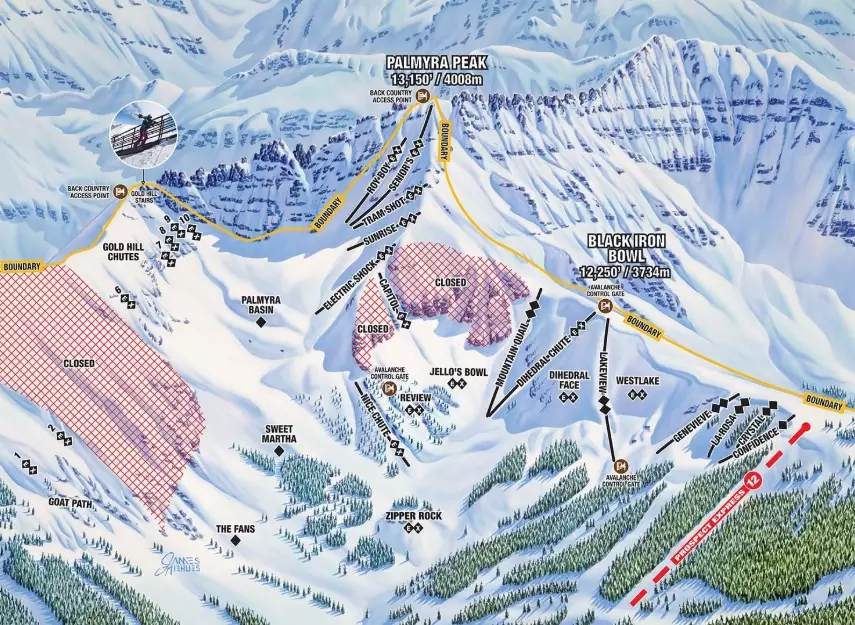
This isn't just about colors. It's about safety, planning, and getting the most out of your expensive lift ticket. A map tells you where the easy cruising runs are, where the steep chutes hide, where to find a quiet lunch spot away from the crowds, and crucially, how to get back to your starting point without needing a rescue sled.
Think of the trail map as the mountain's user manual. You wouldn't assemble furniture without the instructions, so why tackle a mountain without understanding the map?
Why Bother Learning How to Read Ski Trail Maps?
You might think you can just follow signs or the crowd. Bad idea. Signs can be missed, especially in flat light or snow. Crowds can lead you somewhere you're not ready for. The map is your independent source of truth.
Knowing how to read ski trail maps empowers you. It lets you plan a route that matches your energy and skill level. Want a long, gentle warm-up? The map shows you which lifts access long green runs. Feeling confident and want a challenge? The map points you to the advanced terrain pods. It helps you locate on-mountain amenities—where's the mid-mountain lodge with the good chili? Which lift has the shortest line at 11 AM? The answers are all there.
Most importantly, it's a safety tool. It shows you the boundaries of the ski area. Venturing beyond those boundaries, into the backcountry, requires different gear, knowledge, and often a guide. The map makes the controlled, in-bounds area crystal clear. It also shows you slow zones, merging trails, and potential congestion points.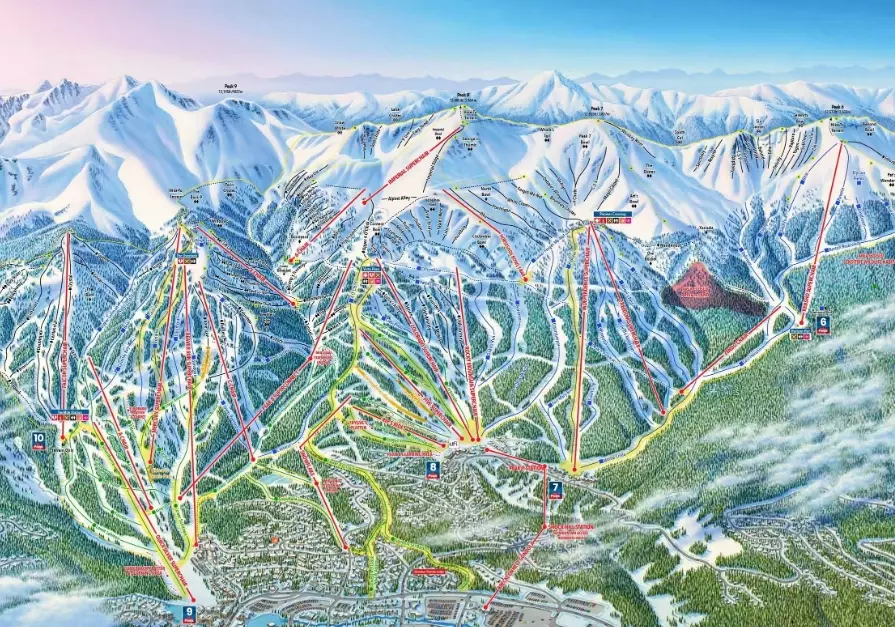
The Universal Language: Colors and Shapes
This is the core vocabulary. Across North America and most of the world, ski resorts use a standardized color and shape system to denote difficulty. It's not a suggestion; it's a critical warning and guide system.
| Symbol & Color | Difficulty Level | What It Really Means for You | Typical Gradient |
|---|---|---|---|
| ● Green Circle | Beginner / Easy | Wide, groomed, gentle slopes. Perfect for first-timers and cruising. The "family highway" of the mountain. | Less than 25% (Less than 14 degrees) |
| ■ Blue Square | Intermediate | The most common run type. Groomed but steeper, may have some rolling terrain or narrower sections. Where most recreational skiers spend their day. | 25% - 40% (14-22 degrees) |
| ◆ Black Diamond | Advanced | Steep, may be ungroomed (moguls, trees, off-piste). Requires confident turning and speed control. Can vary widely in difficulty. | Over 40% (Over 22 degrees) |
| ◆◆ Double Black Diamond | Expert Only | Extremely steep, often involving narrow chutes, mandatory drops, exposed rocks, or dense trees. For experts with specialized skills. Do not attempt unless you are certain. | Often 45%+ (Over 24 degrees) |
Here's the thing they don't always tell you: a black diamond at a small, icy East Coast hill can feel very different from a black diamond at a massive Rocky Mountain resort. The rating is relative to that specific mountain. A blue square at Jackson Hole might feel like a black diamond somewhere else. This is why the map is just your starting point—always scope out the actual run from the top or ask a patroller if you're unsure.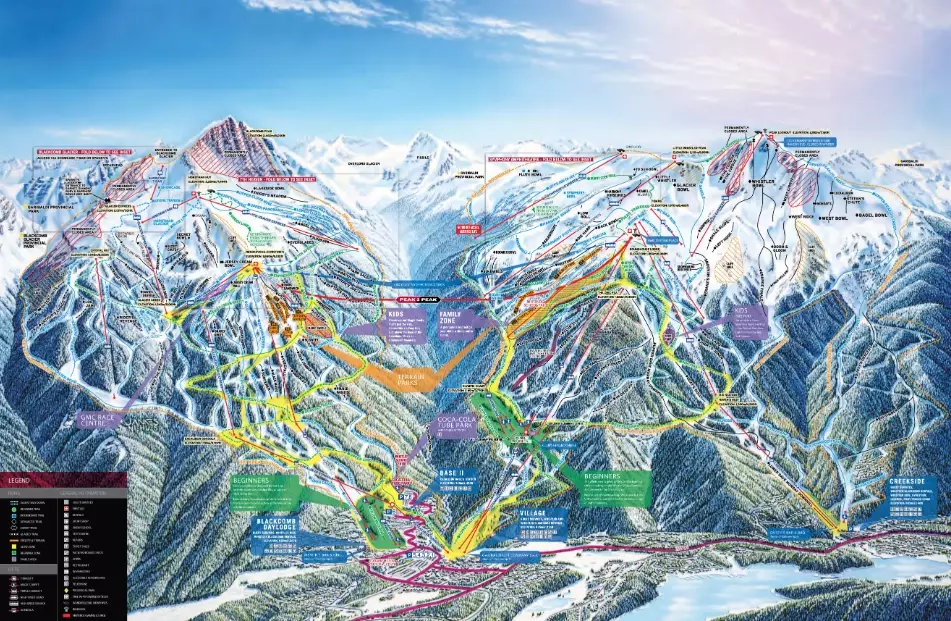
Beyond the Basics: Decoding the Other Symbols
Once you know the colors, the other symbols start making sense. This is where learning how to read ski trail maps gets detailed.
Lift Lines: Usually straight or gently curved dashed or dotted lines. They often have the lift name and type (e.g., "High-Speed 6-Pack," "Fixed-Grip Double," "Surface Tow"). A gondola or tram might be shown as a small rectangle moving along the line.
Boundary Lines: This is a big one. The resort's operational boundary is typically marked with a bold, dashed line, often accompanied by symbols like crossed skis or a skull-and-crossbones. Going past this line means leaving patrolled, avalanche-controlled, and rescue-guaranteed terrain. It's a serious decision requiring avalanche gear and training.
Slow Zones: Marked by a yellow, triangular "slow" sign symbol on the map. These are usually in high-traffic areas, near lift bases, or on catwalk traverses. Patrol takes speed here very seriously.
Other Key Symbols:
- First Aid / Patrol: A red cross. Know where these are.
- Restrooms: Usually a standard male/female symbol or "WC." Useful for planning lunch stops.
- Dining: A knife and fork symbol. Useful for planning lunch stops.
- Snowmaking: Often shown as small snowflake clusters along a trail. Good to know if you're looking for guaranteed man-made snow cover.
- Terrain Parks: Often a rectangle with a stylized "jump" icon or the word "PARK." They'll have their own difficulty ratings for features (small, medium, large).
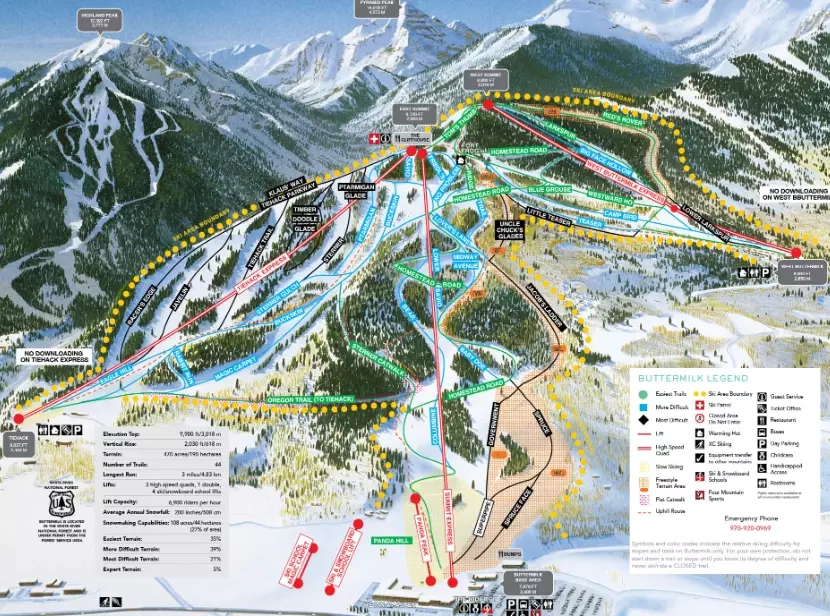
Putting It All Together: A Step-by-Step Map Reading Strategy
Okay, you know the symbols. Now, how do you actually use the map to plan your day? Here's my personal method, honed over many seasons and a few wrong turns.
Step 1: Orient Yourself. Find "YOU ARE HERE." Usually a star or a big dot. Identify the base lodge you're at. Look at the mountain's general shape. Where are the peaks? Which direction faces north (often indicated by a compass rose)? This gives you a mental frame.
Step 2: Identify Your Escape Route. Seriously. Before you dream of epic runs, figure out how you get back. Trace the easiest possible path (green circles and catwalks) from various points on the mountain back to your base. Mountains can be disorienting, especially later in the day when you're tired.
Step 3: Plan Your Progression. Start with the beginner area, even if you're intermediate, to warm up. Look for a network of lifts and runs that allow you to gradually increase difficulty. A good map will show clusters of runs of similar difficulty served by one lift. Find your comfort zone lift.
Step 4: Look for Traffic Patterns. Most people go straight up the main lift from the base. Look for secondary lifts that might have shorter lines. See if you can take a longer, scenic lift to access less crowded terrain. The map shows lift connections—you can often take two less-popular lifts to get to the same peak as one crowded one.
Step 5: Mark the Amenities. Circle the lodges you might want to stop at. Note where the restrooms are (sometimes only at lodges). This prevents desperate searches later.
A good plan on paper leads to a great day on snow. Ten minutes of map study can save an hour of traversing or standing in the wrong line.
Reading the Terrain Between the Lines
A topographical map this is not, but trail maps give hints about the shape of the land. Lines drawn close together on a trail indicate a steeper pitch. Widely spaced lines mean flatter. A trail that winds like a snake is probably following a gentler fall line, while one that goes straight down the fall line is steeper.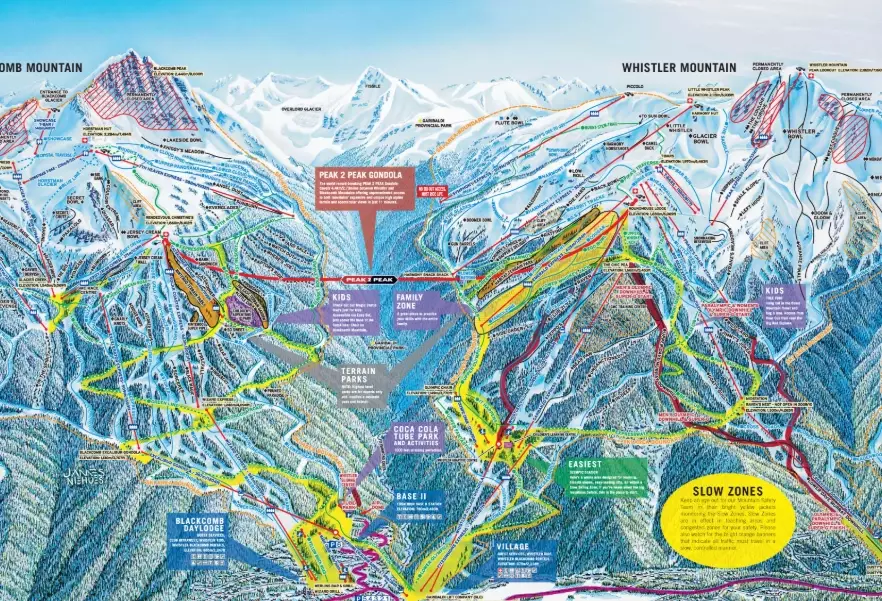
Look for trail names too. While not always accurate, names like "Kiddie Slope," "Easy Street," or "Mellow Meadow" are good signs. On the other hand, "The Plunge," "Corbet's Couloir," "The Staircase," or "Avalanche Gulch" are... pretty self-explanatory warnings. I once ignored the ominous name "Devil's Dive" on a day I was feeling overconfident. The name was, if anything, an understatement.
Digital Maps vs. Paper Maps: The Modern Dilemma
Every resort has an app now. So why talk about paper? Because both have critical roles, and relying solely on your phone is a risk.
Paper Maps: They don't run out of battery. They don't get wet and die from a snowflake (though a soaking will ruin them). You can spread them out, see the whole mountain at once, and make notes. They are reliable. Always, always grab one from the lodge or ticket window and stick it in your pocket. It's your backup brain.
Digital Maps (Apps): Incredibly useful. The best ones, like the official apps from Vail Resorts or Alterra Mountain Company, offer real-time lift line wait times, GPS tracking of your location on the map (a game-changer), restaurant wait times, and even tracking for your friends. They're interactive and powerful.
But.
Phones fail in the cold. Gloves make screens hard to use. Bright sun makes them impossible to see. If you drop it, you're in trouble. My rule? Use the app for live data and tracking, but use the paper map for primary navigation and planning. Let the app tell you how long the lift line is, but let the paper map tell you which lift to go to.
Common Questions (And Real Answers)
Let's tackle some specific things people wonder when they're learning how to read ski trail maps.
You'll sometimes see a trail split into two colors (e.g., blue on one side, black on the other). This usually means the trail has sections of different difficulty. The map is telling you that part of that run is significantly harder. It might be that one side is groomed (blue) and the other is left with moguls (black). Proceed with caution and stick to the side matching your skill.
Usually, these are cat tracks or traverses. They are flat or nearly flat paths used to get from one area to another without losing elevation. They are crucial connectors but require poling or skating. Don't get stuck on one without momentum! They're also often slow zones.
Take them with a grain of salt. They're usually estimated. A "2.5 mile" run might feel longer or shorter depending on how many turns you make, the snow conditions, and how much you stop. Use length to compare runs relative to each other, not as an absolute measure of your time.
The map is always accurate, but your ability to follow it isn't. In a whiteout or heavy snow, visibility can drop to zero. This is when knowing your escape route back to a safe, easy run is critical. If you can't see the next trail sign, it's time to follow simple, wide trails back down to the base. The map told you the way when you could see it—now you have to trust the plan you made.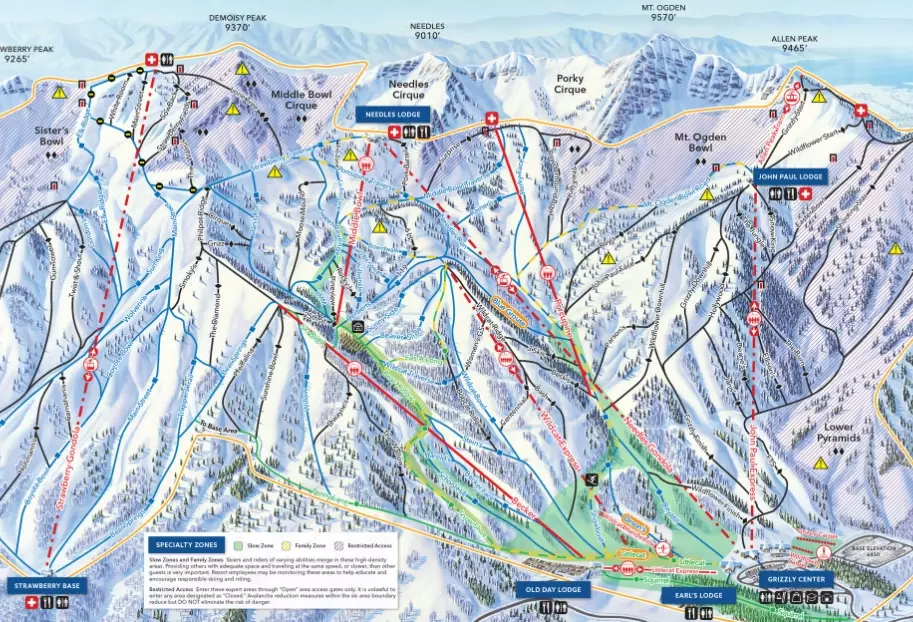
Practice Makes Permanent: How to Get Better
You don't have to be on a mountain to practice. Pull up trail maps online for famous resorts like Whistler Blackcomb, Park City, or Stowe. Go through the exercise. Find the base. Plan a beginner's morning. Plan an expert's afternoon. Trace the routes. Look for the boundary lines. Check out the legends.
When you are on the mountain, make a game of it. At the top of every lift, pull out the map and confirm where you are and what your options are. Before you go down a new run, find it on the map and see what connects to it at the bottom. This constant cross-referencing builds the skill fast.
It becomes second nature.
Soon, you'll be that person who glances at the map and knows exactly where to go. You'll lead your friends to hidden gems and avoid crowded bottlenecks. You'll spend your day skiing, not searching or worrying.
The goal of learning how to read ski trail maps isn't to become a cartographer. It's to turn a confusing piece of paper into a tool for freedom. It's about trading uncertainty for confidence, and fear for fun. So next time you grab that map, don't just see lines and colors. See your day unfolding—the warm-up runs, the thrilling challenges, the quiet glades, and the smooth ride back home. The mountain is talking to you. Now you finally know how to listen.
Related Articles


Comments
Join the discussion