In This Guide
Let's be honest. The idea of getting ski-fit usually involves fancy gym memberships, weird machines you don't know how to use, or a garage full of expensive gear. But what if I told you that some of the most effective ski fitness training happens right in your living room, with nothing more than the floor and your own body?
It's true. I spent years thinking I needed weights and bands and all that stuff. Then, a few seasons ago, I got stuck. An injury, a tight budget, and a brutal work schedule meant the gym was out. I was staring down a ski trip with friends, feeling totally unprepared. Out of sheer desperation, I started piecing together a routine from stuff I remembered, stuff I read, and a lot of trial and error.
The result? Honestly, it was one of my best seasons on the mountain. I felt more balanced, my legs didn't burn out by lunchtime, and I had way more control. All from a ski fitness training at home no equipment plan.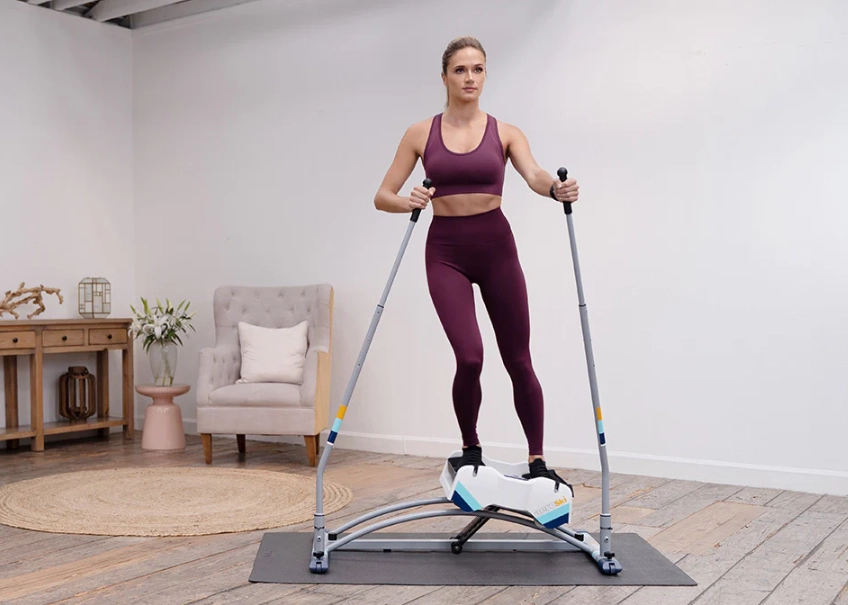
That's what this guide is. It's not some generic "do some squats" list. It's a deep dive into why certain movements matter for skiing, how to do them right (because doing them wrong is worse than not doing them at all), and how to string them together into a plan that actually makes a difference. We're covering everything from the foundational strength you need to survive a full day, to the explosive power for those quick turns, to the brutal endurance for the last run of the day.
And we're doing it all with zero gear. No excuses.
Why Bother with Off-Season Ski Fitness Training?
You could just show up and ski yourself into shape, right? Well, you could. But let me tell you why that's a bad plan.
First, it's miserable. Your vacation becomes a painful slog of muscle fatigue. Second, and more importantly, it's risky. Fatigued muscles lead to poor technique, which leads to loss of control, which leads to... well, let's not go there. The American College of Sports Medicine consistently highlights that preconditioning for a sport significantly reduces injury risk. You're essentially asking your body to perform a complex, demanding task without preparing the muscles and joints for the specific loads.
A proper ski workout with no equipment prepares those tissues. It builds the resilience in your knees and ankles. It teaches your muscles to fire in the right sequence. It means day one on the slopes is about having fun and refining skills, not just surviving.
Think of it as breaking in your ski boots before the trip. You wouldn't put on brand-new, stiff boots for a full day, would you? Don't do that to your body either.
The Three Pillars of At-Home Ski Fitness
Any good program, equipment or not, needs to hit these three areas. Miss one, and you'll feel it.
Pillar 1: Leg Strength & Endurance (The Engine)
This is the obvious one. Your quads, hamstrings, and glutes are the primary movers. But skiing demands a special kind of strength. It's less about lifting a heavy weight once and more about holding a moderate weight (your body in a flexed position) for a long, long time.
That's why isometric holds—where you just hold a position—are golden for ski fitness training at home. They build the muscular endurance that lets you maintain a good athletic stance all the way down the run.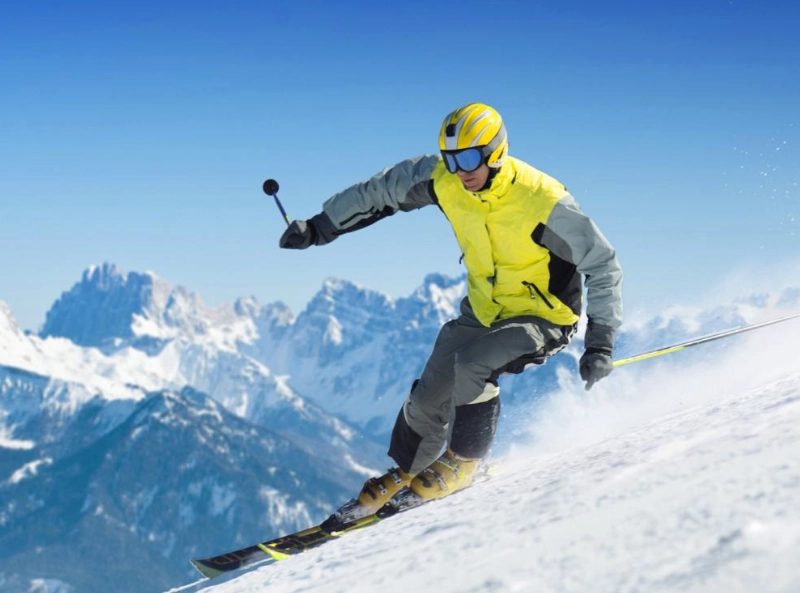
Top No-Equipment Leg Exercises for Skiers:
- The Skier's Wall Sit: This is the king. Back against a wall, knees at 90 degrees. Goal: build up to holding for 2-3 minutes. It burns. It's boring. It works. For a variation, pulse up and down an inch every 10 seconds.
- Pistol Squat Progressions: The single-leg king. If you can't do a full one, that's fine. Start with assisted pistol squats (holding onto a door frame) or just sitting down to a chair and standing up on one leg. The balance and strength transfer to skiing is incredible.
- Lateral Lunges: Skiing is side-to-side. Forward lunges are good, but lateral lunges are specific. Step wide to the side, sink your hips back and down, keep the other leg straight. Feel it in your inner thigh and glutes.
- Bulgarian Split Squats: Elevate your back foot on a couch or sturdy chair. This isolates the front leg and destroys any imbalance between your left and right side. Imbalances are a fast track to injury.
My personal nemesis? Bulgarian Split Squats. My left side is noticeably weaker, and these expose it every time. It's humbling, but fixing that weakness is what keeps me safe.
Pillar 2: Core & Hip Stability (The Command Center)
If your legs are the engine, your core is the chassis and the driver. A weak core means your upper body flails independently of your lower body. You get tossed around by bumps. You can't pressure your skis effectively. It's a mess.
We're not talking about six-pack abs. We're talking about the deep stabilizers—the transverse abdominis, the obliques, the muscles around your spine and hips. Their job is to create a solid platform for your legs to work from.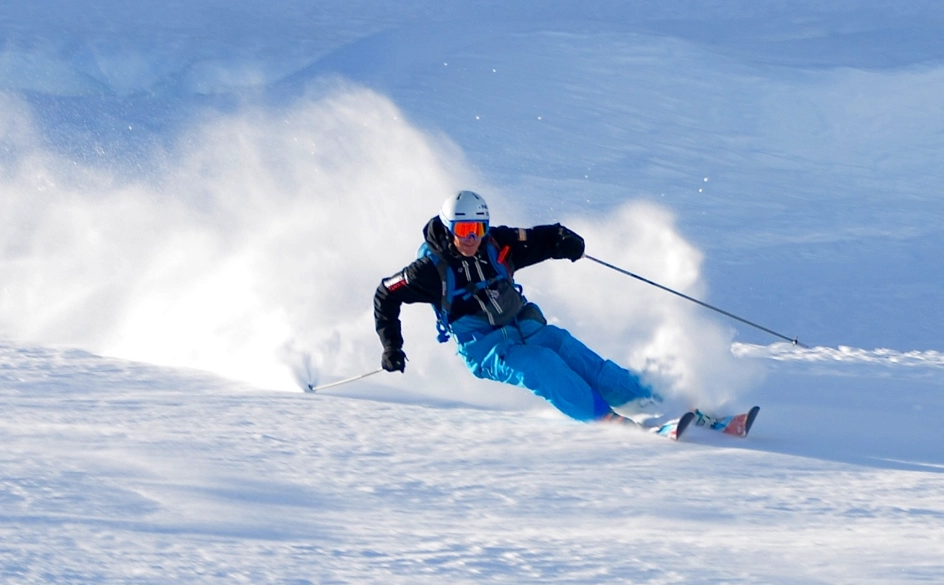
Exercises like planks are a start, but they get boring. For a dynamic sport like skiing, we need dynamic stability.
- Plank Variations: Side planks, plank with shoulder taps, plank with leg lifts. The goal is to resist rotation and movement.
- Dead Bugs: Lie on your back, arms up, knees bent at 90 degrees. Slowly lower your right arm and left leg toward the floor without arching your back or letting your other limbs move. This teaches your core to stabilize while your limbs are in motion—exactly what happens when you ski.
- Bird-Dogs: On all fours, extend your right arm and left leg straight out, keeping your hips level. Hold. This is fantastic for anti-rotation and low-back health.
- Hip Bridges & Single-Leg Hip Bridges: Lie on your back, knees bent. Drive your hips up, squeezing your glutes. For the single-leg version, extend one leg. This fires up the glutes and teaches your pelvis to stay stable on one leg.
Pillar 3: Power & Plyometrics (The Turbo Boost)
This is where you go from surviving to thriving. Power is strength expressed quickly. It's what lets you snap from one turn to the next, absorb a bump, or make a quick recovery when you get off balance. This is often the missing piece in a home skier's routine.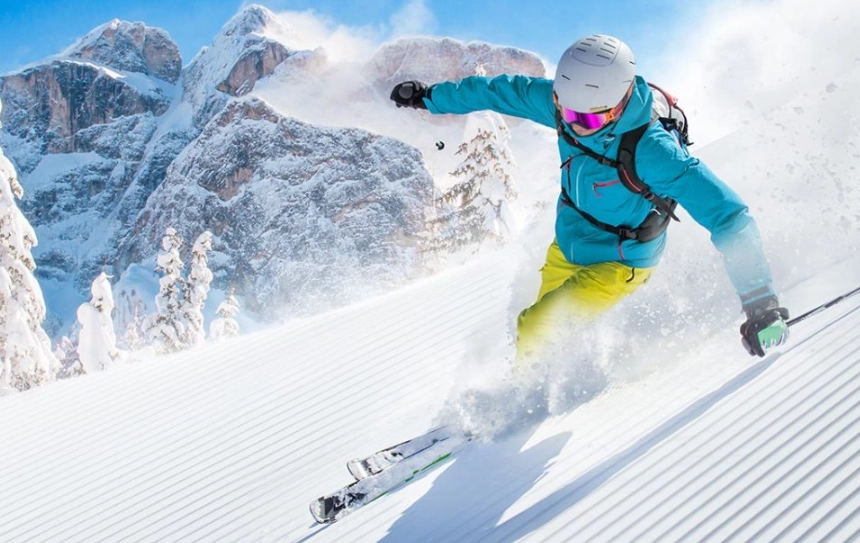
Plyometrics—jumping exercises—train your muscles and tendons to store and release energy elastically. Think of it like a spring. This is brutally efficient and exactly what your legs do during short, sharp turns.
A word of caution: Don't jump into plyometrics (pun intended) if you have any knee issues or are brand new to training. Build a base of strength for 4-6 weeks first.
- Box Jumps (onto a sturdy chair or low step): Explode up, land softly with bent knees. Focus on the soft, quiet landing.
- Lateral Bounds: Jump sideways from one foot to the other, covering as much distance as you can. Stick the landing for a second before bounding back. This mimics the edge-to-edge transfer of weight.
- Skater Jumps: Similar to bounds but more continuous, like a speed skater. Great for cardio and power.
- Squat Jumps: From a squat, explode up as high as you can. Again, the landing is key—absorb the impact like a shock absorber.
Putting It All Together: Your Sample Training Week
Okay, you've got the exercises. How do you mix them into a weekly plan that doesn't take over your life? Here's a simple, effective template. This assumes you're starting 6-8 weeks before your ski trip.
| Day | Focus | Sample Workout (Do 3-4 sets of each) | Notes |
|---|---|---|---|
| Monday | Strength & Stability | Pistol Squat Progressions (8-10 reps per side), Bulgarian Split Squats (10-12 reps), Side Planks (45-60 secs per side), Dead Bugs (10-12 reps per side) | Focus on perfect form. Go slow. This is your technique day. |
| Tuesday | Active Recovery / Cardio | 30-45 mins of other activity: brisk walking, cycling, swimming, or a gentle yoga flow focusing on hips and legs. | This is not a rest day, but a day to move without heavy strain. Promotes recovery. |
| Wednesday | Power & Endurance | Lateral Bounds (8 per side), Squat Jumps (8 reps), Skier's Wall Sit (max hold, rest, repeat 3x), Lateral Lunges (12 per side) | This is the tough one. Give full effort on the jumps, then grind through the endurance holds. |
| Thursday | Rest | Complete rest. Or very light stretching/mobility. | Your body adapts and gets stronger on rest days. Don't skip them. |
| Friday | Full-Body Circuit | Do 3-4 rounds of: 1-min Wall Sit, 10 Single-Leg Hip Bridges per side, 10 Bird-Dogs per side, 30-sec Plank. Minimal rest between exercises. | This builds work capacity—the ability to do lots of different things while tired, just like a ski day. |
| Weekend | Choice & Fun | One day off. One day for a longer hike, bike ride, or sport you enjoy. | Keep it fun. Consistency over months beats a perfect 2-week burst. |
Beyond the Workout: The Often-Forgotten Pieces
A lot of guides stop at the exercises. But your success with a ski fitness training at home no equipment plan depends just as much on these other factors.
Mobility: Can You Actually Get Into Position?
You can be strong as an ox, but if your ankles are stiff and your hips don't move, you'll never get into a proper, balanced athletic stance. Spend 5-10 minutes before each workout on mobility.
- Ankle Mobility: Kneel with the top of your foot flat on the ground, gently lean forward. Do ankle circles.
- Hip Flexor & Quad Stretch: The classic lunging stretch. Skiing keeps you in a flexed position, so these muscles get tight.
- World's Greatest Stretch: From a lunge, drop your elbow to the inside of your front foot, then rotate your torso up to the sky. It's a full-body mobilizer.
Balance: The Secret Skill
Every single-leg exercise you do is also a balance exercise. But dedicate some time to pure balance work. Stand on one leg while brushing your teeth. Stand on a couch cushion (unstable surface) and try to hold. Close your eyes while standing on one leg (near a wall for safety!). This directly trains your proprioception—your body's sense of where it is in space—which is critical for skiing on variable terrain.
Cardio: Don't Gas Out
High-altitude, cold-weather activity is draining. You don't need to be a marathon runner, but having a decent cardio base means you can focus on skiing, not just breathing. The plyometrics help, but add in 1-2 sessions of 20-30 minutes of sustained effort per week. Stair running, jump rope (if you have one), or high-knee running in place are all brutal and effective no-equipment options.
Answering Your Burning Questions (FAQ)
I get a lot of the same questions whenever this topic comes up. Let's tackle them head-on.
How long before my trip should I start?
The sooner, the better. A bare minimum is 6 weeks to see real neurological and strength adaptations. If you have 12+ weeks, you can build a fantastic base. Starting 2 weeks out is better than nothing, but manage your expectations—focus on mobility and waking the muscles up, not building huge strength.
How often should I train per week?
3-4 dedicated sessions is the sweet spot for most people with busy lives. More than that and you risk overtraining if you're not used to it. Remember, the sample week above includes active recovery days—those are part of the plan.
I have bad knees. Can I still do this?
This is crucial. If you have a known knee issue (like patellar tendinitis, arthritis, or an old ACL injury), you must consult a physiotherapist or sports doctor before starting any new program. Many bodyweight exercises can be adapted, but you need professional guidance. Generally, focusing on isometric holds (like wall sits) and non-impact movements first can be safer. Avoid deep squat jumps if there's pain.
Is this really enough without weights?
For the vast majority of recreational skiers, absolutely yes. The principle of progressive overload—making things harder over time—can be achieved without weights. You make an exercise harder by: doing more reps, doing slower reps, adding a pause, moving to a single-leg version, or reducing rest time. The body doesn't know if it's lifting iron or defying gravity, it only knows it's being challenged. For elite athletes, weights become necessary. For us? A diligent no equipment ski workout will deliver huge gains.
What's the single most important exercise?
If I had to pick one? The single-leg squat progression (pistol squat). It builds insane leg strength, challenges your balance, exposes left-right imbalances, and requires core stability—all in one movement. It's the Swiss Army knife of ski fitness training at home.
Making It Stick: The Psychology of Training at Home
The hardest part isn't knowing what to do. It's doing it consistently when the couch is right there.
Here's what worked for me: I stopped thinking of it as a "workout." That word has baggage. I just told myself I was going to "practice skiing" for 30 minutes. I'd put on a ski movie or some energetic music. I'd lay out my mat the night before. I tracked my progress in a simple notebook—noting if I held a wall sit 10 seconds longer, or did one more rep. Seeing that progress is a powerful motivator.
And some days, I just didn't feel it. On those days, I'd commit to just 10 minutes of mobility and balance work. Almost always, once I started, I'd end up doing more. The key was removing the barrier to starting.
Remember, the goal of this entire ski fitness training at home no equipment journey isn't to look a certain way. It's to feel a certain way: confident, strong, and ready to play all day on the mountain. It's about getting the most joy out of your precious time on snow.
So clear a little space in your living room. Your personal ski gym is open for business.
Related Articles

Comments
Join the discussion