That first cold snap hits, and your mind jumps to fresh tracks. But before you wax poetic about powder days, there's a crucial, less glamorous step: the pre-season ski equipment check. Skiing on neglected gear isn't just a performance killer; it's a safety gamble. A thorough inspection now can prevent a binding failure on a steep run, a blister from a worn boot liner, or a costly mid-season repair bill. Think of it as a pit stop for your most important winter tool. Let's get your gear off the bench and ready for the starting gate.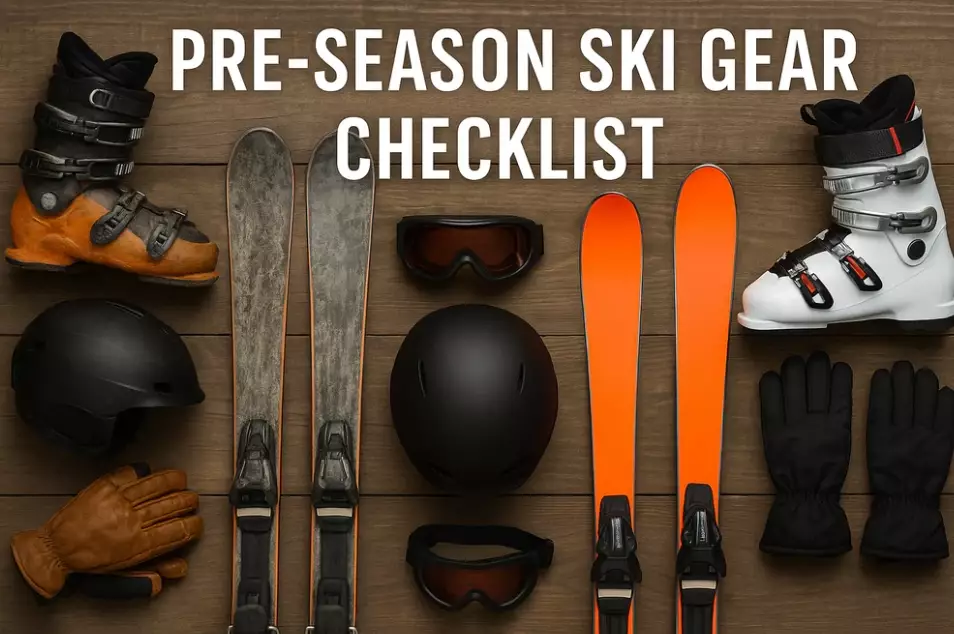
What's Inside This Guide?
- Why a Pre-Season Check is Non-Negotiable
- The Ski Inspection: Base, Edges, and Structure
- The Binding Safety Check: Your Most Critical Step
- The Boot Comfort and Function Check
- Clothing and Accessory Gear Check
- 3 Common Pre-Season Check Mistakes (And How to Avoid Them)
- Your Pre-Season Check Questions Answered
Why a Pre-Season Check is Non-Negotiable
You stored your gear in the garage or basement. It looks fine from the outside. Why bother?
Materials degrade when they sit. Plastic boot shells can become brittle or warp slightly. Boot liners compact and lose their heat-molded shape. Ski bases dry out, leading to oxidation (that white, chalky look) which kills glide. Most insidiously, binding lubricants can dry up or components can settle, affecting the release mechanism. The industry standard, set by organizations like ISO (International Organization for Standardization), requires bindings to be checked annually by a certified technician because these changes are often invisible.
Beyond safety, a check saves money. Catching a small base gouge now means a simple $30 p-tex repair. Ignoring it means water seeps into the core all season, requiring a $150+ base weld later. A loose ski brake is a two-minute fix in the shop now; a lost brake on the mountain means a hike out and a replacement.
The Cost of Skipping the Check: A Quick Scenario
Imagine: First big day, you're charging down a groomer. You hit a patch of wind-scoured ice. Your binding, its release value subtly altered by temperature cycles in your attic, doesn't release as designed. Instead of a clean pop, it holds just a fraction of a second longer. That's often all it takes to turn a simple fall into a knee ligament injury. The $60 you saved on a binding check suddenly seems irrelevant compared to surgery and a lost season.
The Ski Inspection: Base, Edges, and Structure
Start with a clean, dry ski. Wipe off any old storage wax or dirt.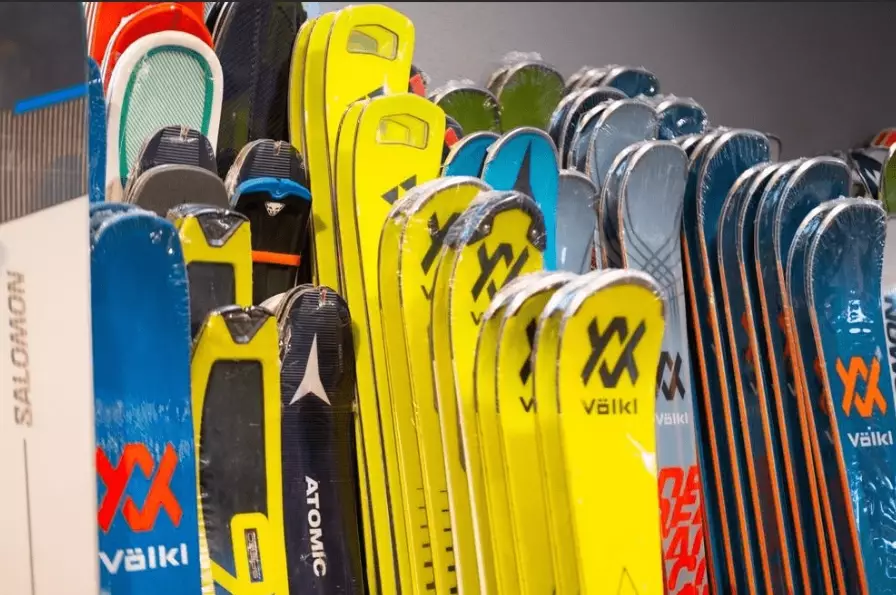
1. The Base: Looking for Hunger and Damage
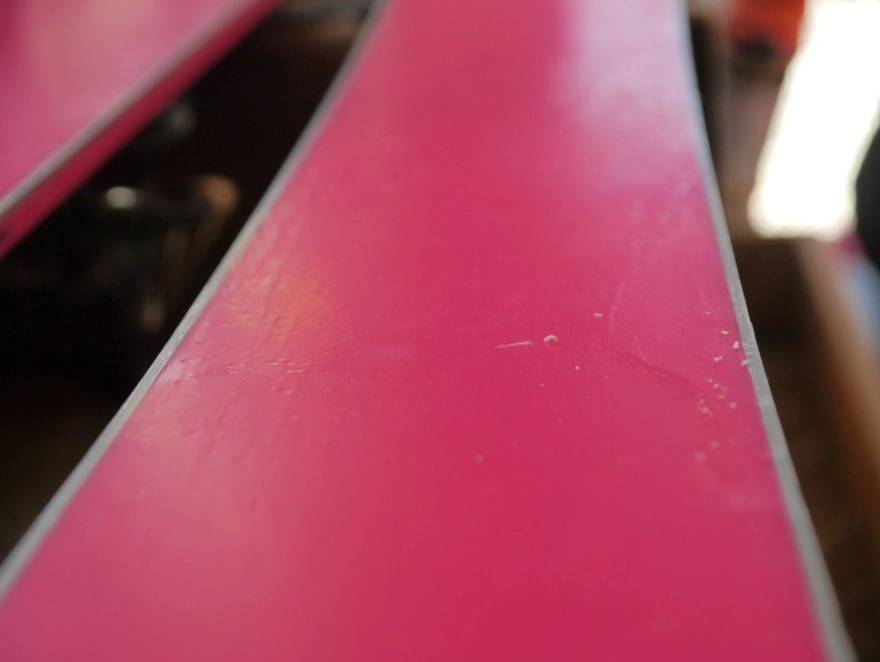
Run your fingers along the base from tip to tail. It should feel uniformly smooth and slightly waxy. If it feels dry, rough, or chalky, it's "hungry"—the polyethylene has dried out. Look closely for core shots (deep gouges that expose the wood/foam core) or significant scratches. Minor superficial scratches are normal. Check the sidewalls for cracks or separation from the base.
2. The Edges: Feeling for Grip
This is tactile. Carefully run your fingernail perpendicularly down the edge from tip to tail. You should feel a slight, consistent catch all the way. If it feels completely smooth and rounded, your edges are dull. Visually inspect for rust spots, especially near the bindings where moisture collects. Rust eats away at the steel, compromising edge integrity.
3. The Overall Structure: Flex and Camber
Place the skis base-to-base and squeeze them together in the middle. Look down the gap. You should see a consistent, smooth arch (the camber). If it's flat or reversed, the ski is fatigued. Feel for any soft spots or delamination (bubbling in the top sheet) by pressing firmly along the length.
| Ski Check Item | What to Look For | If You Find This... |
|---|---|---|
| Base Condition | Dry, white oxidation, deep gouges (core shots), sidewall cracks. | Needs a professional stone grind, wax, and p-tex repair for core shots. |
| Edge Sharpness | Fingernail slides smoothly, visible rust, nicks or burrs. | Requires tuning: detuning tip/tail, sharpening effective edge, rust removal. |
| Camber & Flex | Flat camber, soft spots, delaminated top sheet, cracked edges. | Could indicate ski fatigue or impact damage. Consult a shop for viability. |
| Binding Screws | Any screw head that is not flush with the binding or ski top sheet. | Do not ski. Loose screws must be retapped and reset by a shop. |
The Binding Safety Check: Your Most Critical Step
This is where you must know your limits. You can do a visual and functional check, but the release test is for certified technicians only.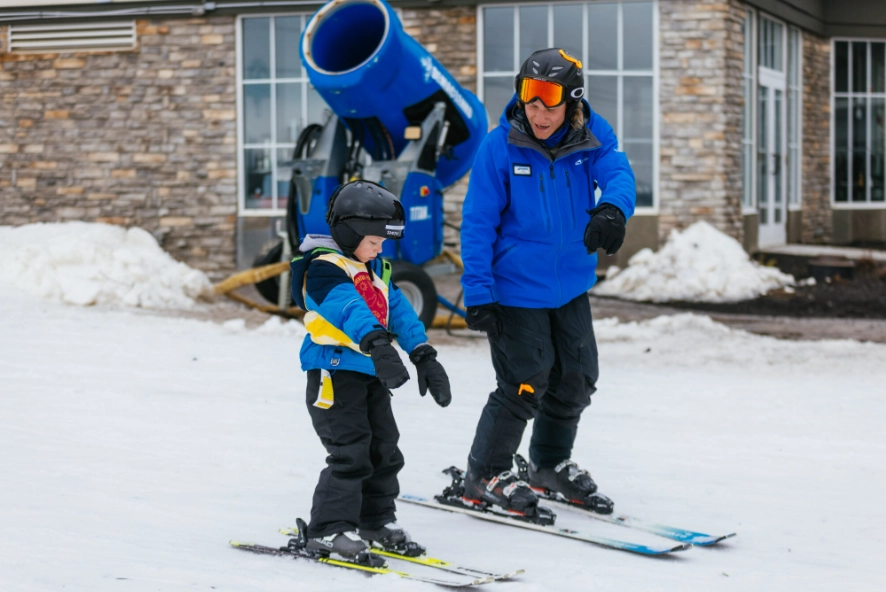
Visual Inspection
Check every screw securing the binding to the ski. Are they all flush? Any signs of lifting or cracking in the ski material around them? Inspect the binding wings, brakes, and AFD (anti-friction device) pad under the toe piece for cracks or excessive wear. Ensure the brake arms spring back strongly and are not bent.
Functional Check (At-Home)
Step into your bindings (on a flat, safe surface). Do the toe and heel pieces engage with a solid, positive click? Do the brakes deploy instantly when you step out? Wiggle laterally in the binding. There should be zero play between your boot sole and the binding.
Here's the expert nuance everyone misses: Clean the boot sole. Dried mud or salt in the boot's toe and heel lugs prevents the binding from engaging fully, increasing the force needed to release. Use a plastic brush and isopropyl alcohol.
The Professional Release Check: This is mandatory. A shop uses a calibrated machine (like a Vermont Test Bench) to measure the exact force required for your binding to release at the toe and heel. They adjust it based on your boot sole length, weight, skier type (I, II, III), and age, following the binding manufacturer's indemnification chart. This is not a DIY project. An incorrect setting is a liability.
The Boot Comfort and Function Check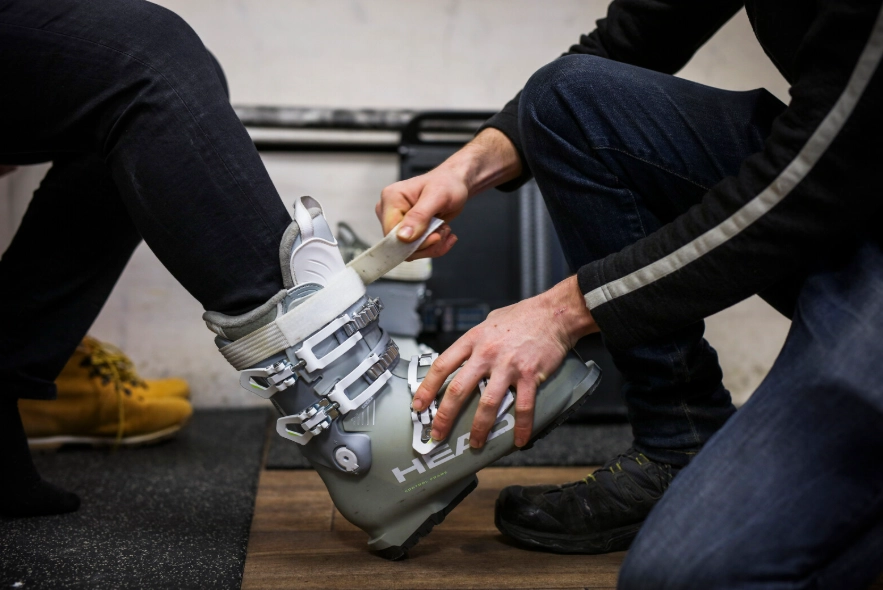
Boots are your direct connection to the ski. Problems here ruin your day faster than anything.
Liner Inspection: Pull out the liners. Have they packed out? Are there thin spots under the ball of your foot or at the heel? Are the seams coming apart? A packed-out liner means lost control and cold feet. Many are heat-moldable again, but there's a limit.
Shell Inspection: Look for cracks, especially around the cuff pivots and buckle attachments. Check the boot sole for deep cuts or wear. The toe and heel lugs must be intact for the binding to grip.
Buckle & Strap Function: Do all buckles latch smoothly through their full range? Lube the pivot points with a dry silicone spray if they're stiff. Does the power strap still have elasticity and Velcro grip?
Put the boots on. Walk around the house for 20 minutes. Do you feel any new pressure points? That packed-out liner is now shifting your foot, creating rub points that didn't exist last spring.
Clothing and Accessory Gear Check
Don't get caught on a cold chairlift with a failed zipper.
- Jacket & Pants: Test all zippers. Re-waterproof by washing with a tech wash (like Nikwax Tech Wash) and then a waterproofing solution. Check seam tape for peeling.
- Base Layers: Are they still odor-resistant and wicking? Synthetic fibers break down over time.
- Gloves: Are they still waterproof? Is the lining intact? A small hole can be repaired with gear tape.
- Goggles: Check the lens for deep scratches that obscure vision in flat light. Is the foam intact? Replace the lens if needed.
- Helmet: This is critical. Any visible crack, dent, or significant impact mark from a drop means immediate replacement. The EPS foam crushes once to protect you. Check the adjustment dial and strap for wear.
3 Common Pre-Season Check Mistakes (And How to Avoid Them)
I've seen these every year in rental shops and among friends.
1. The "Visual Only" Check: People look at their skis, see no obvious cracks, and call it good. They never feel the base or edges, and they completely ignore the bindings. The fix: You must use touch. Feel the base, test the edges, physically step into and out of the bindings.
2. DIY Binding Release Adjustment: Someone gets a screwdriver and tries to "tighten" or "loosen" their bindings based on feel. This is incredibly dangerous. The release setting is a precise torque measurement. You cannot calibrate it by hand. The fix: Budget for an annual professional binding check and adjustment. It's the best insurance you can buy.
3. Ignoring the Boot Liner: Everyone focuses on the hard shell. But the soft liner is what determines fit, warmth, and control. A collapsed liner is the #1 cause of "my boots hurt now" after a summer in storage. The fix: Take the liners out, inspect them, and try the boots on well before your first trip. This gives you time to get them re-molded or shop for new ones if needed.
Your Pre-Season Check Questions Answered
 I found a small crack in my boot shell near the ankle. Can I still ski on it?
Related Articles




Comments
Join the discussion