Quick Navigation
- The Real Names: Decoding the Types of Beginner Skis
- What Makes a Ski "Beginner-Friendly"? The Key Features
- How to Actually Choose Your First Pair of Skis
- Top Brands and Models to Look For (A Non-Exhaustive List)
- Bindings, Boots, and Other Gear: The Full Picture
- Answering Your Burning Questions (FAQ)
- Final Thoughts: Getting Past the Name
You know that feeling. You're standing in a ski shop, or scrolling online, surrounded by a sea of shiny gear with names that sound like secret codes. You just want something to help you learn without wiping out every five seconds. And the big question in your head is... what are beginner skis actually called?
Let's cut through the jargon right now. They aren't just called "beginner skis." That's the broad category. When you dig into it, you'll hear names like all-mountain skis, frontside carvers, or skis with a rocker profile. It's confusing, I know. I remember my first time buying skis. The sales guy was throwing around terms like "sidecut radius" and "torsional stiffness," and I just nodded like I understood, completely lost.
This guide is here to translate all that. We're going to break down exactly what beginner skis are called, why they have those names, and how to pick the pair that won't fight you as you learn.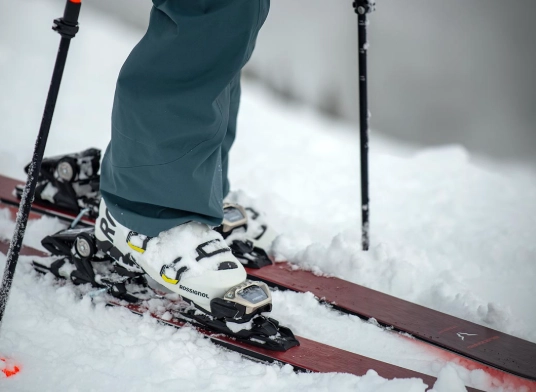
The Real Names: Decoding the Types of Beginner Skis
Forget the marketing fluff. When we talk about skis for newbies, we're usually talking about a few specific designs. The names come from their shape, their intended use, and their technology.
All-Mountain Skis (Your Best Bet)
This is the number one answer to "what are beginner skis called?" It's a bit of a catch-all term, but for good reason. All-mountain skis are designed to do a little bit of everything reasonably well. They're not specialists, they're generalists.
For a beginner, this is perfect. You're not tackling deep powder or icy race courses yet. You're on the green and blue groomed runs. An all-mountain ski in a beginner-friendly construction is forgiving. It has a moderate width (somewhere between 75mm and 85mm underfoot is typical), which makes it easy to roll from edge to edge. It won't punish you for being a bit off-balance.
The Snowsports Industries America (SIA), a major industry group, categorizes skis based on use, and "All-Mountain" is the primary category for versatile, resort-focused skis. Many brands specifically label their easier-to-ski models within this family.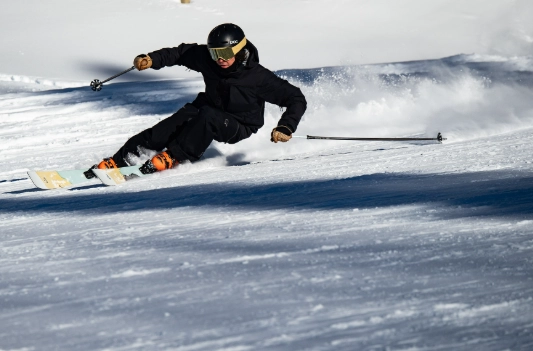
Carving Skis / Frontside Skis
These are a sub-category of all-mountain skis, but they're worth their own mention. Sometimes you'll hear them called frontside carvers. Their whole purpose is to make crisp, clean turns on groomed snow.
How do they do it? They have a pronounced sidecut—that's the hourglass shape when you look at the ski from above. A deeper sidecut means the ski wants to turn more easily. For a beginner, this is like having training wheels. The ski practically helps you initiate the turn. They're also usually lighter and softer in flex than more advanced skis, which means they're less tiring to use and more forgiving of errors in posture.
Rocker Skis (The Game Changer)
This isn't so much a type of ski as a key feature that has revolutionized beginner skiing. Rocker (or early rise) refers to the shape of the ski from the side. Traditionally, skis were cambered—they arched up in the middle. Rocker skis are the opposite; the tips and tails curve up off the snow.
Why does this matter for a new skier? Imagine the front of your ski is already slightly lifted. It's much less likely to catch an edge and trip you up. It makes initiating turns easier and provides more stability in variable snow. Most modern beginner skis incorporate some rocker in the tip, and many are full "rocker" or "flat-to-rockers" which are incredibly easy to pivot and control.
When you're asking "what are beginner skis called?" today, the answer almost always includes "...with rocker."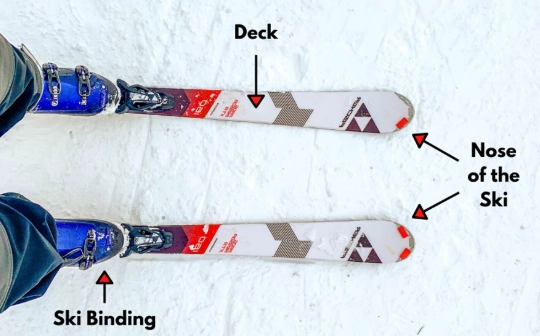
What Makes a Ski "Beginner-Friendly"? The Key Features
It's not just a name. There are specific engineering choices that make a ski suitable for someone learning. If you understand these, you can look at any ski's specs and have a good idea if it's right for you.
| Feature | What It Means | Why It Helps Beginners |
|---|---|---|
| Soft Flex | How easily the ski bends along its length. | A softer flex is more forgiving. It requires less force to bend into a turn, is more comfortable at slower speeds, and absorbs bumps and mistakes instead of throwing you around. |
| Pronounced Sidecut | The hourglass shape (wide tip, narrow waist, wide tail). | A deeper sidecut creates a shorter "effective edge" when the ski is tilted, making it want to turn in a smaller radius. It literally helps steer you into the turn. |
| Tip & Tail Rocker | The ends of the ski curve up off the snow. | Prevents the dreaded "tip dive" and edge catch. Makes the ski feel shorter and more maneuverable, reduces fatigue, and boosts confidence in softer snow. |
| Lightweight Construction | Use of lighter woods and materials in the core. | Lighter skis are easier to swing around, less tiring to carry, and respond quicker to your inputs. You'll feel more in control. |
| Moderate Width | Waist width typically between 75mm - 88mm. | Narrow enough to get on edge easily for carving on groomers, but wide enough to provide a stable, confidence-inspiring platform. |
Now, a word of warning. Some brands will label a ski as "intermediate" or even "advanced-intermediate" that actually has a lot of these beginner-friendly traits. They might call it "accessible" or "playful." Don't be scared off by the label. Read the reviews. Often, a ski designed for a lighter-weight advanced skier who likes short turns can be an absolute dream for a strong beginner.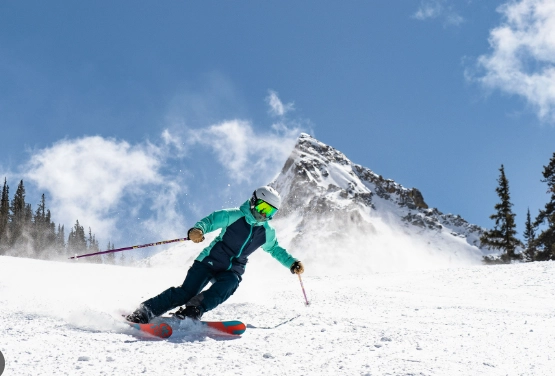
How to Actually Choose Your First Pair of Skis
Knowing what beginner skis are called is half the battle. The other half is figuring out which one is for you. It's not one-size-fits-all.
First, and I can't stress this enough: Rent or demo first. Most good ski shops have demo programs where you can try different models for a day. It's the best money you'll spend. What feels good under one person's feet might feel dead under yours. I made the mistake of buying my second pair based solely on magazine reviews, and I never really loved them.
The Step-by-Step Selection Process
- Be honest about your level. Are you a first-day never-ever? Or can you confidently link turns on green runs? The ski for an absolute day-one skier is different from one for someone ready to tackle easy blues.
- Consider where you'll ski 90% of the time. Is it the icy, hard-packed slopes of the East? Or the softer, groomed corduroy of Colorado? Eastern skiers might want a ski with a bit more edge grip, while Western skiers can benefit from a bit more width and rocker.
- Get the length right. This is critical. The old rule of thumb (ski should stand between your chin and nose) is outdated due to rocker. For a beginner ski with rocker, you typically want it somewhere between your chin and the top of your head. Shorter = easier to turn, more forgiving. Longer = more stable at speed. Err on the shorter side when learning. A shop can help immensely here.
- Set a budget and stick to it. You don't need the most expensive tech. Look for models from the previous season—they're often 30-40% cheaper and the technology hasn't changed dramatically.
Top Brands and Models to Look For (A Non-Exhaustive List)
Almost every major ski brand has a fantastic lineup of beginner skis. Here are a few consistently well-regarded ones across different categories. Remember, model names change yearly, but the series often remain.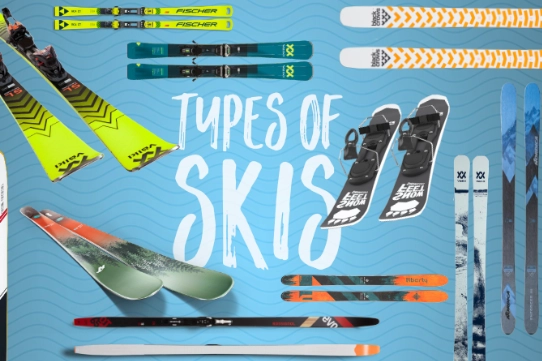
For the True First-Timer: These are the most forgiving, easiest-to-use skis on the market.
- Rossignol Experience Series (e.g., Experience 74 AI): A legendary beginner line. Easy turn initiation, smooth, predictable. It's a classic for a reason.
- Elan Wingman CTi: Amazingly easy to pivot and control. The "Amphibio" technology sounds gimmicky but genuinely makes the ski feel intuitive.
- K2 Mindbender 75C (Women's: K2 Mindbender 75CW): Light, soft, and smooth. K2's Konnect boot interface can also make getting in and out easier.
For the Quick Learner (Ready for Blues): A bit more performance, but still very forgiving.
- Volkl Blaze 86: Lighter than a feather and packed with rocker. This ski is shockingly easy for its width and can handle a bit of soft snow too.
- Nordica Navigator 75: A precise, confidence-inspiring carver. If you like the feeling of being locked into a clean turn, this is a great choice.
- Salomon Stance 84: A bit more solid and stable underfoot than some, which can be great for heavier or more aggressive beginners.
For detailed, independent reviews of current models, I always cross-reference with sources like Ski Magazine's Gear Reviews. They test hundreds of skis each year with skiers of all levels.
Bindings, Boots, and Other Gear: The Full Picture
Skis are just one piece of the puzzle. Honestly, your boots are more important. An expert skier on beginner skis will still get down the mountain. A beginner in painful, ill-fitting expert boots will have a miserable time no matter what skis they're on.
For bindings on beginner skis, you don't need the highest-end racing model. A reliable, mid-range binding from a major brand like Look, Tyrolia, or Salomon/Atomic that is properly adjusted for your weight and boot sole length (this is a MUST) is perfect. Most ski-and-binding packages come with a perfectly appropriate binding.
Answering Your Burning Questions (FAQ)
Final Thoughts: Getting Past the Name
So, what are beginner skis called? By now, you know they go by many names: all-mountain, frontside, carving, rocker. But the name is just a shortcut. What you're really looking for is a combination of soft flex, easy turn initiation, and forgiveness.
The best advice I can give is to talk to people. Go to a dedicated ski shop, not a big-box sporting goods store. Tell them exactly where you ski and what you find challenging. A good shop employee will guide you better than any article.
Remember, the goal isn't to buy the perfect ski for life. The goal is to buy the perfect ski to fall in love with skiing. A friendly, easy pair of skis will do that. They'll be the tool that transforms you from someone who slides down a hill into a skier. And once that happens, you'll know exactly what to look for next time.
Now get out there. The snow's waiting.
Related Articles
Comments
Join the discussion