What’s Inside This Guide
- Safety First: Non-Negotiable Gadgets for the Backcountry and Beyond
- Combatting the Cold: Gadgets for Warmth and Comfort
- Performance & Fun: Gadgets to Up Your Game and Capture It
- The Organizers & Problem-Solvers: Everyday Carry Essentials
- Putting It All Together: A Quick-Reference Table
- Common Questions About Ski Gadgets (FAQ)
- Final Thoughts
Let's be honest. Half the fun of skiing, besides the actual skiing, is the gear. There's something deeply satisfying about fine-tuning your kit, adding that one clever tool or piece of tech that makes your day on the mountain smoother, safer, or just more fun. But with so many products shouting for your attention, it's easy to get overwhelmed. What are some must-have ski gadgets that are actually worth the money and the space in your pack?
I've spent more seasons than I care to admit chasing powder, freezing on lifts, and fumbling with gear in lodge parking lots. I've bought the gimmicks and I've found the genuine game-changers. This isn't about the flashiest or most expensive toys. It's about the essentials—the tools and tech that solve real problems for skiers.
We're going to break it down by what they do for you. Because when you're asking "what are some must-have ski gadgets?", you're really asking a few different questions: How do I stay safe? How do I stay warm and comfortable? How do I ski better or capture the moment? And how do I make the whole logistics of the day less of a hassle?
Safety First: Non-Negotiable Gadgets for the Backcountry and Beyond
This is the serious stuff. If you step one foot into the backcountry, this isn't a "gadget" category. It's mandatory life-saving equipment. But even for in-bounds skiers, some safety tech has become incredibly smart and worthwhile.
The Holy Trinity of Backcountry Safety
You've heard it a million times: beacon, shovel, probe. This is the absolute baseline. But the gadgets within this category have gotten seriously advanced.
Modern digital avalanche transceivers, like those from Mammut or Backcountry Access (BCA), aren't just simple beepers anymore. They have multiple- burial search functions, clearer directional indicators, and some even pair with your phone for extra data. The BCA Link 2.0 is a popular workhorse. Is it fun? No. Is it the most critical answer to "what are some must-have ski gadgets for off-piste?" Absolutely, yes.
Shovels and probes have seen less flashy innovation, but material science makes them lighter and stronger. Get a metal-bladed shovel (plastic is useless in hard snow) and a probe that's at least 240cm long. Store them in an accessible pack pocket, not buried at the bottom.
Helmet Tech That's Actually Smart
Helmets are standard now, thankfully. But the new wave of ski helmet gadgets integrates audio and communication seamlessly. Systems like the Outdoor Technology Chips 2.0 or speakers built into brands like Smith and POC let you take calls, listen to music, or chat with your buddies on the chairlift without dealing with tangled headphone wires or earbuds falling out.
The real game-changer, though, is integrated communication. Walkie-talkie apps on your phone are spotty. Dedicated units like the BCA Link 2.0 Radio or the Rocky Talkie create a simple, push-to-talk mesh network for your group. No cell service needed. It transforms the experience of skiing spread out in trees or powder, letting you call out stashes or regroup easily. For keeping a group connected, this is a top contender for must-have ski gadgets.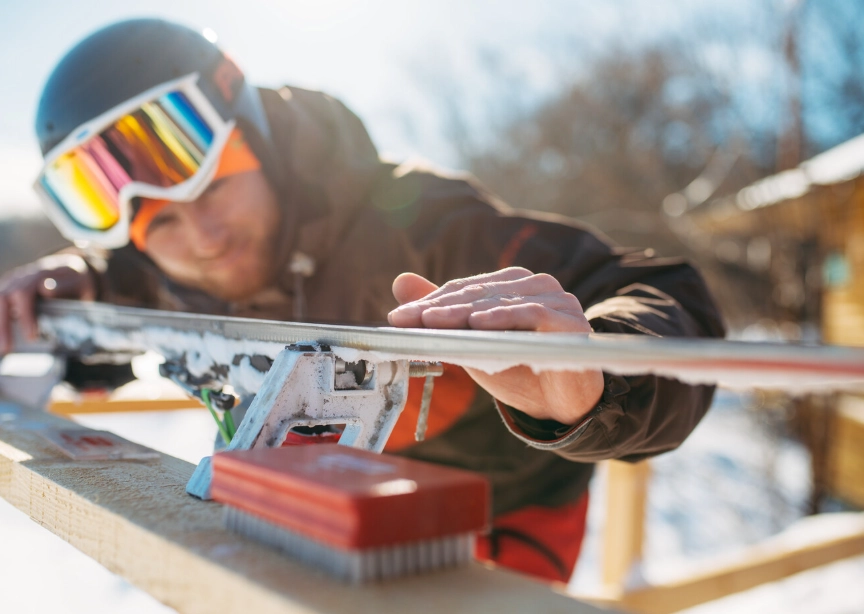
I was skeptical until I used one. Yelling and waiting at trail merges is a Stone Age practice.
Combatting the Cold: Gadgets for Warmth and Comfort
Cold hands and feet can ruin a perfect day faster than anything. The old solution was bulkier gloves and thicker socks, which often just cut off circulation and made things worse. Modern gadgetry takes a smarter approach.
The Heated Revolution
Heated gear has moved from clunky novelty to refined essential. Heated gloves and socks with lithium-ion battery packs are the stars here.
Brands like Volt Heat and Hestra make fantastic heated gloves. The batteries are slim, often fitting in a wrist pouch, and offer multiple heat settings. On a bitter cold day, turning on the low setting is like a miracle. It's not about making your hands sweat, just about taking the painful edge off and keeping blood flowing.
Heated socks work on the same principle. Cold feet are miserable, and these are a godsend for those with poor circulation. The battery packs usually sit on your calf. Just remember to charge them the night before—a dead battery is a sad discovery at the mountain.
Then there are smaller heated items. Heated boot bags to dry your liners overnight? Brilliant. Portable, rechargeable hand warmers that you can slip into any glove or pocket? Absolutely a must-have ski gadget for anyone who feels the cold.
The Humble Heroes: Balaclavas, Neck Gaiters, and Lens Tech
Some of the best gadgets are simple and cheap. A good merino wool or synthetic balaclava that covers your neck, chin, and cheeks is worth its weight in gold on a windy day. It's more effective than just a jacket collar.
For your goggles, anti-fog tech has gotten better. But the real gadget is a bottle of cat crap (the actual brand name—it's a wax-based anti-fog). Apply it the night before. Cheap, effective, and prevents that awful moment of blindness when you step inside.
And let's talk about goggle lenses. Photochromic lenses that automatically adjust from bright sun to flat light (like Smith's ChromaPop or Zeiss's Light Adaptive) are a luxury that feels like a necessity. You don't need to carry multiple lenses or stop to change them. It's one less decision to make.
Is it a gadget? It's advanced materials science in a frame. I count it.
Performance & Fun: Gadgets to Up Your Game and Capture It
This is where tech gets really fun. These are the tools that help you analyze your skiing, capture memories, or just add a new layer of enjoyment to the sport.
Action Cameras and Mounts
GoPro started it all, but the field has grown. The question isn't really "should I get one?" but "how should I use it?" The chest mount gives a great, stable POV that shows your skis and the terrain ahead. The helmet mount is more immersive but can be shaky. The new trend is the mouth mount—sounds weird, looks a bit like you're snorkeling, but it provides an incredibly stable and natural head-level view.
The latest cameras have horizon leveling, incredible stabilization (HyperSmooth is black magic), and high-resolution modes. But here's my personal take: you don't need the newest model. A GoPro Hero from a few generations ago, bought used, will still capture stunning footage. Don't get caught in the upgrade cycle unless you're a serious filmmaker.
Ski Tracking Sensors and Apps
This is a fascinating category. Small sensors like the Carv system fit inside your boot liner and connect to your phone. They give you real-time audio coaching on your technique—pressure, edging, rotation. It's like having a ski instructor in your ear. For the data-driven skier looking to improve, it's unparalleled.
Then there are more general tracking apps like Slopes or Ski Tracks. They use your phone's GPS to map your day, track speed, vertical, and runs. It's a fun way to review your day and compete (gently) with friends. They also show lift lines and trail maps. Slopes is particularly polished.
But a word of caution: don't become a slave to the metrics. Chasing a top speed number can lead to bad decisions. Use it as a diary, not a scoreboard.
Portable power banks are a silent hero in this category. All these devices eat battery, especially in the cold. A slim, high-capacity power bank in your pocket can keep your phone, camera, and heated gear running all day. Get one with a 10,000mAh capacity or higher. Anker makes reliable ones.
The Organizers & Problem-Solvers: Everyday Carry Essentials
These are the unsung heroes. The little things that live in your jacket pocket or backpack and save the day when problems arise.
The Multi-Tool and Repair Kit
A compact multi-tool designed for skiing is invaluable. Look for one with a Phillips and flathead screwdriver (for binding adjustments, though be careful), a metal file/stone for edge touch-ups, and a wax scraper. Brands like Dakine and Black Diamond make ski-specific ones.
Pair it with a small repair kit: a roll of duct tape (wrap some around a ski pole or credit card), a few zip ties, a length of thin cord, and a spare ski brake retention strap (the little rubber band that holds your brakes up for skinning). This kit can fix a broken strap, secure a loose buckle, or perform a dozen other trailside repairs. It weighs nothing and offers immense peace of mind.
Hydration and Snack Management
Hydration packs (like CamelBak) are common, but the insulated tube covers are the real gadget. They prevent the water in the tube from freezing. Without one, your hydration pack is useless after the first run on a cold day.
For snacks, I'm a convert to insulated soft flasks. A wide-mouth flask can hold a thick smoothie or soup, and it won't get crushed like a can or plastic container in your pack. Throw in a few high-fat, high-energy bars (ProBar, CLIF) and you've got lunch handled without a costly lodge stop.
Drying and Storage Back Home
The gadgetry continues after the ski day. A dedicated gear dryer, like the DryGuy Force series, is a game-changer for boot and glove care. It blows warm, dry air into your boots and gloves overnight, preventing the funk and ensuring they're warm and dry for the next morning. It pays for itself in extended gear life and comfort.
A good boot bag with separate compartments for wet and dry gear is also key. Look for one with a vented helmet pocket and a waterproof bottom compartment for soggy gloves and baselayers.
Putting It All Together: A Quick-Reference Table
Okay, that's a lot of info. Let's simplify. Here’s a breakdown of some must-have ski gadgets by category and what problem they solve.
| Gadget Category | Example Product/Type | Primary Problem It Solves | Priority (For Whom?) |
|---|---|---|---|
| Core Safety | Avalanche Beacon (Mammut Barryvox, BCA Tracker) | Location in an avalanche | #1 for Backcountry Skiers |
| Group Communication | Backcountry Radio (BCA Link, Rocky Talkie) | Staying in touch without cell service | High for Groups, Tree Skiers |
| Cold Hands/Feet | Rechargeable Heated Gloves (Volt Heat, Hestra) | Painful cold, poor circulation | High for Cold-Weather Skiers |
| Footage & Memory | Action Camera (GoPro, Insta360) + Mouth Mount | Capturing stable, immersive POV video | Medium-High for Enthusiasts |
| Ski Analysis | Digital Coaching Sensor (Carv) | Improving technique without a coach | Medium for Technique-Focused Skiers |
| Everyday Carry | Ski Multi-Tool + Mini Repair Kit | Trailside binding/boot/gear fixes | High for Everyone |
| Post-Ski Care | Gear Dryer (DryGuy) | Wet, smelly, cold boots & gloves | Medium-High for Multi-Day Trips |
Common Questions About Ski Gadgets (FAQ)
Final Thoughts
So, what are some must-have ski gadgets? The list isn't one-size-fits-all. It depends on where you ski, who you ski with, and what bugs you about the experience.
The thread that ties the best gadgets together is that they solve a specific, annoying problem. They reduce friction, increase safety, or amplify fun. They shouldn't complicate your day; they should simplify it.
Maybe this season it's a good multi-tool and a power bank. Next season, add a communication radio if you ski in a group. The season after, maybe heated liners. Build your kit slowly and intentionally.
The mountain is the main event. The best gadgets are the ones you barely notice—they just work quietly in the background, making sure nothing gets between you and the next perfect turn.
Now go check your beacon batteries.
Related Articles






Comments
Join the discussion