Quick Navigation
You've typed that exact question into Google, haven't you? "How many types of ski are there?" It sounds straightforward, but the answer is a bit like snowflakes – it depends on how you look at it. Ask a gearhead in a ski shop, and they might start talking about camber profiles and sidecut radii. Ask a weekend warrior, and they'll probably mention powder skis and carving skis. The truth is, there isn't one single number. The world of skis has exploded with specialization.
I remember walking into a major ski retailer a few years back, utterly overwhelmed. The wall was a sea of colors, shapes, and crazy names. The old binary world of "skis" was gone. Now, we have tools designed for very specific jobs and feelings on the snow. To truly answer "how many types of ski are there?", we need to move beyond a simple count and dive into the why behind each design.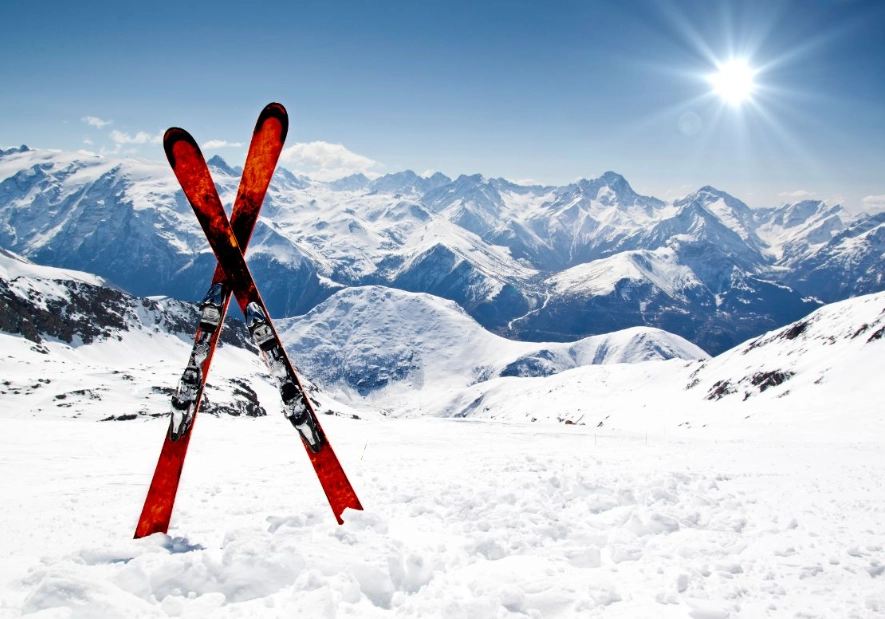
Let's cut through the marketing jargon. This guide won't just list types; it will explain what makes each one tick, who it's for, and—crucially—where it might let you down. Because no single ski does everything perfectly, no matter what the brochure says.
The Four Pillars: Core Ski Categories by Purpose
If you're looking for a foundational answer to "how many types of ski are there?", most industry experts and serious skiers break it down into four primary categories. Think of these as the big families. Every ski you see will have its roots in one of these, even if it's trying to be a hybrid.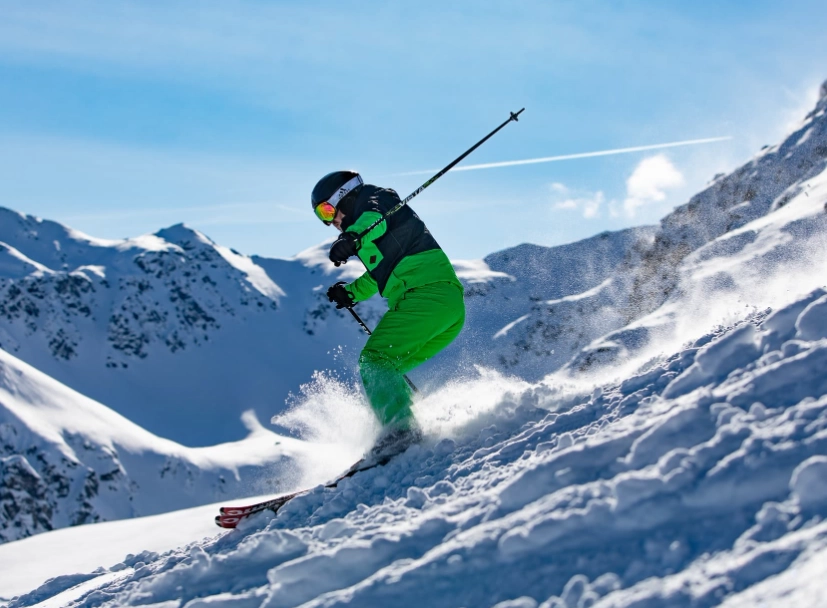
All-Mountain Skis: The Jack-of-All-Trades
This is where most people should start looking. The name says it all. All-mountain skis are designed to be competent across the entire resort—groomed runs, a bit of chopped-up snow, maybe a venture into some soft snow on the side of a trail. They are the compromise kings.
They're typically mid-width (somewhere between 85mm and 105mm underfoot), have a moderate turn radius, and feature a mix of camber and rocker. The goal is predictability and ease. Brands like Rossignol, Salomon, and K2 dominate here with models that are incredibly popular for good reason. They're friendly.
Who are they for? Intermediate to advanced skiers who ski a bit of everything in a day, or beginners looking for a ski they won't quickly outgrow.
Powder Skis / Big Mountain Skis: The Floatation Specialists
When the snow report shows a foot of fresh, these are the tools you want. Powder skis are built for one thing: floating on top of deep, soft snow. To do this, they are much wider, especially underfoot (110mm and up, way up). They have significant rocker in the tip and tail, which prevents them from diving, and often a tapered shape.
They feel surfy and playful in the deep stuff. But take them on a hard-packed groomer the next day, and you'll be working overtime. They can feel sluggish, hooky, and tiring to turn. Companies like Moment and 4FRNT have cult followings in this space.
Who are they for? Skiers who live for deep days, chase storms, or have access to open, untracked terrain. They are a specialist tool, and owning a pair often means you have a second, narrower ski for other conditions.
Frontside / Carving Skis: The Precision Instruments
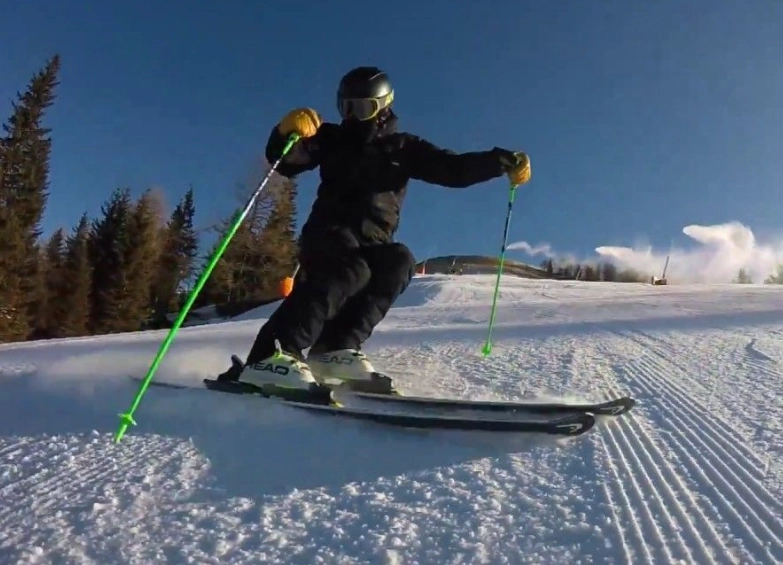
These are the sports cars of the ski world. Narrow (typically under 80mm underfoot), with lots of camber and a deep sidecut, they are built for one thing: gripping and ripping on groomed, firm snow. They want to be on edge, carving high-speed, precise turns.
The feeling is addictive—clean, powerful, and fast. But step off the corduroy, and they become a liability. They sink in powder, get deflected in chop, and are miserable in moguls. You'll see brands like Atomic and HEAD pushing the limits here, especially with their race-derived technology.
Who are they for? Skiers who love the sensation of carving, spend 90% of their time on-piste, or are working on perfecting their technique on groomed runs.
Touring / Alpine Touring Skis: The Lightweight Explorers
This category has exploded in popularity with the rise of backcountry skiing. These skis are built to be light so you can efficiently climb up hills with skins on. That means sacrifices in materials, which often translates to less dampness and stability on the downhill compared to a resort ski of similar dimensions.
They come in all shapes—lightweight powder skis, lightweight all-mountain skis. The key metric is weight. A great resource for understanding the nuances of backcountry gear is the International Ski Federation's resources on ski mountaineering, though their focus is competitive.
Who are they for? Skiers who want to earn their turns, access the backcountry, or just get away from the lifts. This is a commitment to a whole different style of skiing.
| Ski Type | Primary Terrain | Typical Width (Underfoot) | Key Feel/Strength | Biggest Compromise |
|---|---|---|---|---|
| All-Mountain | Everything in-bounds | 85mm - 105mm | Versatile, forgiving, predictable | Not exceptional in any one condition |
| Powder / Big Mountain | Deep snow, open terrain | 110mm+ | Floatation, surfy, playful in soft snow | Sluggish and hard to manage on hard snow |
| Frontside / Carving | Groomed runs, hardpack | 65mm - 80mm | Precision, edge grip, speed, agility | Poor performance in soft or uneven snow |
| Touring / Alpine Touring | Backcountry, uphill travel | Varies widely | Lightweight for climbing, freedom | Often less stable/damp on the descent |
See? Asking "how many types of ski are there?" and getting the answer "four" is a good start. But it's just the door. Walk through it, and you find a maze of sub-categories and niches. That's where things get interesting.
Beyond the Big Four: Specialized Niches and Hybrids
Once you understand the pillars, you see skis designed for hyper-specific situations. This is where the count of "how many types of ski are there?" really starts to climb.
Freestyle / Park Skis: Built for jumps, rails, and halfpipes. They're twin-tipped (curved up at both ends for skiing backwards), softer in flex for easier pressing and landing, and often center-mounted. Durability is key. They're terrible for charging at speed but pure fun in the terrain park.
Mogul Skis: A dying art, perhaps, but a true specialist. Very narrow, very soft, lightweight, and designed to pivot quickly in the bumps. You won't see many of these outside a competitor's quiver.
Racing Skis (SL, GS, DH): The pinnacle of the carving ski. Stiff, unforgiving, and built for World Cup gates. A slalom (SL) ski is short and quick-turning; a downhill (DH) ski is a long, stiff, straight-line missile. Don't buy these unless you're racing at a high level. Seriously, they're a nightmare for casual skiing.
All-Mountain Wide / Freeride Skis: This is the blurry line between all-mountain and powder skis. Usually 105mm-115mm underfoot. They want to handle powder well but still be manageable on the rest of the mountain. This might be the most popular category for advanced skiers in the West.
Beginner / Learning Skis: Often softer flexing, with lots of early-rise tip rocker to prevent catching edges. They are designed to make the first days easier, but you'll likely grow out of them quickly.
So, when someone asks you, "Hey, how many types of ski are there?" you can say the core styles are four, but the specializations are many. It's not about memorizing a list; it's about understanding a landscape.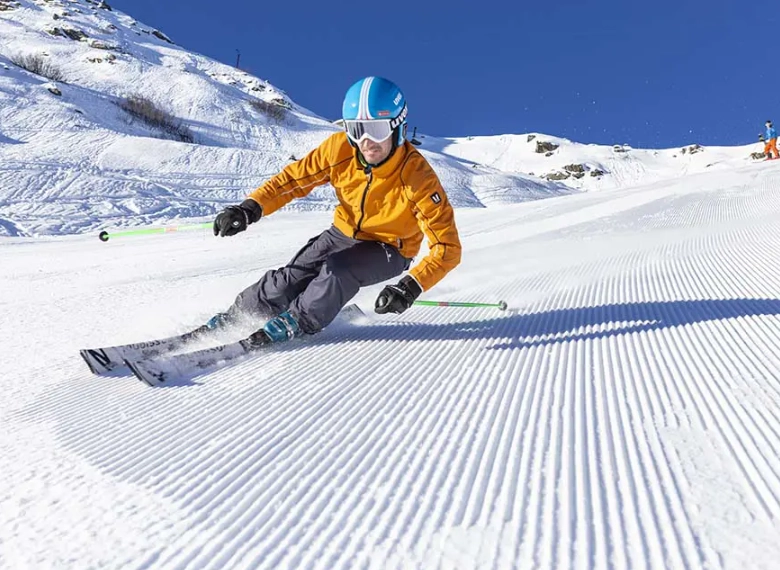
How to Choose: It's Not About the 'Best,' It's About the 'Right'
Now that we've explored the terrain of ski types, the real question becomes: how do you pick? The goal isn't to find the "best" ski in the world. The goal is to find the best ski for you, right now.
I've made this mistake. I bought a ski because a magazine said it was the top all-mountain pick, but it was too much ski for my ability at the time. It was stiff and demanding, and it made my days less fun, not more. Lesson learned.
The Decision Checklist
Ask yourself these questions in order:
- Where and what do you ski 80% of the time? East Coast ice? Western powder bowls? Midwest groomers? This is your #1 filter. Be brutally honest. Don't buy a 120mm powder ski if you see three deep days a season.
- What's your skiing style and ability level? Are you a cautious cruiser, an aggressive carver, a side-hit seeker, or a fall-line bomber? A stiff, expert-level ski will punish an intermediate. A soft, beginner ski will chatter and feel unstable for an expert.
- What's missing from your current ski experience? Do you want more float? More stability at speed? Easier turn initiation? More playfulness? Identify the desired feeling.
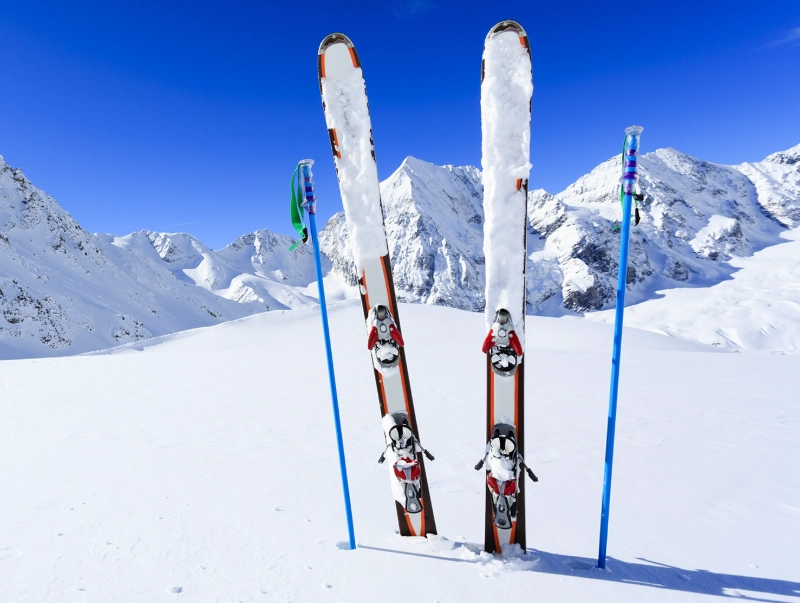
Let's talk about specs for a second, without getting too geeky. Width is the easiest place to start. It's a strong indicator of intent. Turn radius tells you how quick or long the ski wants to turn naturally. Rocker (tips/tails up) helps with float and ease; camber (middle up) helps with edge grip and pop.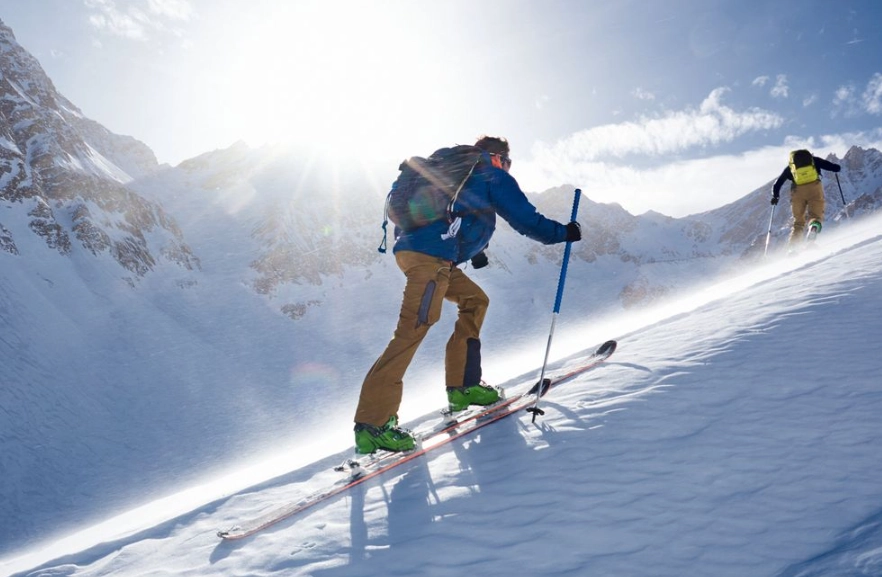
Frequently Asked Questions (FAQs)
The Final Run: It's About the Experience, Not the Count
So, after all this, how many types of ski are there? Dozens, if you count every niche. Four, if you want the foundational families. But I hope you see now that the number isn't the point.
The point is that modern ski design is incredibly sophisticated, giving us tools to enhance specific kinds of fun. The joy comes from matching the tool to the task—feeling that perfect float in powder on a wide ski, or the razor-sharp carve on a groomer with a frontside ski.
It’s a great time to be a skier. The variety means there’s almost certainly a perfect plank of wood, metal, and carbon out there with your name on it. You just have to know where to look. And now, hopefully, you do.
Related Articles
Comments
Join the discussion