In This Guide
- The Big Three: Skis, Bindings, and Boots
- What to Wear: The Layering System (No, Not Your Hoodie)
- Safety & Performance Accessories (The Non-Negotiables)
- The "Nice-to-Haves" & Specialized Gear
- Buying Guide: How to Navigate All These Types of Skiing Gear Names
- Common Questions About Types of Skiing Gear Names
- Final Run: Knowledge is Confidence
You know the feeling. You walk into a ski shop or scroll through an online store, and you're hit with a wall of jargon. All-mountain skis, twin-tips, DIN settings, shell boots, hardshell jackets, merino base layers... it's enough to make your head spin faster than a beginner on a black diamond. What does it all mean? And more importantly, what do you actually need?
I remember my first season. I showed up in jeans and a cotton hoodie, rented some gear that felt like clown shoes attached to planks, and spent more time shivering and falling than actually skiing. It was a mess. I was confused by all the types of skiing gear names, and it totally killed the fun.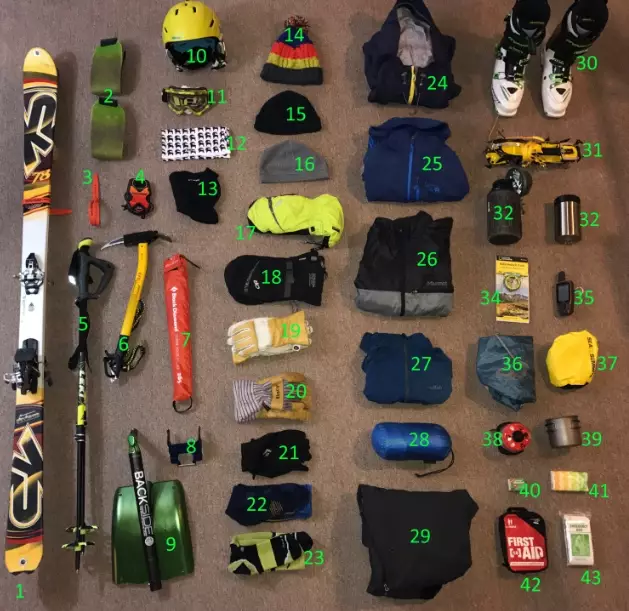
It doesn't have to be that way. Once you crack the code on the basic categories and names, buying or renting gear becomes way less intimidating. This guide is here to translate the lingo. We'll walk through every major category, explain what things are actually called, what they do, and why you might (or might not) need them. Think of it as your friendly, jargon-busting map to the world of skiing equipment.
The Big Three: Skis, Bindings, and Boots
This is the holy trinity, the non-negotiable core of your setup. Get this wrong, and nothing else matters.
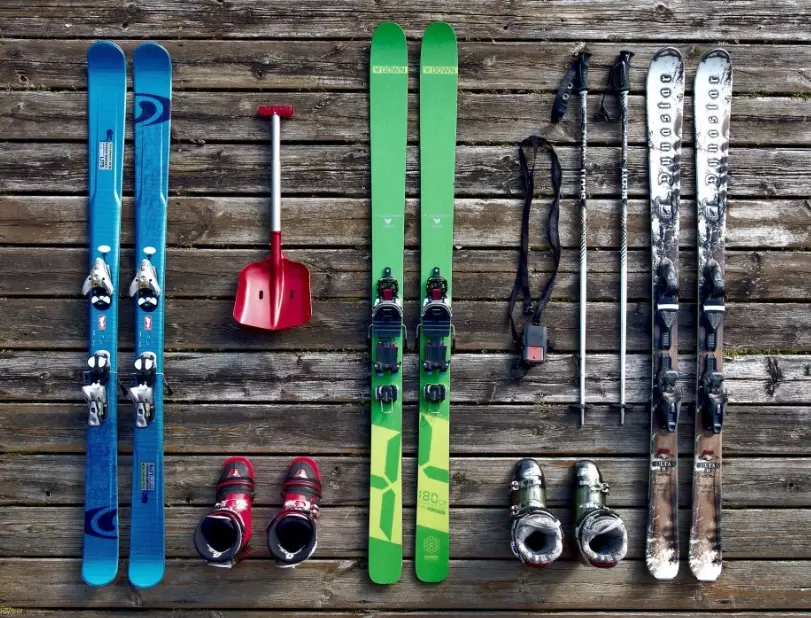
Skis: It's Not Just One Piece of Plastic
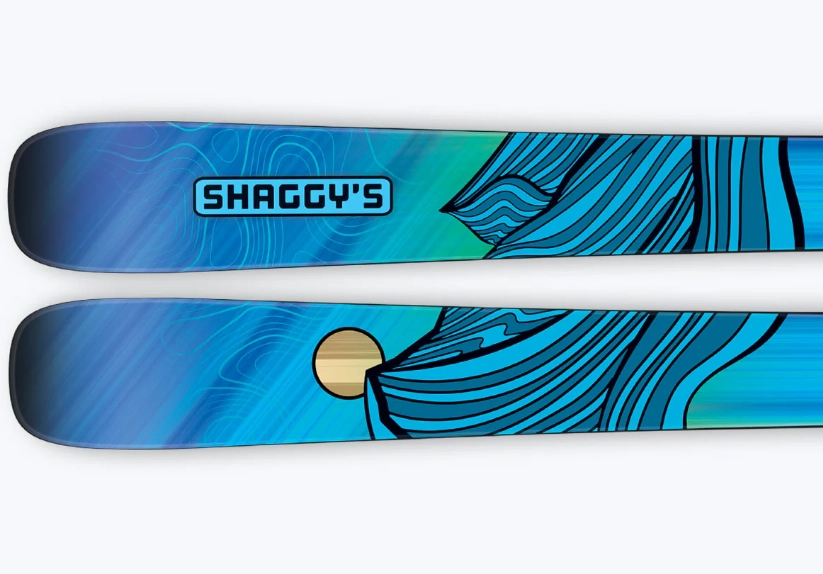
Skis have more parts and varieties than a Swiss Army knife. Let's break down the names you'll see.
By Type & Purpose: This is the biggest differentiator.
- All-Mountain Skis: The jack-of-all-trades. They're designed to handle a bit of everything—groomed runs, a little powder, some crud. For 80% of skiers, this is the category to look at first. They're forgiving and versatile.
- Powder Skis: These are the fat boys. Wide underfoot (often 100mm+), with a lot of rocker (upturned tips and tails) to float on deep snow. They're a dream in fresh powder but can feel like steering a canoe on hardpack.
- Carving Skis / Frontside Skis: Narrow, stiff, and built for speed on groomed trails. They have a deep sidecut (shaped like an hourglass) to hold on ice and make precise, arcing turns. Not much fun off-piste.
- Freestyle/Twin-Tip Skis: These have upturned tails (twin-tips) so you can ski backwards (switch). They're softer and more maneuverable for park and pipe tricks. The bindings are often mounted more centrally.
- Backcountry / Touring Skis: Lightweight versions of the above, designed to be used with special bindings and boots that let you walk uphill. A whole different beast.
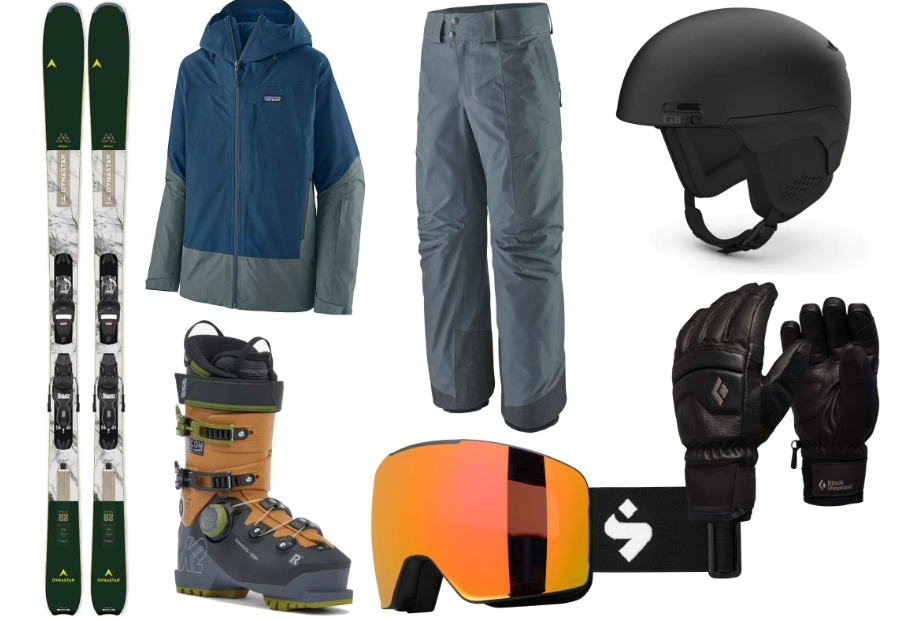
Key Parts & Specs: When you look at a ski's description, you'll see numbers like 128-98-118. That's the ski's profile.
- Tip / Shovel: The front, wide part. Helps initiate turns and float.
- Waist / Underfoot Width: The narrowest point, measured in millimeters. This is a key number. Narrower (70-85mm) for carving, wider (90-110mm+) for all-mountain/powder.
- Tail: The back end.
- Sidecut: The curve from tip to waist to tail. A deeper sidecut means a tighter turning radius.
- Camber & Rocker: Camber is the traditional upward arch in the middle when the ski is unweighted. Rocker is the reverse—upturned tips/tails. Most modern skis are a hybrid (rocker-camber-rocker) for versatility.
Bindings: The Safety Gatekeepers
These aren't just dumb clips. They're sophisticated release mechanisms that save your knees. The big term here is DIN setting. It's a number (usually 3-12) that determines how much force is needed for the binding to release your boot in a fall. It's set based on your weight, height, age, and skier type (I, II, or III). Never set this yourself. A shop tech must do it. A binding that's too tight won't release when it should; too loose, and you'll pop out randomly.
Other binding types include Alpine Touring (AT) Bindings which have a free-heel mode for climbing, and Frame Bindings, a heavier hybrid option.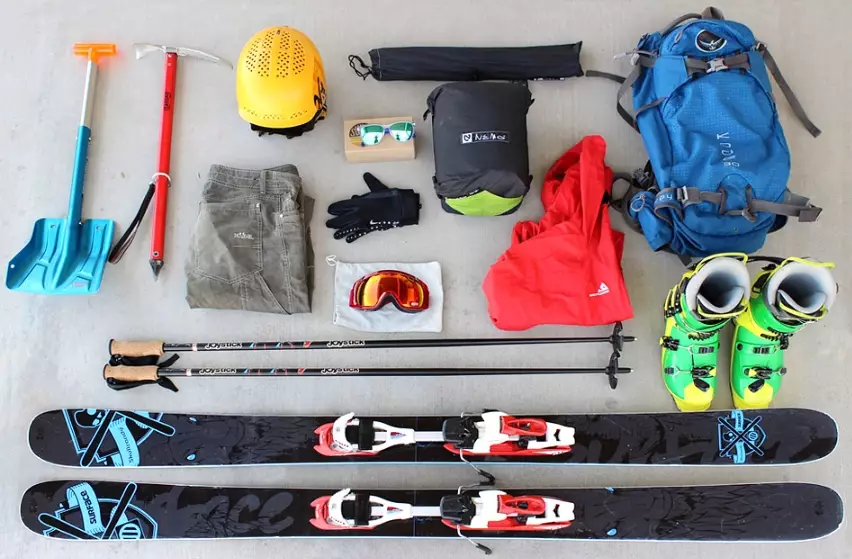
Boots: The Most Important Piece (Seriously)
I'll say it again: boots are king. An expensive boot that fits poorly is a torture device. A well-fitting mid-range boot will transform your skiing.
Key Boot Types & Features:
- Alpine Boots: The standard, stiff downhill boots. They have a rigid plastic outer shell and a soft inner liner (the Intuition liner is a famous aftermarket upgrade).
- Walk Mode / Hike Mode: Common in higher-end all-mountain boots. A lever lets you flex the cuff forward for easier walking to the lift or on flat sections.
- Last Width: The width of the boot's shell at its widest point, usually around 98-106mm. Narrow lasts are for performance/fitting narrow feet, wider lasts for comfort.
- Flex Index: A number (e.g., 90, 120) indicating stiffness. Lower (70-90) for beginners/intermediates, higher (100-130+) for aggressive experts. Don't over-flex for ego—a too-stiff boot is uncontrollable.
The best advice for boots? Go to a professional boot fitter. Not just any shop clerk, but someone with a reputation. They'll measure your foot, watch you stand, and recommend boots you'd never have considered. It's worth every penny. A good resource to understand the importance of this is the professional advice from retailers like REI's expert guide on ski boot fitting.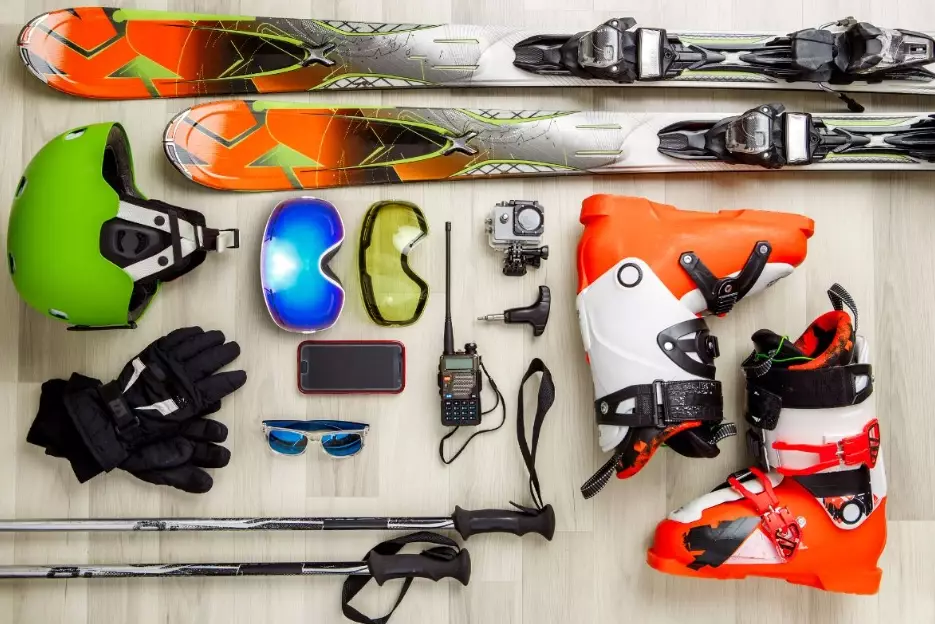
What to Wear: The Layering System (No, Not Your Hoodie)
Forget the bulky single-piece snowsuit. Modern ski clothing is a technical, layered system. Each layer has a specific job and a specific name.
| Layer Name | Also Called | Primary Job | Key Materials & Features | Common Mistake |
|---|---|---|---|---|
| Base Layer | Long Johns, Thermal Underwear | Moisture Management (Wicking) | Merino Wool, Synthetic Polyester (e.g., Polypropylene). Avoid Cotton at all costs—it holds sweat and gets cold. | Wearing cotton t-shirts or thermals. You'll be damp and chilled by 10 AM. |
| Mid Layer | Insulation Layer | Trapping Warmth | Fleece, Down Jackets, Synthetic Puffers (e.g., PrimaLoft). Down is warmer but useless when wet. Synthetic is bulkier but dries fast. | Using your everyday puffy coat. It's not breathable and will get soaked from sweat. |
| Outer Layer | Shell, Ski Jacket & Pants | Weather Protection (Wind/Water/Snow) | Hardshell (Gore-Tex, similar membranes), Softshell (more breathable, less waterproof). Look for taped seams, powder skirts, venting zippers. | Thinking a water-resistant winter coat is enough. You need fully waterproof/breathable for a full day on the mountain. |
A note on Gore-Tex: It's the gold-standard membrane for waterproofing and breathability, but it's expensive. Many brands (The North Face's Futurelight, Patagonia's H2No) have their own excellent alternatives that are often better value.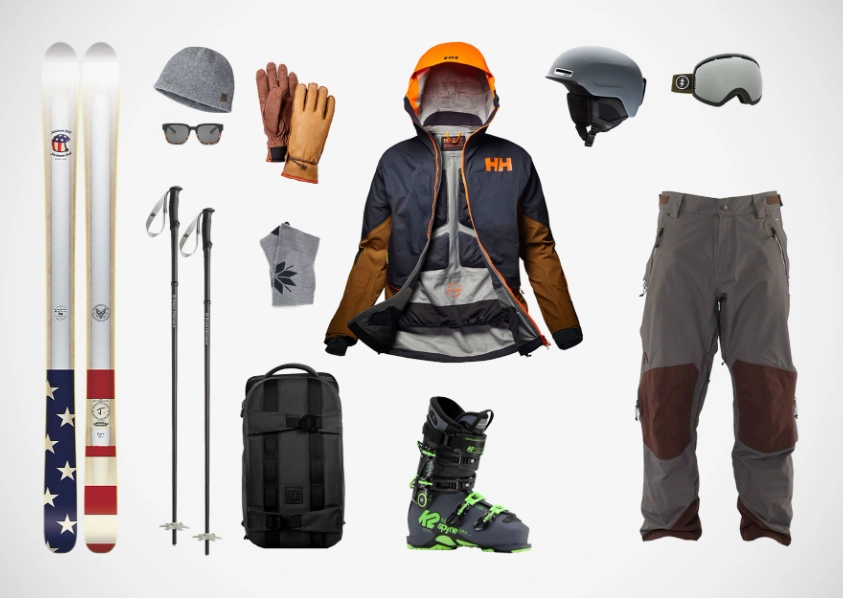
Safety & Performance Accessories (The Non-Negotiables)
These aren't afterthoughts. They're critical.
Helmet
Just wear one. Full stop. Modern ski helmets are lightweight, warm, and have features like MIPS (Multi-directional Impact Protection System) which reduces rotational forces on your brain in a crash. It's a worthwhile technology. Get one that fits snugly without pressure points.
Goggles
Your eyes need protection from wind, snow, and UV reflection (which is intense at altitude). Key terms:
- Lens VLT (Visible Light Transmission): The percentage of light that gets through. Low VLT (5-20%) for bright sunny days (dark lens). High VLT (50-80%) for flat light or night skiing (clear/yellow/rose lens).
- Photochromic Lenses: These automatically adjust tint based on light conditions. Super convenient but pricey.
- Spherical vs. Cylindrical Lenses: Spherical lenses are curved like a sphere, offering better peripheral vision and less distortion. They're generally higher-end.
Gloves or Mittens
Mittens are warmer than gloves because your fingers share heat. Look for waterproof membranes (Gore-Tex again) and durable palm material. I prefer a leather palm for better grip on poles. Cheap nylon gloves get wet and cold instantly.
The "Nice-to-Haves" & Specialized Gear
Once you have the basics, this other gear can enhance comfort or enable specific activities.
- Neck Gaiter / Balaclava: A tube of fabric for your neck and face. Far better than a scarf. A merino wool one is a game-changer on cold days.
- Ski Socks: Another place to avoid cotton! Get tall, thin-to-medium thickness ski-specific socks made of merino or synthetic blend. Thick socks will make your boots tight and cut off circulation.
- Helmet Audio: Speakers that fit inside your helmet ear pads. Great for listening to music or taking calls on the lift.
- Backpack (Small): For carrying water, snacks, an extra layer, and safety gear if you're going off-piste (avalanche beacon, probe, shovel).
- Tuning Gear: A whole other world. Edge tuners, waxing irons, scrapers, brushes. For most people, taking skis to a professional tune shop 1-2 times a season is sufficient. But knowing you need a base grind, edge sharpening, and hot wax is useful vocab.
Buying Guide: How to Navigate All These Types of Skiing Gear Names
Now that you know the players, how do you build your team?
Step 2: Prioritize Fit Over Flash. This is especially true for boots and helmets. A $400 boot that fits perfectly is infinitely better than a $800 boot that doesn't. Spend your time and money here first.
Step 3: Rent Before You Buy (Especially Skis). Most shops let you demo different models. Try an all-mountain ski one day, a carving ski the next. See what you like. It's the best way to learn what the different types of skiing gear names feel like under your feet.
Step 4: Consider Used or Previous-Season Gear. Ski technology evolves, but not as fast as phone tech. Last year's model is often 30-50% cheaper and 95% as good. Check reputable used gear sites or end-of-season sales.
Step 5: Assemble a Core Checklist. Before you shop, make a list so you don't forget the essentials.
Essential Gear Checklist
- Skis (matched to your level & typical terrain)
- Ski Bindings (professionally mounted and DIN-set)
- Ski Boots (professionally fitted!)
- Ski Poles (often overlooked, but simple)
- Helmet (with MIPS if possible)
- Goggles (with 2 lenses for different light or photochromic)
- Base Layer Top & Bottom (synthetic or merino)
- Mid Layer Jacket/Fleece
- Ski Jacket (waterproof/breathable shell)
- Ski Pants (waterproof/breathable shell)
- Ski Socks (2-3 pairs, synthetic/merino)
- Gloves or Mittens (waterproof)
- Neck Gaiter
Common Questions About Types of Skiing Gear Names
Final Run: Knowledge is Confidence
Phew. That's a lot of names, right? But here's the thing—you don't need to memorize it all. Bookmark this page. Use it as a reference when you're shopping or reading product descriptions. The goal isn't to become a gear snob, but to become a confident consumer.
Understanding the basic types of skiing gear names—knowing why a boot's flex matters, why you layer with specific materials, what that waist width number means—empowers you to make good choices. It helps you communicate what you need in a shop. It stops you from wasting money on flashy gear that's wrong for you.
Start with the essentials. Get the fit right. Rent and demo to learn your preferences. The mountain is supposed to be fun, not a test of your equipment vocabulary. Now that you've got a handle on the lingo, you can focus on the most important thing: making turns and enjoying the ride.
See you out there.
Related Articles
Comments
Join the discussion