Let's clear something up right away. Best bikini snow skiing isn't about shredding black diamonds in a two-piece. It's a vibe. It's that perfect spring afternoon where the sun is blazing, the snow is soft, and you peel off your jacket for a few glorious minutes to celebrate the end of winter. It's about capturing that iconic shot, feeling the sun on your skin after months of bundling up, and doing it all without turning into a human popsicle. This guide cuts through the Instagram fantasy and gives you the real deal on where to go, what to actually wear, and how to get those photos without the rookie mistakes I see every season.
What's Inside?
Where to Go: Top Resorts for Bikini Skiing Weather
Location is everything. You need reliable late-season sun, high-altitude slopes that hold snow into spring, and a fun, relaxed atmosphere. Based on my seasons working in the Alps and chasing spring corn snow, here are the spots that deliver.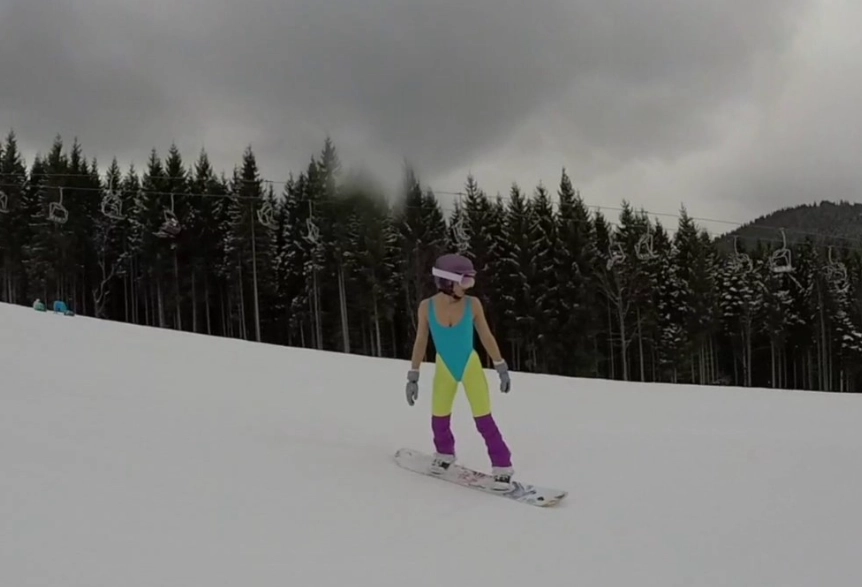
Top Pick for Consistent Sun & Vibe: Tignes/Val d'Isère, France. The Espace Killy area sits high in the Tarentaise Valley. Tignes' glacier means skiing often lasts into May. The south-facing slopes of Val d'Isère's Solaise area become a sun trap by April. The real secret? The legendary Folie Douce après-ski bars at the top of both resorts. The party starts on the terrace in the afternoon sun – it's the epicenter of bikini and shirtless skiing photos. Expect lift tickets around €60 per day in late season. Fly into Geneva (GVA), then a 3-hour transfer.
Best for High Altitude & Guaranteed Snow: Sölden, Austria. Home to two glaciers, Sölden's season is long. The 007 Elements restaurant at 3,048m on the Gaislachkogl is not only an architectural marvel but a stunning, sunny photo backdrop. The resort is less about wild après and more about reliable, expansive skiing well into spring. Innsbruck (INN) airport is about 90 minutes away.
The North American Spring Skiing Capital: Mammoth Mountain, California. Mammoth's base elevation is already high, and it's famous for deep snowpacks that last. By May, the Main Lodge sun deck is a festival of sunbathing skiers and riders. The vibe is uniquely Californian. You'll need a car. Fly into Mammoth Lakes (MMH) or Reno (RNO).
Here’s a quick comparison to help you decide:
| Resort | Country | Best Time | Key Feature for Bikini Skiing | Approx. Late-Season Day Pass |
|---|---|---|---|---|
| Tignes/Val d'Isère | France | Late March - April | Legendary sunny après-ski terraces, high altitude | €55-65 |
| Sölden | Austria | April - Early May | Glacier skiing, modern lift system, stunning photo spots | €58-62 |
| Mammoth Mountain | USA (CA) | April - May (sometimes June) | Massive spring snowpack, huge sunny decks, laid-back vibe | $130-150 |
| Whistler Blackcomb | Canada (BC) | April | Long ski-out runs in the sun, great village atmosphere | $120-140 CAD |
What to Actually Wear: The Smart Layering System
This is where most people get it wrong. They see the photo and think "bikini under a thin jacket." Disaster. You'll be cold on the lift and a sweaty mess while skiing. The goal is to be comfortable while moving and ready to strip down quickly for photos.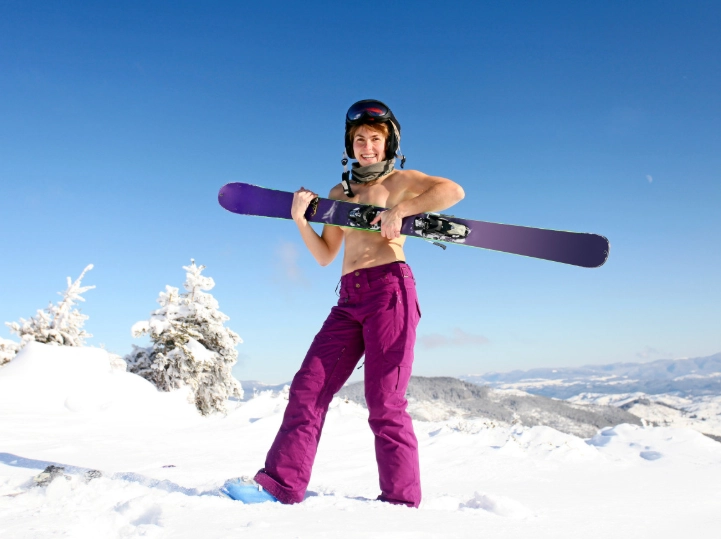
The Golden Rule: You are dressing for two different activities: 1) dynamic skiing/snowboarding, and 2) static sunbathing/photography. Your kit must work for both.
The Core Layering Strategy
- Base Layer (Skin Layer): Your bikini top and bottom. Choose a sports-style bikini for security, not a flimsy string tie. A bandeau or racerback top stays put better.
- Insulation Layer (The Warmth): This is the critical piece everyone forgets. A lightweight, packable puffer jacket or a thick fleece. Not your big ski jacket. Something that stuffs into a backpack. This goes on the second you stop moving.
- Shell Layer (The Protector): A lightweight, breathable windshell or softshell jacket. This blocks the wind on the chairlift and during runs, but won't make you overheat. It should have a full zip for easy removal.
- Bottoms: Wear your normal ski pants or snowboard pants. They come off easily for the shot. Some opt for high-waisted bikini bottoms under thinner snow pants for a quicker transition.
My personal go-to? A supportive sports bikini, a 60g synthetic insulated vest (packs tiny), and a Pertex windshell. In my backpack: sunscreen, a microfiber towel (to dry off or sit on), and hand warmers.
How to Photograph Bikini Skiing Like a Pro
Getting the shot is the whole point. But the difference between a cringe-worthy, awkward pic and a stunning one comes down to a few pro tips.
Timing is Everything: The "golden hour" before sunset provides magical light, but on the mountain, the best light is often midday to early afternoon when the sun is highest and shadows are minimal. Avoid early morning—it's still too cold.
Scout Your Location: Don't just stop on any run. Look for: A clean, snowy backdrop (not a car park or lift line). A safe, wide area well off the piste where you won't be in anyone's way. Interesting features like a lone tree, a rock formation, or a view of the valley.
The Action Shot vs. The Lifestyle Shot: The classic action shot is skis on, jacket off, mid-turn or skiing away from the camera. Use burst mode. For lifestyle shots, sit on your jacket, lean back on your skis planted in the snow, or hold your skis over your shoulder. Look relaxed, not like you're freezing.
A subtle mistake I see? People looking directly at the camera with a tense "I'm cold" smile. Look past the camera, laugh with your friend, or look down at your skis. It feels more natural.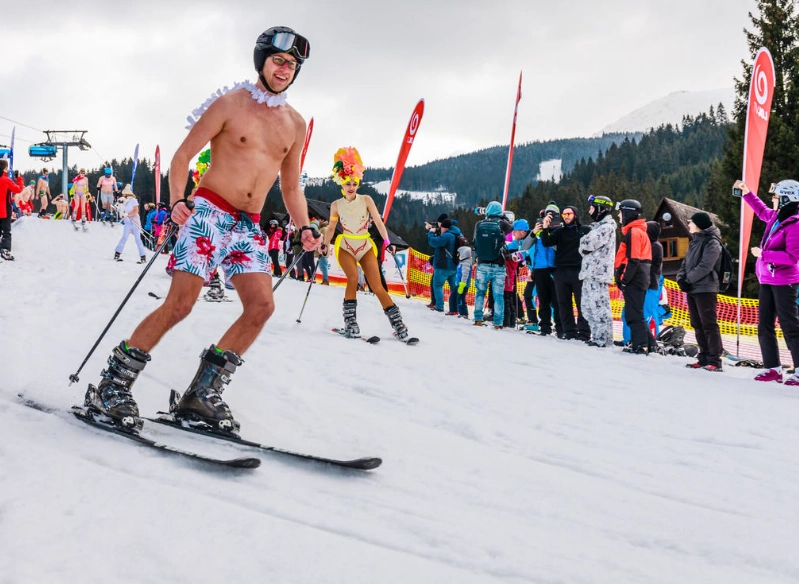
Safety First: The Risks Nobody Talks About
This isn't just about comfort; it's about safety. The mountain doesn't care about your Instagram feed.
- Hypothermia & Frostbite: Exposed skin in sub-zero temperatures, even with sun, can get cold fast. Wind chill is the real killer. The moment you feel your fingers or toes going numb, get your layers back on. Don't "push through" for one more shot.
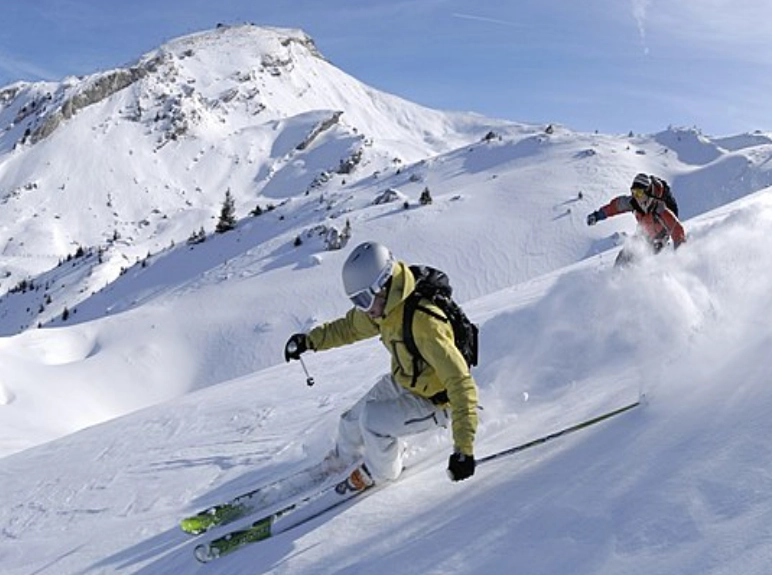
- Sunburn & Snow Blindness: This is the #1 underestimated risk. Snow reflects up to 80% of UV rays, effectively giving you a double dose. At high altitude, UV intensity is significantly greater. The American Cancer Society and the International Ski Federation (FIS) both emphasize high-altitude sun protection. You need: SPF 50+ broad-spectrum sunscreen, applied liberally to ALL exposed skin 30 minutes before, and re-applied every 2 hours. Don't forget your part line, ears, and under your chin. High-quality UV-protection sunglasses or goggles. Your eyes can get sunburned too (photokeratitis).
- Avalanche Terrain: Spring conditions increase avalanche risk in certain aspects. Never venture into closed or backcountry areas for a photo. Stick to open, controlled slopes.
I learned the sunburn lesson the hard way during a long spring shoot. Even with sunscreen, the reflection off the snow gave me a brutal burn on my shoulders and face. Now I'm religious about application and re-application.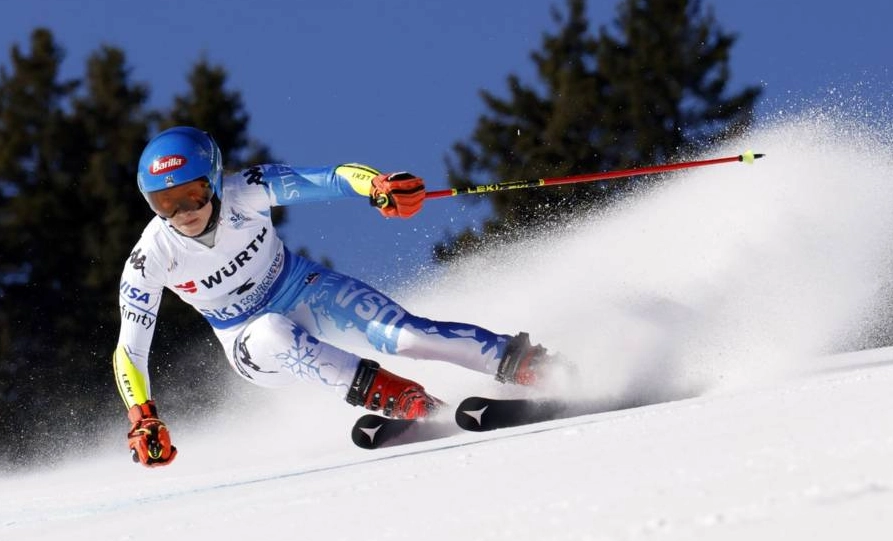
Your Bikini Skiing Questions Answered
How do you avoid getting extremely cold when skiing in just a bikini?
What's the best sunscreen for bikini skiing at high altitude?
Are there ski resorts that frown upon or ban bikini skiing?
Related Articles

Comments
Join the discussion