You're planning a big ski trip. You want endless terrain, that feeling of exploring a massive mountain, the option to ski a different zone every day. Your search leads you to "largest ski resorts in North America." But here's the thing most lists won't tell you: raw acreage is a seductive number, but it doesn't always translate to the best experience. A resort can have 5,000 acres of mostly flat, lift-starved terrain and feel smaller than one with 3,000 acres of perfectly sculpted, accessible fall lines.
I've spent two decades chasing snow across the continent, and I've learned that size needs context. This guide is about that context. We'll look beyond the marketing brochures to the actual on-snow feel, the logistics, and the vibe of these behemoths. Because choosing the right giant is the difference between an epic trip and a frustrating one where you spend half your time on traverse cat tracks or in lift lines.
Your Quick Guide to the Giants
What "Big" Really Means on a Ski Mountain
Let's clear this up first. When resorts boast about being the largest, they're almost always referring to skiable acreage. It's the total area within the resort boundary where you're allowed to ski. It's a useful metric, but it's not the only one.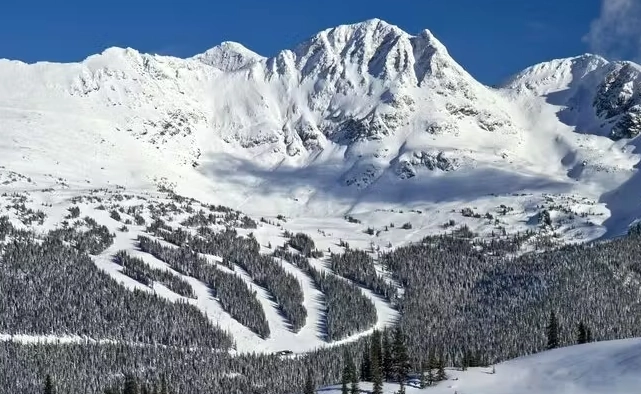
You need to pair it with two others:
- Vertical Drop: The height from the base to the highest lift-served point. This dictates the length and sustained pitch of your runs. A 4,000-foot vertical is a serious mountain. A 2,000-foot vertical can feel repetitive after a few days, no matter how wide it is.
- Lift Network: This is the unsung hero. What good is 7,000 acres if it's served by three slow double chairs? Modern, high-speed lifts—gondolas, six-packs, eight-packs—are force multipliers. They shrink the mountain in the best way, letting you lap more vertical feet per day.
Here's a personal gripe: some resorts count every inch of side-country and hike-to terrain in their acreage. That's great for experts, but if you're an intermediate skier who sticks to the groomers, that number is irrelevant to you. Always ask: how much of this is lift-served, in-bounds terrain for my ability level?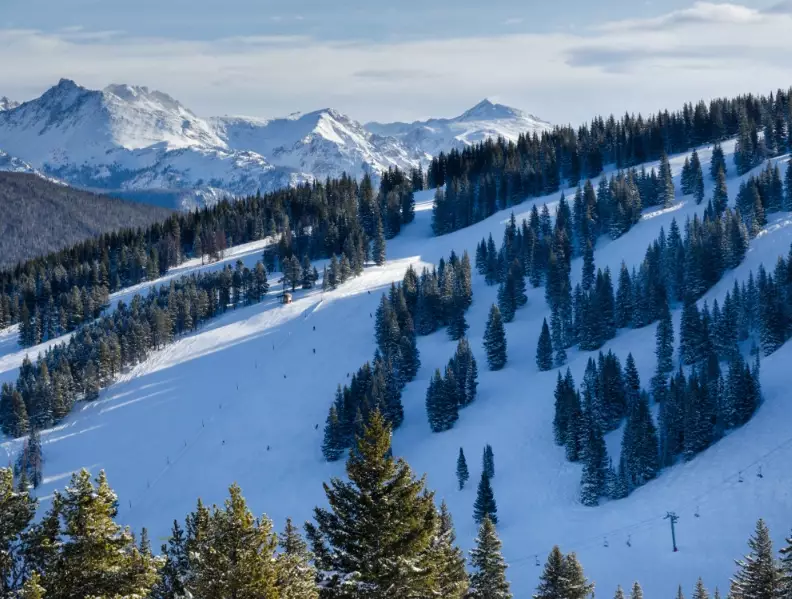
The Heavy Hitters: A Side-by-Side Look
This table isn't just a list. It's a cheat sheet to compare the core stats that define the experience. I've focused on lift-served acreage where possible to give a truer picture.
| Resort (State/Province) | Skiable Acres (Reported) | Vertical Drop (Feet) | Key Lift Infrastructure | Notable Vibe & Terrain Mix |
|---|---|---|---|---|
| Whistler Blackcomb (BC) | 8,171 | 5,280 | Peak 2 Peak Gondola, 25+ high-speed lifts | Two mountains in one. Epic village life, reliable snow, immense expert terrain. |
| Park City Mountain (UT) | 7,300 | 3,200 | Quicksilver Gondola linking historic areas | Massive, sprawling. Excellent intermediates, great town access. |
| Big Sky Resort (MT) | 5,850 | 4,350 | Lone Peak Tram, Ramcharger 8 (heated seats!) | Raw, uncrowded, big mountain feel. Low skier density is a huge plus. |
| Vail Mountain (CO) | 5,317 | 3,450 | Two gondolas from town, extensive high-speed network | Seven legendary Back Bowls. Front-side is cruiser heaven. Upscale, bustling. |
| Heavenly Mountain (CA/NV) | 4,800 | 3,500 | Gondola from Stateline, NV | Straddles two states. Lake Tahoe views are unbeatable. Party atmosphere. |
See how the story starts to change? Whistler's vertical is in a league of its own. Big Sky's low skier density is a hidden stat that massively impacts your day. Park City's acreage is mind-boggling, but its vertical is more modest.
Beyond the Numbers: A Resort-by-Resort Deep Dive
The stats are the skeleton. Here's the flesh and blood—what it actually feels like to ski there.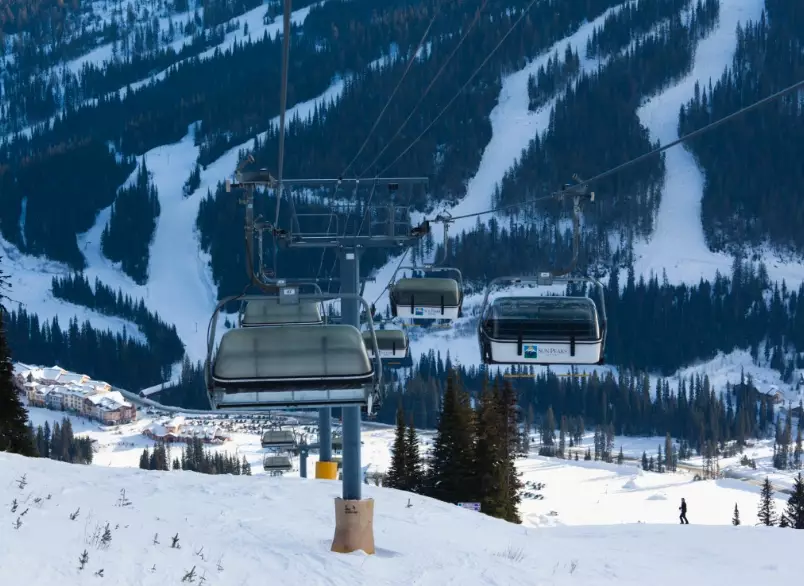
Whistler Blackcomb, British Columbia
This is the undisputed king by almost any measure. The Peak 2 Peak Gondola connecting the two mountains is a game-changer. You can start your day on Blackcomb's glacier, hop over to Whistler's alpine bowls for lunch, and finish on a long, tree-lined cruiser back to the village. The sheer variety is unmatched. The village is a real, walkable town with everything, which is a blessing and a curse—it can get expensive and crowded during peak weeks. Snow reliability is generally excellent, but you can get rain at the base in early or late season. A pro tip: don't try to "do it all" in three days. Pick one mountain per day to avoid spending your entire trip in transit.
Park City Mountain, Utah
Park City feels less like one mountain and more like three or four smaller resorts glued together. The 2015 connection of Park City and Canyons Resort created this monster. The terrain is incredibly diverse, but the interconnectivity relies heavily on a few key lifts (like the Quicksilver Gondola). If one goes on wind hold, your plans are shot. The town of Park City is fantastic, with direct ski access. The snow is famously light, and the intermediate cruising is some of the best on the continent. The scale can be disorienting—use the resort app religiously.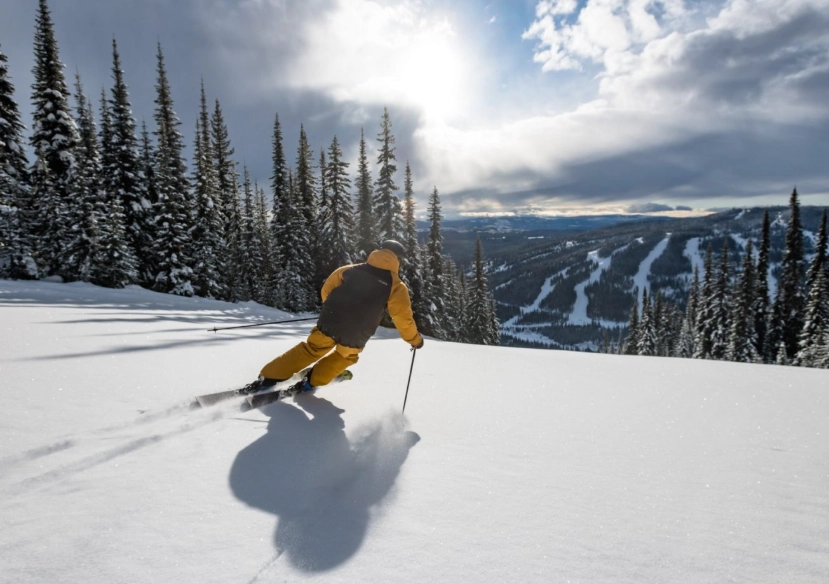
Vail Mountain, Colorado
Vail's genius is its compartmentalization. The front side, facing the interstate, is a meticulously groomed paradise of long, rolling blue runs. Then you go over the ridge into the Back Bowls—vast, treeless, sun-drenched expanses that feel like another planet. On a powder day, there's nothing like it. The downside? It's expensive, the base villages (Vail Village, Lionshead) feel manufactured, and the catwalks to get back to certain lifts can be tedious. Vail rewards local knowledge. Find someone who knows the secret stashes in the Blue Sky Basin area.
Big Sky Resort, Montana
Big Sky is the anti-Vail. It's remote, feels wild, and you'll rarely wait in a lift line. The terrain is serious—the Lone Peak Tram accesses some of the most extreme in-bounds skiing in the U.S. But don't be scared off; there are miles of fantastic intermediate runs off the Swift Current and Ramcharger lifts. The real challenge here is the altitude and weather. The summit sits at 11,166 feet, and it can get bitterly cold. The base area is improving but still feels sparse compared to Whistler or Vail. You come here for the skiing, not the apres.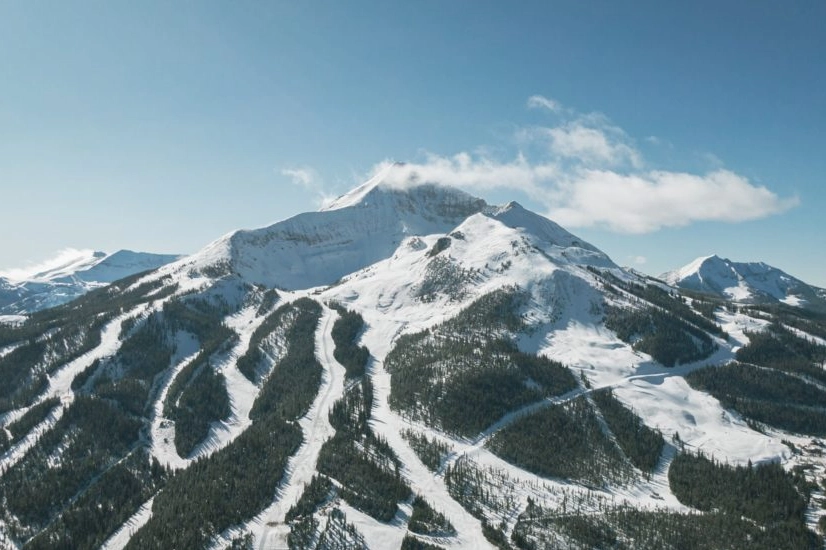
How to Choose the Right Mega-Resort for You
Stop looking at the acreage number first. Start here:
For Families & Beginners: Prioritize resorts with large, dedicated learning areas. Park City has excellent, separate beginner zones. Whistler's Olympic Station area on Blackcomb is perfect. Heavenly's California base area is gentle. Avoid places where beginner runs are just narrow cat tracks funneling down from expert terrain.
For Intermediates Who Love to Cruise: You want high-speed lifts serving long, consistent blue runs. Vail's front side and Park City's entire empire were built for you. Whistler's Symphony Amphitheatre on a sunny day is intermediate heaven.
For Experts & Powder Hounds: You need steep, challenging, and accessible expert terrain. Big Sky's tram-served chutes, Whistler's Spanky's Ladder, and Vail's Back Bowls are your playgrounds. Consider snow reliability—Utah and British Columbia often have more consistent deep seasons than some Colorado resorts.
For the Social Scene & Town Life: If apres-ski and dining are half the trip, Whistler and Park City offer authentic towns with real character. Heavenly has the casinos and nightlife of Stateline, NV. Vail and Big Sky are more resort-centric.
Mastering the Logistics of a Big Mountain Trip
A big resort punishes poor planning. Here’s how to not get burned.
Lodging Location is Everything: This is the most important decision after picking the resort. Being "walking distance" can mean a 20-minute slog in ski boots. Truly ski-in/ski-out is worth a premium. If not, ensure there's a reliable, free shuttle that runs early and late. Study the trail map: stay near a lift that services the terrain you'll ski most.
Lift Tickets & Passes: The Epic Pass (Vail Resorts) and Ikon Pass (Alterra) dominate. If you're going to Whistler, Vail, or Park City, an Epic Pass product will likely save you a fortune over window rates. Buy online, in advance. Always.
Getting There: Whistler: Fly to Vancouver (YVR), 2-hour drive. Park City/Heavenly: Fly to Salt Lake City (SLC) or Reno (RNO), both under 90 minutes. Vail: Fly to Denver (DEN), 2-hour drive (can be 4+ in weekend traffic). Big Sky: Fly to Bozeman (BZN), 1-hour drive. Factor in transfer time and cost.
Rentals: Don't rent at the airport if you can avoid it. Use a quality shop in town or, better yet, one that delivers to your lodging. The gear will be better tuned, and you'll save the hassle of transporting it.
Your Biggest Questions, Answered
Choosing one of North America's largest ski resorts is committing to an adventure. It's about embracing the scale, doing a little homework, and then letting yourself get lost (figuratively, please use the map) in the possibilities. Forget about ticking off every run. Pick a zone, explore it deeply, and soak in the sheer magnitude of the mountains. That's the real reward of skiing the giants.
Related Articles
Comments
Join the discussion