Quick Exploration Guide
Let's talk about size. If you're like me, when you book a ski holiday, you want to know you won't be skiing the same three runs by Wednesday. You want variety, you want exploration, you want that feeling of setting out in the morning and knowing you could literally ski all day and not cover the same ground twice. That's the dream, right? Well, in Europe, that dream is built on a scale that's hard to comprehend until you're there, staring at a trail map that looks more like a subway system.
We're talking about the largest ski resorts in Europe. These aren't just hills; they're interconnected valleys, mountains, and villages stitched together by hundreds of lifts. The stats are mind-boggling – hundreds of kilometers of pistes, lift systems that move tens of thousands of people per hour, and ski areas so vast they span international borders. But here's the thing I've learned from chasing the biggest ski areas: size isn't everything. Well, it is a huge part of it, but it's not the *only* thing.
The Core Question: What makes a ski resort "large"? Is it just the total piste length? Or is it the skiable area in hectares? The number of lifts? The vertical drop? Most rankings focus on the total groomed piste length in kilometers, and that's a solid, comparable metric. But a truly great large European ski resort combines massive terrain with efficient lifts, interesting villages, and reliable snow. A resort with 600km of pistes but only two slow chairlifts to access it all would be a nightmare.
Breaking Down the Behemoths: The Top Contenders
Alright, let's get into the meat of it. Based on the official, linked piste kilometers (that's the key – they have to be connected by lifts, not just a marketing gimmick), a few names consistently dominate the conversation. I've skied most of these, and each has a completely different personality.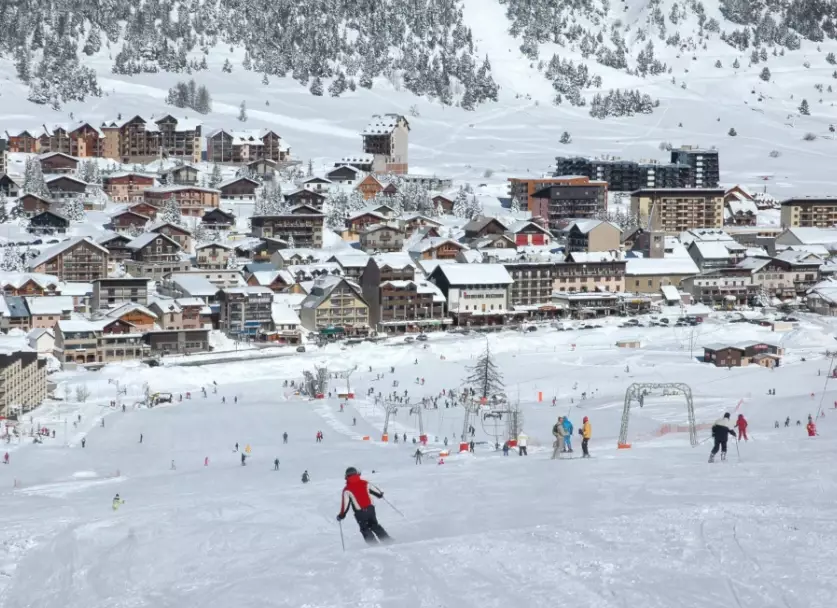
The Undisputed King: Les 3 Vallées, France
You can't have a conversation about the largest ski resorts Europe has to offer without starting here. Les 3 Vallées (The 3 Valleys) is the benchmark. It's not just big; it's a properly engineered ski metropolis.
- Claimed Piste Length: A staggering 600km of interconnected runs.
- The Vibe: Utterly vast and incredibly efficient. You can start in Courchevel, have lunch in Meribel, and finish your day in Val Thorens, all on skis.
- My Take: The sheer scale is breathtaking. The lift system, particularly the modern gondolas, is phenomenal at moving people. But a word of caution – it can feel a bit... corporate. Some of the charm is lost in the sheer efficiency and the eye-watering prices in places like Courchevel 1850. Val Thorens, being the highest, has the most reliable snow, but it's a purpose-built resort, not a quaint alpine village. For pure, guaranteed skiing variety across a massive area, it's unbeatable. The official Les 3 Vallées website is your best source for the latest lift status and piste maps.
But is it the best? That depends.
The High-Altitude Challenger: Skirama Dolomiti, Italy (Dolomiti Superski)
This one is a different beast. While Les 3 Vallées is one contiguous area, the Dolomiti Superski area is a colossal network of 12 separate ski areas, all accessible on one pass. The total marketed piste length is over 1,200km, but you often need a bus or car to hop between major sectors like Val Gardena, Alta Badia, and Cortina d'Ampezzo.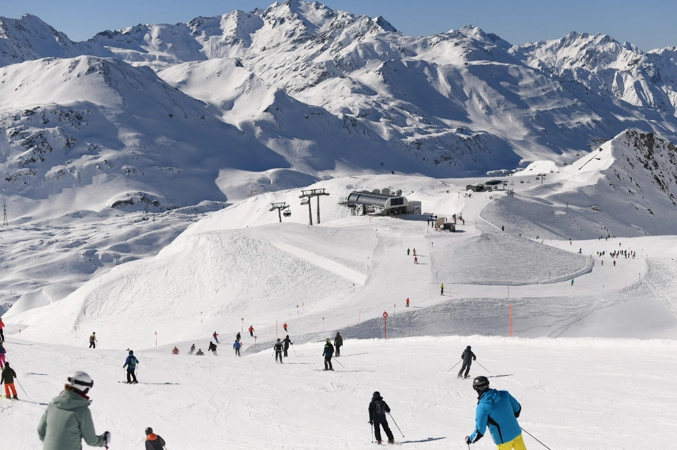
- The Key Area: For the most interconnected, ski-only experience, focus on the Sella Ronda circuit. This is a famous day-long tour around the Sella massif, covering about 40km of skiing through four valleys.
- The Vibe: Italian *dolce vita* meets stunning UNESCO mountain scenery. The food on the mountain is in a different league compared to France. Think plate of fresh pasta and a glass of Lagrein for lunch.
- My Take: The scenery is arguably the most dramatic in the Alps. However, calling it a single "resort" is a stretch. It's a collection of world-class areas. The skiing between linked areas (like the Sella Ronda) is fantastic, but to experience it all, you need to plan some transport. The snow can be less reliable at lower altitudes compared to the high glaciers of France or Switzerland. But for a combination of culture, food, and breathtaking skiing, it's a unique contender for the title of most impressive large ski region. Check the Dolomiti Superski portal for detailed area maps.
The Swiss Efficiency Expert: Portes du Soleil, France/Switzerland
Straddling the border between France and Switzerland, the Portes du Soleil is another giant. It's often quoted as having around 600km of pistes, rivaling Les 3 Vallées.
- The Vibe: More relaxed and spread out than the 3 Valleys. It encompasses famous party towns like Avoriaz and Morzine, and quieter Swiss villages like Champéry.
- Terrain Note: It has a huge amount of gentle, cruising terrain, but also some seriously challenging off-piste and iconic runs like the "Swiss Wall" (a mogul field that's as brutal as its name suggests).
- My Take: I love the international flavor. Skiing from France to Switzerland for lunch never gets old. However, the connection points between some sectors can be slow or involve surface lifts, which can break up the flow on a busy day. It feels less "polished" than the 3 Valleys but has more character in its villages. The snow reliability in the lower villages (like Morzine) can be an issue in warm winters.
Local's Tip: When comparing these giants, don't just look at the total kilometer number. Look at the vertical drop of the linked area. A resort with a 2000m vertical drop from top to bottom offers more sustained, interesting runs than one with the same piste length spread over rolling hills.
Let's put these top three in a quick comparison table, because seeing the numbers side-by-side helps.
| Resort Name | Country | Linked Piste (approx.) | Key Villages | Best For |
|---|---|---|---|---|
| Les 3 Vallées | France | 600 km | Courchevel, Meribel, Val Thorens | Unmatched scale & efficiency, high-altitude snow surety |
| Sella Ronda (Dolomiti Superski) | Italy | ~40km circuit, 1200km+ region | Val Gardena, Alta Badia, Cortina | Stunning scenery, incredible food, iconic circuit skiing |
| Portes du Soleil | France/Switzerland | 600 km | Avoriaz, Morzine, Les Gets, Champéry | International skiing, varied terrain, lively aprés-ski |
Beyond the Top Three: Other Massive Players Worth Your Time
The conversation doesn't end with the "big three." Europe is packed with other ski areas that are gigantic by any other continent's standards.
Espace Killy (Val d'Isère & Tignes), France
Named after champion skier Jean-Claude Killy, this area offers around 300km of pistes. Don't let the smaller number fool you – it's some of the most challenging and varied terrain in the Alps, with phenomenal off-piste and a huge amount of high-altitude, glacier-backed skiing. Val d'Isère is a legendary town with a fierce reputation for expert terrain.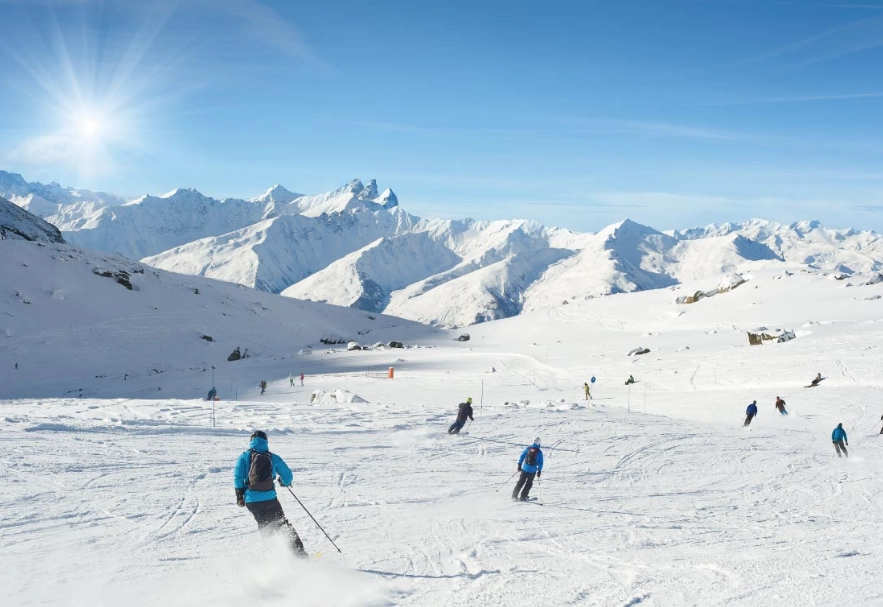
4 Vallées, Switzerland (Including Verbier)
Switzerland's largest linked ski area, with about 410km of pistes. Verbier is the star here, a magnet for expert skiers and the international jet-set. The off-piste in the Mont Fort sector is legendary. It's chic, challenging, and stunningly beautiful. The Swiss official tourism site has great info on the region.
SkiWelt Wilder Kaiser - Brixental, Austria
Often overlooked in the "biggest" talks, Austria's SkiWelt is one of the world's largest interconnected ski areas, with over 280km of pistes served by a mind-boggling 90 lifts. The vibe is pure, cozy Austrian charm – think wooden huts and gemütlichkeit. It's a fantastic area for intermediates and families who love cruising perfectly groomed runs.
How to Actually Choose Between These Giants
So you've decided you want a piece of this mega-resort action. Great! But how do you pick? Throwing a dart at a map isn't the best strategy.
Honest Truth: The biggest pitfall is choosing a resort based solely on piste length, without considering your group's ability and what you want from the holiday. A beginner will be miserable and intimidated in Verbier. A hardcore off-piste skier might get bored in the SkiWelt.
Here’s a simple checklist I use:
- Group Ability: Are you mostly beginners/intermediates? Prioritize areas with vast networks of blue and red runs (SkiWelt, much of Portes du Soleil). Are you experts? Look for steep couloirs, challenging off-piste, and high alpine terrain (Espace Killy, 4 Vallées, the steeper sectors of the 3 Valleys).
- Snow Reliability: Booking early or late season? Focus on resorts with high-altitude villages and glaciers (Val Thorens in 3 Valleys, Tignes in Espace Killy, Zermatt). The official France Montagnes site provides good regional snow data.
- Village Vibe: Do you want a bustling, aprés-ski party town (Val d'Isère, St. Anton)? A chic, luxury experience (Courchevel 1850, Verbier)? A traditional, family-friendly Austrian village (everywhere in the SkiWelt)? This matters more than you think after the lifts close.
- Budget: Let's be real. Switzerland and top French resorts (Courchevel) are expensive. Austria and Italian resorts often offer better value, especially for food and drink on the mountain.
Frequently Asked Questions (The Stuff You Really Want to Know)
I get a lot of questions about these places. Here are the real answers.
Is it easy to get lost in these huge ski areas?
Yes, absolutely. But that's half the fun! All major resorts have excellent, color-coded piste maps. Use them. Also, smartphone apps like SkiTracks or the resort's own app with GPS maps are lifesavers. My strategy? Plan a rough circuit for the morning, find a lunch spot, and then explore a new sector in the afternoon. Always know the last lift time back to your home valley!
Do I need to be an expert skier to enjoy them?
Not at all. In fact, some of the largest ski resorts in Europe are paradise for intermediates. The sheer number of long, cruising red and blue runs is what makes them so appealing. Beginners might find the scale overwhelming at first, but most have excellent beginner areas and ski schools in each village.
Are lift lines a nightmare?
It depends on the week and the resort's infrastructure. The very largest ski resorts Europe boasts, like Les 3 Vallées, have invested heavily in high-speed, high-capacity gondolas and chairlifts that swallow queues. You'll still get lines at key connection points on peak weeks (Christmas, February half-term). Quieter weeks in January or late March are a dream.
Is one pass enough for the whole area?
For the truly linked areas (like all of Les 3 Vallées, the Sella Ronda circuit, Portes du Soleil), yes, one pass covers all lifts. For regional passes like Dolomiti Superski, one pass covers all 12 areas, but you may need a bus to travel between some of them. Always check exactly what your pass covers.
Final Thoughts: Beyond the Bragging Rights
Chasing the title of the absolute largest ski resort in Europe is fun for trivia. But as a skier planning a trip, it's more useful to think about what kind of "bigness" you want.
Do you want the seamless, engineered scale of Les 3 Vallées? The cultural and culinary tour of the Dolomites? The international charm of Portes du Soleil? The challenging, high-alpine thrill of Espace Killy? The cozy, efficient expanse of an Austrian giant like SkiWelt?
Each of these largest European ski resorts offers a different version of a ski holiday on a grand scale. My advice? Try them all. Start with the one that matches your group's personality and ability. The beauty of these places is that they deliver that core promise: you will not run out of new things to ski. The mountain will always have another corner to explore, another run to try, another view to gasp at. And really, that's what we're all after.
Just remember to pack a good trail map.
Related Articles

Comments
Join the discussion